Algeria
 Egypt
 Libya
 Morocco
 Sudan
 Tunisia
 Benin
 Burkina Faso
 Cabo Verde
 Côte d'Ivoire
 Ghana
 Guinea
 Guinea-Bissau
 Liberia
 Mali
 Mauritania
 Niger
 Nigeria
 Sierra Leone
 The Gambia
 Togo
 Cameroon
 Central African Republic
 Chad
 DR Congo
 Equatorial Guinea
 Gabon
 Republic of the Congo
 São Tomé and Príncipe
 Burundi
 Comoros
 Djibouti
 Eritrea
 Ethiopia
 Kenya
 Madagascar
 Malawi
 Mauritius
 Mozambique
 Rwanda
 Seychelles
 Somalia
 South Sudan
 Tanzania
 Uganda
 Angola
 Botswana
 Eswatini
 Lesotho
 Namibia
 South Africa
 Zambia
 Zimbabwe
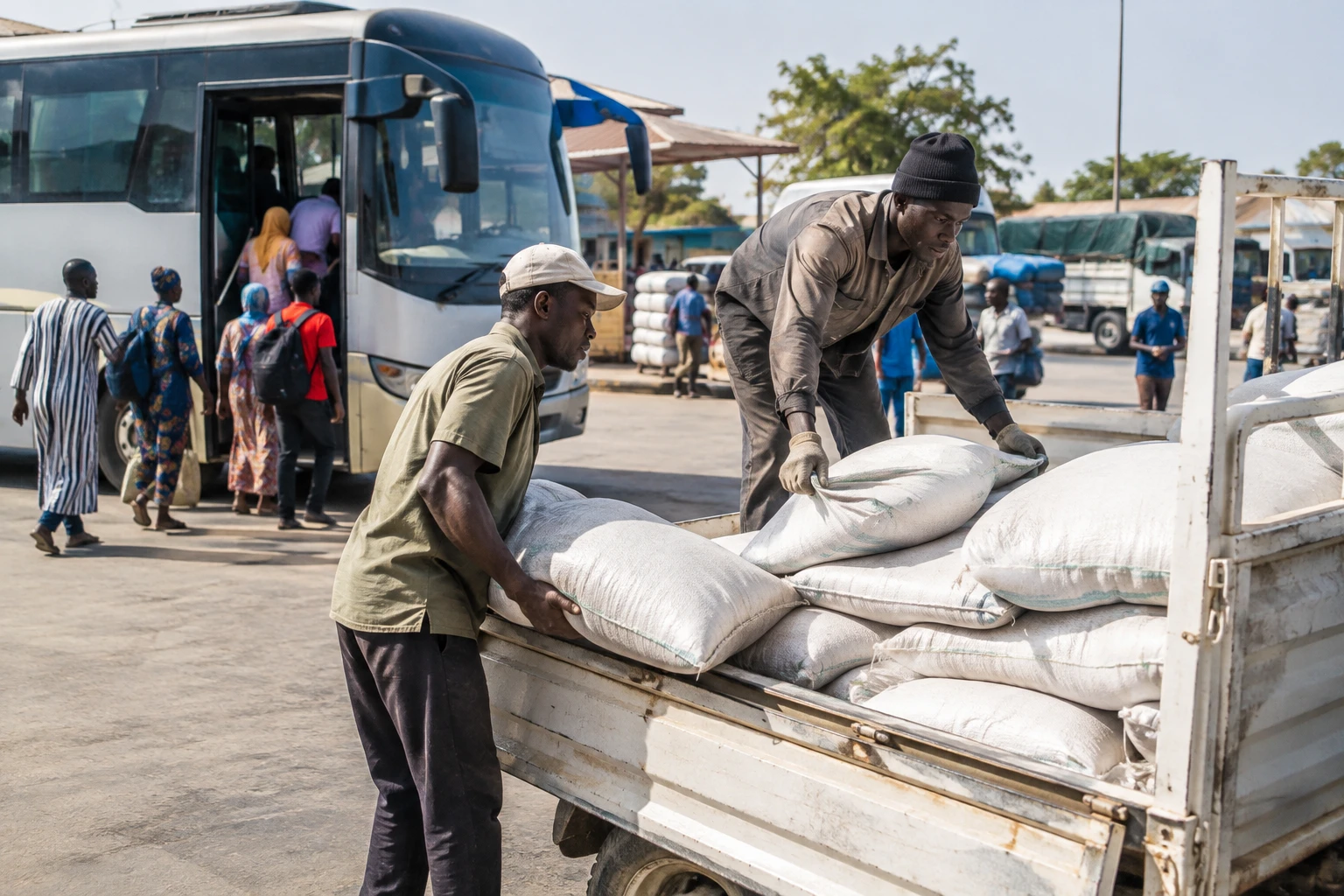
For a millet farmer in Senegal, choosing fertiliser is about more than an industrial formula. It also depends on price, the availability of inputs and the condition of the land being cultivated. The announced arrival of a new player in organic fertilisers therefore raises a practical question: how can the range of products be expanded without replacing one dependency with another?
A local industry at the intersection of several issues
Senegal already has a sizeable mineral fertiliser industry. Industries chimiques du Sénégal (ICS), controlled by the Indorama group, mines phosphate and manufactures, among other products, phosphate fertilisers. Its Mbao site, near Dakar, supplies some of the inputs used by Senegalese farms.
This production is part of a West African market in which agricultural needs exceed the local capacity of many countries. Producing in Senegal can help secure national supplies and, depending on volumes and commercial terms, also serve neighbouring markets. But the mineral fertiliser industry alone cannot address soil fertility challenges.
The regional debate also concerns the availability and cost of inputs, as well as practices suited to soils and crops. The Economic Community of West African States (ECOWAS) brings the countries of the region together around shared economic issues; Senegal’s choices may therefore matter beyond its borders, without necessarily reflecting the diversity of West African agricultural needs.
Trials conducted with Senegalese researchers
ICS chief executive Mama Sougoufara announced on 4 November 2026 that the company was considering marketing biological fertilisers from the next agricultural season. The trials are in their second year and are being conducted with the Senegalese Agricultural Research Institute (ISRA). The announcement was reported by the Senegalese Press Agency and separately picked up by SenePlus.
The executive did not specify planned volumes, prices or the investment required. Nor did he say whether production would rely entirely on ICS facilities or involve partnerships with producers already operating in the sector. The date mentioned therefore remains a company target, not confirmation that a commercial launch has already taken place.
The term “organic” covers products derived from plant or animal materials, such as compost or manure. These fertilisers are not interchangeable with mineral fertilisers: their effects and uses depend on their composition, soils, crops and farming practices. One key issue is how to combine them with mineral inputs, rather than presenting the two categories as opposing solutions.
The shift comes as ICS continues a major industrial programme. In October 2025, the APS reported an announced investment of CFA francs 126 billion over the 2025-2028 period. The project includes the refurbishment of the Mbao plant and a new single superphosphate unit. These figures describe planned industrial capacity; they do not indicate the scale of the future organic project.
Public demand is growing, but the sector needs structure
The targets for the 2026-2027 agricultural season include 20,000 tonnes of solid organic fertilisers and 30,000 tonnes of solid organic soil conditioners. These volumes are set out in the Agriculture Ministry’s budget documents. They point to the growing role of these products in national policy, but a supply target alone does not guarantee that products will be accessible to every farm.
Figures from the National Agency for Statistics and Demography (ANSD) already show an increase in the quantities planned and supplied through public schemes. Between 2023 and 2024, organic soil conditioners rose from 3,000 to 10,000 tonnes. These figures track recorded supplies, not necessarily actual purchases or use across all plots.
Soil restoration is another driver of this shift. The Senegalese government has set a target of treating more than one million hectares between 2025 and 2029 through phosphate application, liming and organic inputs. This approach requires taking account of differences between local areas: a formula that works in one zone will not automatically suit all others.
The sector must also address questions of quality, standards, certification and financing. At a workshop held in Dakar on 13 October 2026, sector stakeholders highlighted these needs, the APS reports. The FAO also notes that access to organic matter, agricultural advice and quality guarantees are among the challenges involved in developing these practices in Senegal.
What the announcement means for farmers
For ICS, entering this segment could broaden its range beyond mineral fertilisers and bring the company closer to public priorities for land restoration. For producers, the value will depend above all on verifiable field results, an affordable price, availability at the right time and appropriate advice. The needs of a cereal farm are not necessarily the same as those of a market garden or an integrated livestock farm.
Co-operation between ICS and ISRA may help test formulations and their uses in local conditions. It does not, however, replace independent assessment of results or transparency about product composition. A broader industrial offering could support local production; it should also leave room for Senegalese co-operatives and businesses that already manufacture or distribute soil conditioners.
Its regional reach will ultimately depend on the ability to produce consistently, establish reliable standards and offer products suited to West Africa’s different soils. The next milestone to watch is the agricultural season announced by ICS: prices, the volumes actually put on sale and the trial results will show whether this diversification becomes an accessible offering in Senegal and across the region.