Algeria
 Egypt
 Libya
 Morocco
 Sudan
 Tunisia
 Benin
 Burkina Faso
 Cabo Verde
 Côte d'Ivoire
 Ghana
 Guinea
 Guinea-Bissau
 Liberia
 Mali
 Mauritania
 Niger
 Nigeria
 Senegal
 Sierra Leone
 The Gambia
 Togo
 Cameroon
 Central African Republic
 Chad
 Equatorial Guinea
 Gabon
 Republic of the Congo
 São Tomé and Príncipe
 Burundi
 Comoros
 Djibouti
 Eritrea
 Ethiopia
 Kenya
 Madagascar
 Malawi
 Mauritius
 Mozambique
 Rwanda
 Seychelles
 Somalia
 South Sudan
 Tanzania
 Uganda
 Angola
 Botswana
 Eswatini
 Lesotho
 Namibia
 South Africa
 Zambia
 Zimbabwe
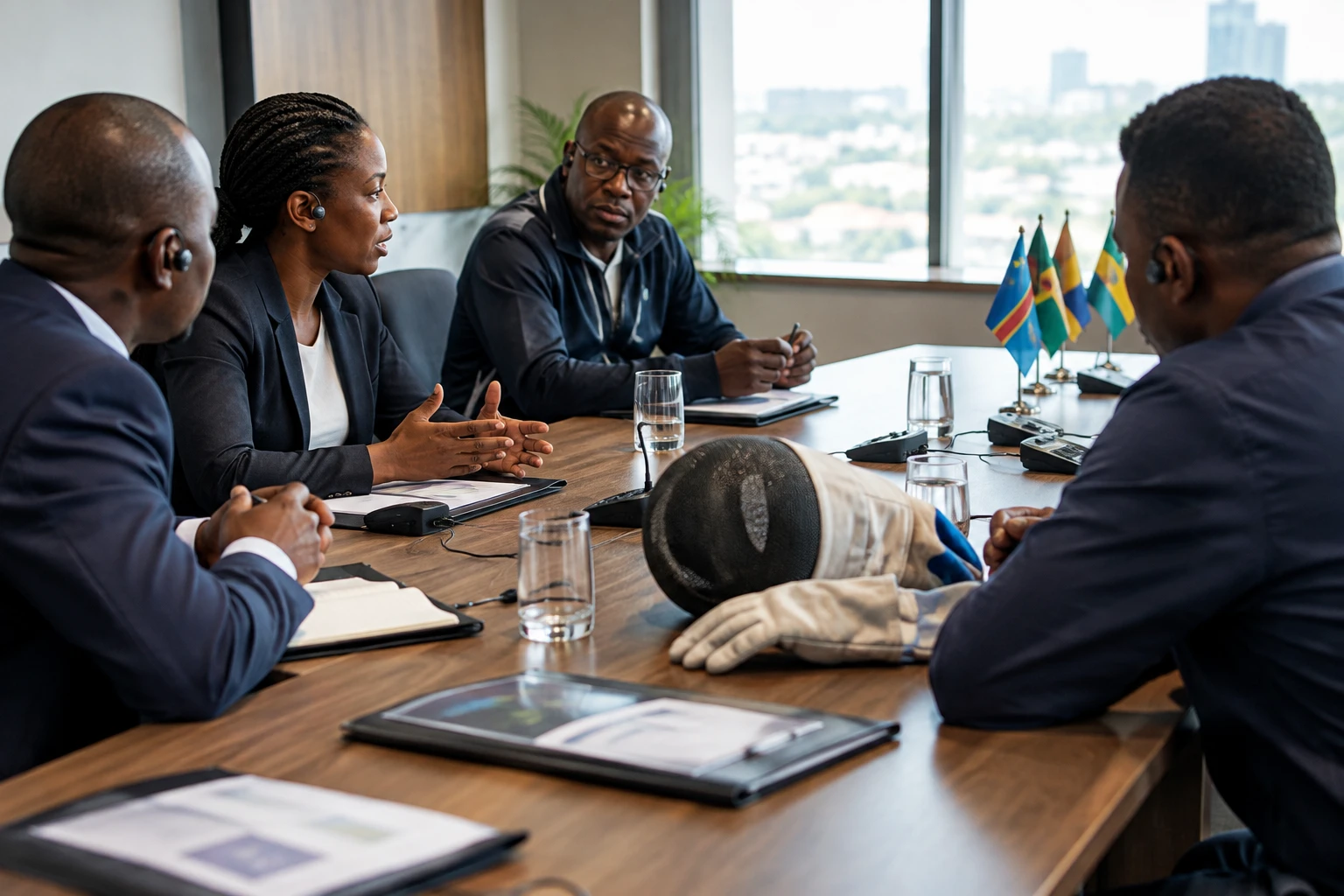
In Kinshasa, fencing is still practised far from the major sporting stages. For the young people who take it up, the Youth Olympic Games (YOG) in Dakar offer a rare opportunity: to gauge their level, gain experience and bring visibility to a little-known sport in the Democratic Republic of the Congo (DR Congo).
An African event, an Olympic sport
The YOG will take place in Senegal from 31 October to 13 November 2026. Dakar, Diamniadio and Saly will host the competitions for this edition, the first Olympic sporting event to be held on the African continent. Fencing is one of the 25 sports on the competition programme. The official Dakar 2026 Games press kit sets out the dates and main details of the event.
The event’s continental significance lends particular weight to the presence of young Congolese fencers. But holding the Games in Africa does not, in itself, guarantee that the continent’s federations will secure lasting benefits. What follows will also depend on coaching, equipment and the competition opportunities available after Dakar.
In DR Congo, the Congolese Fencing Federation is recognised by the International Fencing Federation, which lists its base as Kinshasa. This recognition places the sport within an international network. However, on its own, it says nothing about young people’s actual access to venues, equipment or trained coaches.
A sport built on the ground
Available information on Congolese preparations reports that sessions are being held outdoors in Lemba, amid difficulties caused by a lack of venues and resources. Young fencer Mervie Yembele Tulunga, aged 16 at the time of the reported preparations, is said to train in sabre several times a week. These details describe an individual journey; on their own, they do not make it possible to assess the situation of all clubs or practitioners in the country.
In a sport where specialist equipment and travel matter, training conditions directly affect progress. A suitable venue makes it possible to train regularly and safely. Frequent competitions give young people the chance to face different styles and refine their technique. Without these steps, talent and motivation rely more heavily on the efforts of athletes, families and coaches.
The challenge therefore goes beyond selecting one or a few young people for a major event. It is also about whether their experience can help develop a local pathway: introduction to the sport, training, refereeing, physical preparation and access to tournaments. A result in Dakar could attract attention, but continuity will depend above all on what is put in place in Kinshasa and other cities.
Visibility cannot replace resources
Fencing remains little covered in Congolese sports media, where the most popular disciplines often take up most of the space. An international competition can briefly raise its profile. It allows the public to discover the weapons, rules and qualities required: controlled movement, anticipation and precision.
For young athletes, this exposure can matter. It may prompt new people to sign up and encourage coaches. But media coverage does not solve the cost of equipment or the difficulty of maintaining regular training. Families that fund part of the journey, clubs seeking facilities and federations responsible for developing the next generation face different constraints.
The International Fencing Federation lists the Congolese federation among its African federations. This is an institutional marker, not proof of a substantial nationwide network. To assess the sport’s progress, it will be important to track competitions held in DR Congo, coach training and young people’s access to suitable equipment.
A challenge beyond the capital
The preparations described are centred in Kinshasa. It is therefore difficult to know how widely the sport is practised beyond the capital. This matters if access to fencing is not to depend solely on a handful of urban organisations. Initiatives in several provinces would broaden the pool of practitioners and offer more opportunities to young people.
At regional level, the YOG give African federations an opportunity to meet and compare their training methods. For DR Congo, a member of the Southern African Development Community (SADC), the sporting challenge is also to strengthen exchanges with neighbouring countries and make regional competitions more accessible. This requires regular schedules and the ability to travel, not just a one-off presence at the Games.
Dakar can thus serve as a showcase and a starting point, without being presented as an automatic solution. For Congolese fencers, the immediate goal is the competition. For the national sporting movement, the real test will come afterwards: turning the attention generated by the YOG into regular training, coach development and competition opportunities for a wider generation.