Algeria
 Egypt
 Libya
 Morocco
 Sudan
 Tunisia
 Benin
 Burkina Faso
 Cabo Verde
 Côte d'Ivoire
 Ghana
 Guinea
 Guinea-Bissau
 Liberia
 Mali
 Mauritania
 Niger
 Nigeria
 Senegal
 Sierra Leone
 The Gambia
 Togo
 Cameroon
 Central African Republic
 Chad
 Equatorial Guinea
 Gabon
 Republic of the Congo
 São Tomé and Príncipe
 Burundi
 Comoros
 Djibouti
 Eritrea
 Ethiopia
 Kenya
 Madagascar
 Malawi
 Mauritius
 Mozambique
 Rwanda
 Seychelles
 Somalia
 South Sudan
 Tanzania
 Uganda
 Angola
 Botswana
 Eswatini
 Lesotho
 Namibia
 South Africa
 Zambia
 Zimbabwe
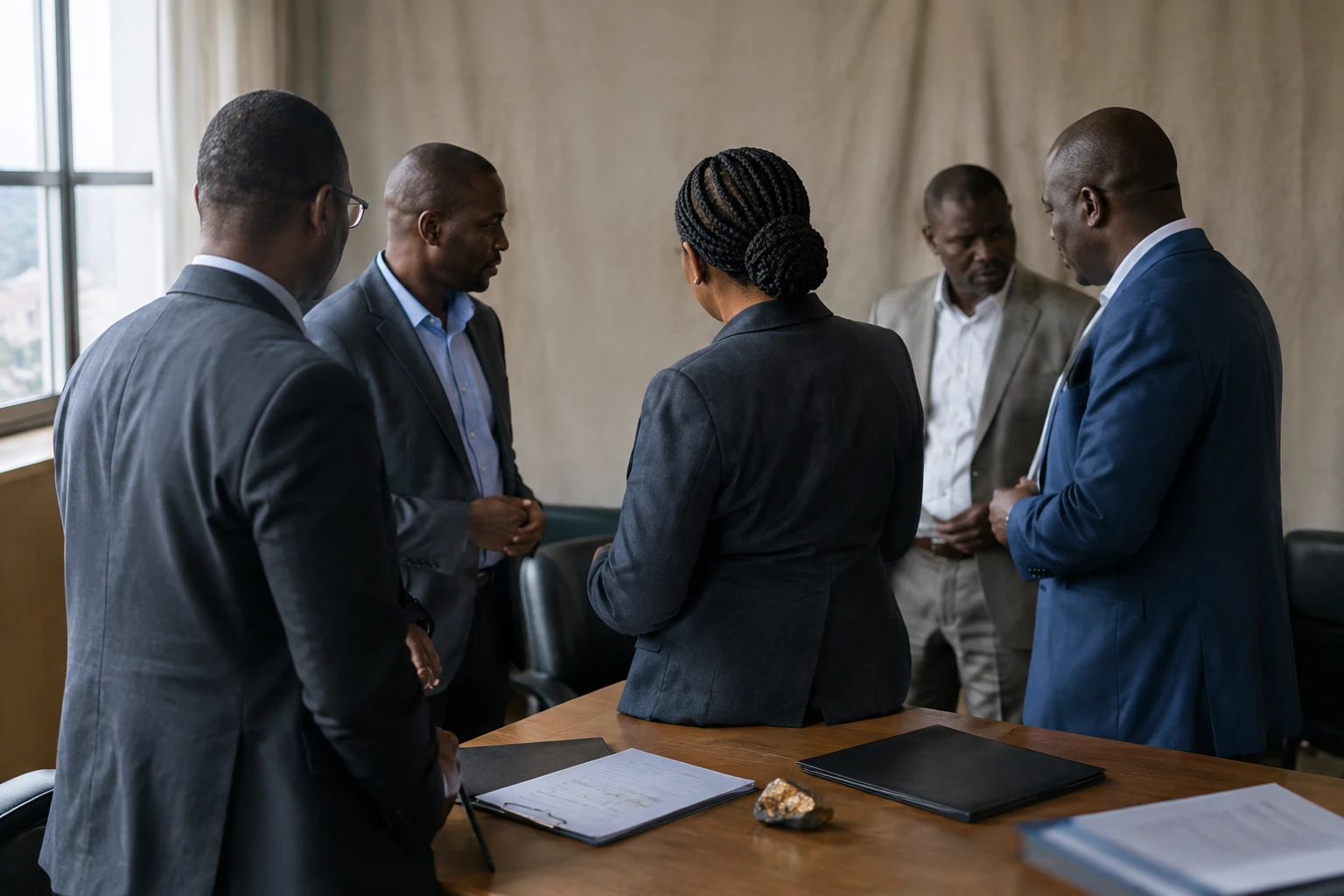
In the east of the Democratic Republic of the Congo, gold extracted from a mine can travel along a commercial route to regional markets. But in some areas, part of the revenue generated by this activity also funds the Allied Democratic Forces (ADF), an armed group that continues to threaten civilians. For the Congolese authorities, the challenge is therefore not limited to securing mining sites: they must also understand who buys, transports and resells the metal.
Funding rooted in local communities
A report published on 27 October 2026 by the investigative organisation The Sentry describes a gold corridor linking Manguredjipa, in Lubero territory in North Kivu, to Mambasa, in Ituri, and then to Bafwasende, in Tshopo province. It estimates that the ADF could earn between $1m and $1.6m a year from gold-mining sites in the Manguredjipa region alone. This is an estimate, not a figure verified by the Congolese authorities.
The report says the group has gradually increased its local revenues, while resources linked to its affiliation with the Islamic State organisation have declined since late 2024. Gold is said to have become its main source of funding, ahead of revenue from cocoa, extortion and kidnappings. The Sentry says it drew on field research and an examination of cross-border trading networks. The Sentry report on gold financing for the ADF details its estimates and the methods described.
A separate analysis by ACLED, an organisation that monitors conflict, had already documented in 2025 a shift towards controlling mining sites and taxing some local activities. It provides context, but does not independently verify the amount cited by The Sentry. ACLED’s analysis of the ADF’s evolution in eastern Congo also highlights the effects of military pressure and the group’s fragmentation.
From rural mines to regional trade networks
According to The Sentry, gold from conflict-affected areas enters trading networks linking remote sites to purchasing centres, including Butembo, and then to markets in Uganda. The report cites transport routes such as the one from Beni to Kasindi. Traders, transporters and intermediaries thus play a role in a chain that can turn a local resource into revenue for an armed group.
The ADF’s presence around mines does not mean that every trader or buyer knowingly helps finance the group. Rather, the report describes systems in which intimidation, forced levies and opaque transactions can blur the line between legal and illegal activity. This distinction matters: controls must target suspicious networks and flows without treating mine workers or local traders as combatants.
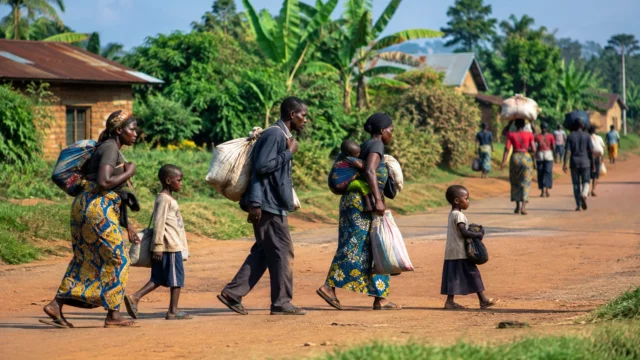
In rural areas, the consequences can be direct. Miners risk being forced to work or pay levies. Farmers and cocoa producers may face taxes imposed by force. People living along transport routes are exposed to kidnappings, looting and displacement. In towns such as Butembo, commercial activity also depends on passable roads and supplies from neighbouring territories.
Military pressure is not enough
The ADF operates in a region where Congolese and Ugandan forces have been conducting the joint Operation Shujaa since 2021. The co-operation targets the armed group, but the operations have not ended its ability to move and reorganise. In its report, The Sentry describes units dispersed across the provinces of North Kivu, Ituri and Tshopo. The United Nations has also reported that ADF attacks have continued despite the joint operations. The UN report on the security situation in the DRC documents this military context.
This dispersal complicates the response. Securing a camp or a road does not automatically dry up revenue if mining activities and trading routes remain accessible elsewhere. Conversely, poorly targeted operations can disrupt the livelihoods of people who depend on artisanal mining and trade. The challenge, therefore, is to reduce the group’s resources while protecting civilians and avoiding indiscriminate cuts to their livelihoods.
For Kinshasa, this means, in particular, better monitoring of sites and purchasing routes, documenting forced levies and co-operating with transit countries. Uganda is directly affected by the trade routes mentioned in the report. An effective response requires controls to extend beyond the Congolese border, and investigations to distinguish established facts from suspicions about specific actors.
A Congolese issue with regional implications
The issue extends beyond North Kivu alone. Ituri and Tshopo are also affected by the corridor described, while trade involves cross-border networks. The DRC is a member of the Economic Community of Central African States (ECCAS), but the issue also requires co-operation with Uganda, a neighbouring country in East Africa. It therefore calls for exchanges between states on gold traceability, trade controls and information-sharing.
The Sentry’s recommendation to refer the matter to the UN Security Council reflects a desire to strengthen the international response. It does not replace national and regional responsibilities: identifying those who profit from the trade, protecting mining communities and making commercial routes more transparent remain practical tasks. What happens next will depend, in particular, on the ability of the Congolese and Ugandan authorities to track gold beyond extraction sites, without conflating local trade with armed-group financing.