Algeria
 Egypt
 Libya
 Morocco
 Sudan
 Tunisia
 Benin
 Burkina Faso
 Cabo Verde
 Côte d'Ivoire
 Ghana
 Guinea
 Guinea-Bissau
 Liberia
 Mali
 Mauritania
 Niger
 Nigeria
 Senegal
 Sierra Leone
 The Gambia
 Togo
 Cameroon
 Central African Republic
 Chad
 Equatorial Guinea
 Gabon
 Republic of the Congo
 São Tomé and Príncipe
 Burundi
 Comoros
 Djibouti
 Eritrea
 Ethiopia
 Kenya
 Madagascar
 Malawi
 Mauritius
 Mozambique
 Rwanda
 Seychelles
 Somalia
 South Sudan
 Tanzania
 Uganda
 Angola
 Botswana
 Eswatini
 Lesotho
 Namibia
 South Africa
 Zambia
 Zimbabwe
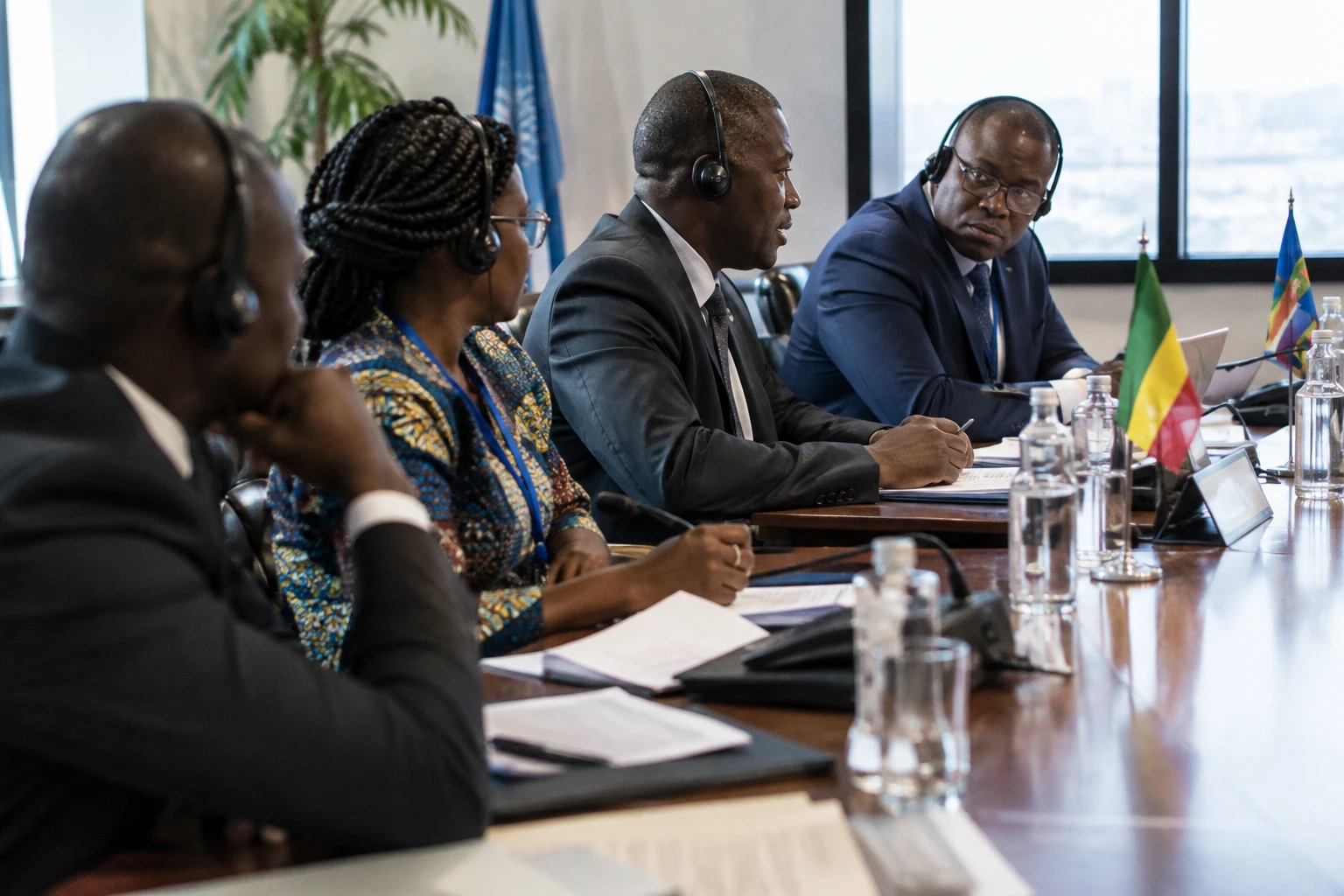
In the Democratic Republic of the Congo, political dialogue does not address the same question for everyone. Can it help stop the fighting, prepare an agreement among Congolese actors, or simply restore trust in the institutions? The positions taken by Joseph Kabila and Félix Tshisekedi reveal disagreement over the rules of dialogue, but also over the role of arms and the 2028 election deadline.
A regional peace process, a national political crisis
In the east of the country, the Doha talks bring together Kinshasa and the Congo River Alliance/March 23 Movement (AFC/M23), in a process separate from the national dialogue proposed by the government. The framework agreement signed in November 2025 provides, among other things, for a prisoner-release mechanism and a ceasefire-monitoring arrangement. It is part of a regional framework backed by the African Union and involving the East African Community (EAC) and the Southern African Development Community (SADC). The Doha framework agreement for peace in the DRC therefore separates security negotiations from domestic political debate.
This distinction matters to Congolese people living far from Kinshasa. In areas affected by fighting, security and freedom of movement are daily urgencies. In the capital, the issue also concerns the legitimacy of institutions and the rules governing the transfer of power. The two issues overlap, but no political dialogue alone can guarantee an end to hostilities.
Doha remains an option, but Kabila does not rule out armed struggle
In an interview conducted on 23 October and broadcast on 27 October, Joseph Kabila argues for continuing the Doha talks. He nevertheless says this path is “one option among others”. The former president accuses the authorities of failing to honour certain commitments, particularly on prisoners and the ceasefire. He also refers to drone attacks and says he himself was targeted in Goma. These are his allegations; they have not been independently substantiated by the material consulted.
Kabila does not make the continuation of negotiations conditional on abandoning armed struggle. He justifies this position by what he describes as the closure of political space and the government’s refusal to organise genuine dialogue. This choice has taken on particular significance since the launch of the Front for the Refoundation of the Nation (FRN), a political and military coalition that includes the AFC/M23, according to reports published at the time of its creation. This composition raises a practical question: how can peace talks be maintained with actors, some of whom are associated with a new coalition led by Kabila?
Félix Tshisekedi rejects this legitimisation of the use of arms. On 24 October, addressing elected representatives of the Sacred Union, his political majority, he condemned his predecessor’s decision to fight the government he had once led. He portrayed Kabila’s role in the FRN as a way of giving a Congolese appearance to what Kinshasa calls Rwandan aggression. This characterisation is that of the president and his government; it should not be confused with an independent finding on the full extent of responsibility.
Two views of dialogue and a way out of the crisis
Kabila is calling for an independent body to lead a national dialogue, representatives of the main political currents and guarantors tasked with monitoring decisions. He cites as a model the inter-Congolese dialogue launched after he came to power in 2001, which accompanied a process of national reunification. He also calls for foreign troops to leave, without setting out a timetable or specific mechanism in the interview.
Tshisekedi assigns dialogue a different role. “Dialogue will not end the war,” he told elected representatives of his majority. He presents it instead as a way to strengthen national cohesion and gather proposals from the population. He wants consultations in the provinces and is asking elected representatives to facilitate residents’ expression without steering their answers. This format would broaden the discussion beyond political leaders, but its independence and arrangements remain to be clarified.
The two men therefore agree on the word “dialogue”, but not on its mandate. For Kabila, it should enable political and security negotiations whose conclusions would be followed up. For Tshisekedi, it is not a military solution and should first help bring the country together. People in territories affected by fighting may nevertheless judge the process by its impact on security, while political actors will focus above all on who controls the agenda and who takes part.
2028, a question of legitimacy and timing
The former president disputes the credibility of the institutions that emerged from the 2023 elections and doubts that the vote scheduled for 2028 will take place. Asked about waiting until then, he contrasts an election with a “revolution”, while clarifying that the word does not necessarily mean war. He calls for the political system to be transformed, particularly the electoral system, but does not detail the steps or safeguards for such a reform.
Tshisekedi, for his part, backs a revision of the Constitution and denies wanting to use it to extend his term. Addressing Sacred Union lawmakers, he linked his departure in 2028 to the achievement of his objectives and to the possibility that the public would reject constitutional change. This statement leaves open the question of the procedure and what would happen in the event of disagreement. It comes as any change to the rules governing the presidential term fuels opposition distrust.
The Constitution currently in force limits the president to two five-year terms. The debate is therefore not only about the text: it concerns trust in the institutions responsible for interpreting it, in the electoral process and in respect for the transfer of power. The opposition, the majority and civic organisations do not necessarily assess these issues in the same way.
The C64 seeks to open a path to mediation
Meeting in Rome from 25 to 27 October, the Article 64 Coalition (C64) announced that it wanted to meet Tshisekedi and Kabila separately to discuss the conditions for inclusive dialogue. It opposes both the seizure of power by force and a constitutional amendment that, its members say, would circumvent term limits. The FRN has said it is ready to receive a delegation, but no timetable has been announced in the information available.
This initiative offers an opportunity for discussion, not yet an established mediation. The test will be whether the meetings can define accepted rules, include actors beyond the political camps and align with regional efforts in the east of the country. For SADC, the EAC and the African Union, stability in the DRC also affects the balance of the Great Lakes region. For Congolese people, the immediate question is whether political announcements will translate into verifiable mechanisms: an observed ceasefire, credible consultations and a clear electoral timetable.