Algeria
 Egypt
 Libya
 Morocco
 Sudan
 Tunisia
 Benin
 Burkina Faso
 Cabo Verde
 Côte d'Ivoire
 Ghana
 Guinea
 Guinea-Bissau
 Liberia
 Mali
 Mauritania
 Niger
 Nigeria
 Senegal
 Sierra Leone
 The Gambia
 Togo
 Cameroon
 Central African Republic
 Chad
 Equatorial Guinea
 Gabon
 Republic of the Congo
 São Tomé and Príncipe
 Burundi
 Comoros
 Djibouti
 Eritrea
 Ethiopia
 Kenya
 Madagascar
 Malawi
 Mauritius
 Mozambique
 Rwanda
 Seychelles
 Somalia
 South Sudan
 Tanzania
 Uganda
 Angola
 Botswana
 Eswatini
 Lesotho
 Namibia
 South Africa
 Zambia
 Zimbabwe
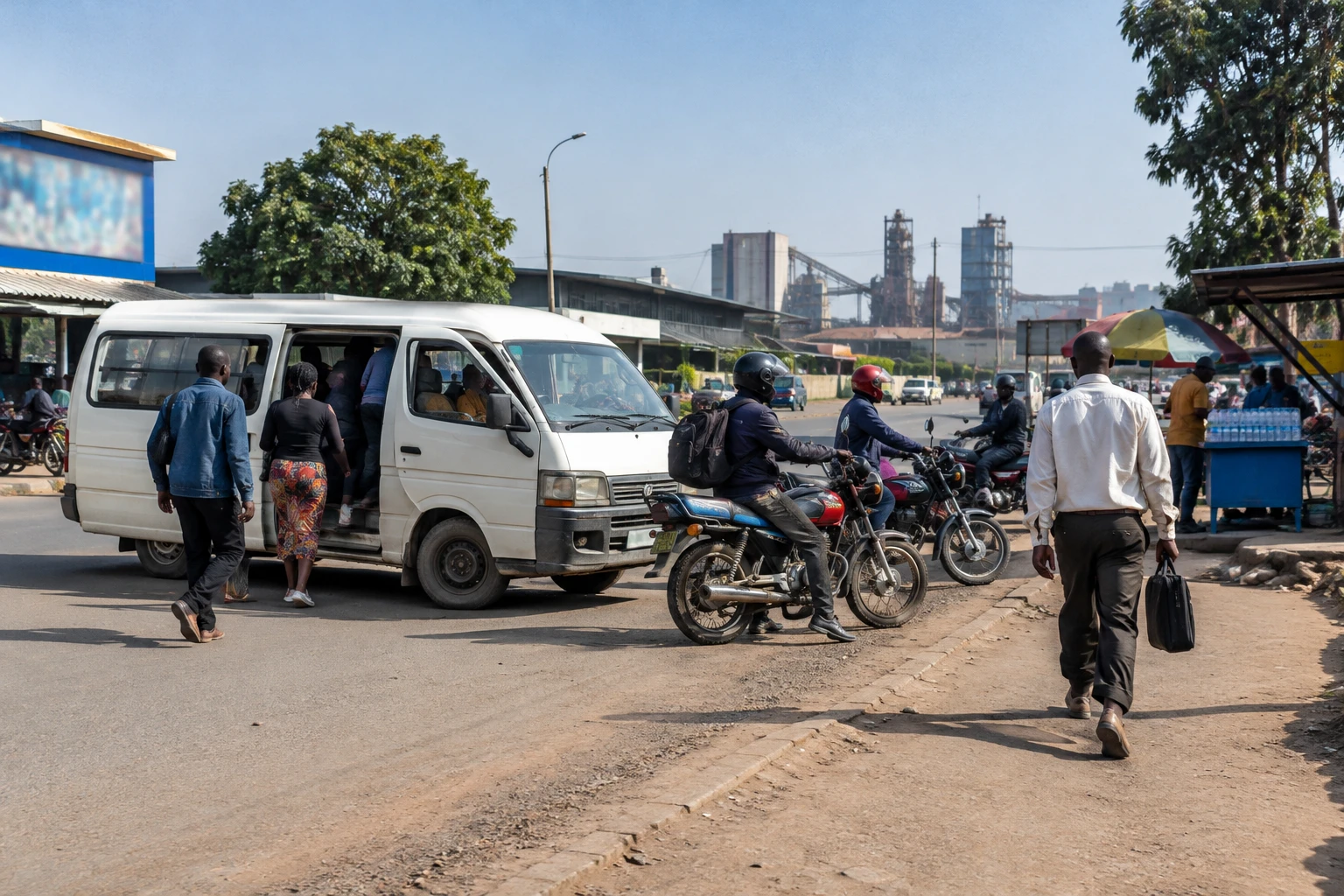
In Kolwezi, losing access to a buying depot or a mining site can mean losing a day’s income overnight. The tensions in October are a reminder that a policy of control cannot succeed without legal markets accessible to artisanal miners.
A mining city caught between controls and livelihoods
Kolwezi, the capital of Lualaba province, lies at the heart of the copper and cobalt belt in the south-east of the Democratic Republic of the Congo. Mining activity there brings together major industrial projects, processing plants, traders and artisanal miners. These actors do not have equal access to sites or the same economic clout.
For several years, the Congolese government has sought to regulate artisanal mining and the movement of minerals. Artisanal mining zones, or ZEA, are areas legally reserved for artisanal miners. Their development is intended to offer them an alternative to industrial concessions. But designating an area is not enough: it must be accessible, equipped and connected to buyers.
DR Congo is a member of the Southern African Development Community (SADC), which brings together states in southern Africa and supports, among other things, regional economic cooperation. Mineral traceability and stability in mining areas therefore affect more than Lualaba alone: they influence regional and international supply chains.
Protests amid inspection operations
On 19 and 20 October 2026, protests by artisanal miners disrupted several neighbourhoods in Kolwezi. Barricades, fires and clashes with security forces were reported. Commercial and school activities were also affected.
Radio Okapi and Actualité.cd reported injuries and property damage, but no consolidated official figures. Local organisations cited deaths, but this information has not been confirmed by an independent count. The toll should therefore not be presented as established.
Protesters objected to restrictions on the sale of their minerals and their removal from certain sites. Anger mounted during an inspection mission by an inter-agency commission from Kinshasa. It brings together departments dealing with mining, security and justice. The commission says it wants uniformed personnel operating at sites outside the legal framework removed, and miners working in industrial concessions relocated.
The move follows instructions issued by President Félix Tshisekedi at the Council of Ministers meeting on 10 July 2026: to remove police and military personnel involved in mining activities and dismantle fraud networks. The official minutes confirm that the meeting took place, while Congolese media have documented the commission’s deployment and the unrest in Kolwezi. Details of the incidents, however, remain based on local accounts.
The key question: where to sell and where to work?
The controls also target networks that may be supplying unauthorised mining. Metalkol, a subsidiary of Eurasian Resources Group, has reported incursions onto its concession near Kolwezi. It says minerals extracted without authorisation were being taken to processing plants. The figure of more than 2,000 tonnes a day cited by the company remains an attributed estimate, not an independently verified number.
Local authorities have disputed the suggestion that processing plants were closed across the board. On 20 October, Lualaba Governor Fifi Masuka said that “no processing plant has been closed”. This statement does not settle the dispute: miners say they can no longer sell under the same conditions, while the authorities are asking them to use compliant cooperatives and trading centres.
These centres can facilitate the assessment and traceability of minerals. Their usefulness, however, depends on their ability to handle volumes, offer clear prices and operate without prohibitive fees. If access to buyers is reduced before regular channels are up and running, the loss of income will first affect households directly dependent on artisanal mining. It may also have knock-on effects on the city’s small businesses.
The same issue applies to mining sites. The authorities have told miners at Kamilombe, a site allocated to Gécamines, to leave and have proposed relocating them to ZEA 371. But available information does not specify the zone’s capacity or the state of its facilities. Without a practical solution, relocation risks moving the conflict rather than resolving it.
From mining order to public trust
For the state, enforcing mining titles and removing fraud networks addresses security, public revenue and investment protection. For concession holders, unauthorised occupation can disrupt operations and make accountability in the event of an incident less clear. For miners, by contrast, eviction without a viable site or commercial outlet directly threatens their income.
This gap fuels distrust. It is compounded when uniformed personnel are accused of being present at mining sites outside the legal framework: the state must then enforce its rules while also overseeing its own agents. A lasting operation therefore requires clear procedures, defined responsibilities and dialogue that is not limited to industrial operators.
A gradual return to calm was reported on 21 October, following the unrest. Metalkol also reported that it had regained control of its concession. These developments do not resolve the underlying issue. The next step will be to check whether the announced ZEA genuinely have the access, equipment and buying channels required.
In Kolwezi, as in other mining areas in the region, the challenge is to make industrial mining, artisanal activity and traceability rules work side by side. The Congolese authorities will have to show that controls do not mean only evictions, but also practical legal alternatives. Only then can concession security go hand in hand with incomes less exposed to arbitrary decisions and irregular channels.