Algeria
 Egypt
 Libya
 Morocco
 Sudan
 Tunisia
 Benin
 Burkina Faso
 Cabo Verde
 Côte d'Ivoire
 Ghana
 Guinea
 Guinea-Bissau
 Liberia
 Mali
 Mauritania
 Niger
 Nigeria
 Senegal
 Sierra Leone
 The Gambia
 Togo
 Cameroon
 Central African Republic
 Chad
 Equatorial Guinea
 Gabon
 Republic of the Congo
 São Tomé and Príncipe
 Burundi
 Comoros
 Djibouti
 Eritrea
 Ethiopia
 Kenya
 Madagascar
 Malawi
 Mauritius
 Mozambique
 Rwanda
 Seychelles
 Somalia
 South Sudan
 Tanzania
 Uganda
 Angola
 Botswana
 Eswatini
 Lesotho
 Namibia
 South Africa
 Zambia
 Zimbabwe
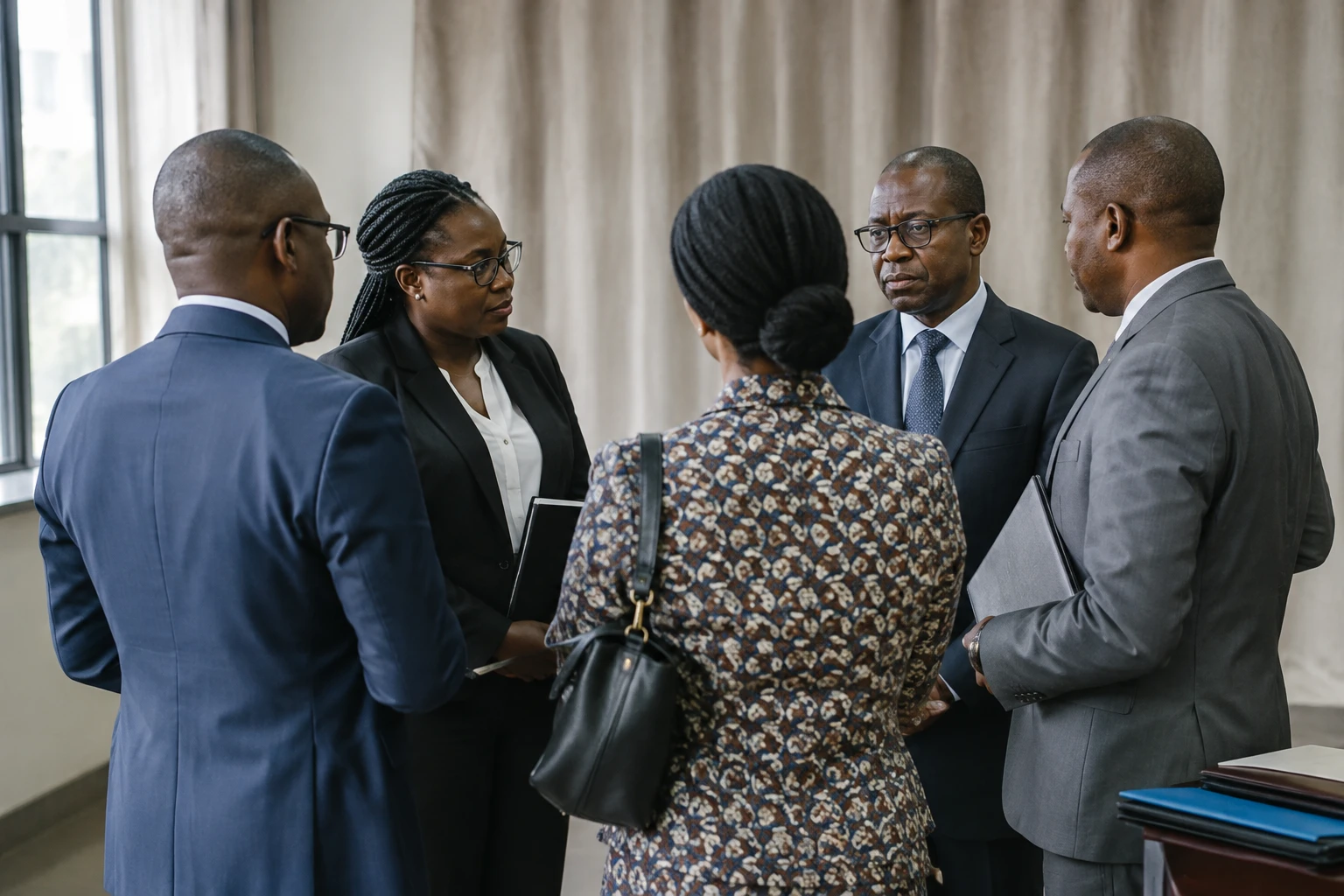
In Kinshasa, suspending new admissions to Makala may curb overcrowding. But the measure will not free up a single cell. Without swift court decisions and lawful detention arrangements, the excess population risks being shifted to other facilities, which are less visible and sometimes less closely monitored.
An emergency measure in a capital under pressure
Makala Central Prison, also known as the Kinshasa Penitentiary and Rehabilitation Centre, was designed to accommodate about 1,500 people. Yet, according to figures published on 22 October 2026 by Radio Okapi, it holds at least 16,155. Another report by the Congolese Press Agency, dated 16 October, put the number of detainees at 16,238. Attributed to the authorities, these figures describe a facility holding more than ten times its theoretical capacity.
The Minister of State for Justice, Guillaume Ngefa, ordered the suspension of new admissions by circular, except in exceptional cases authorised by the courts. The measure, presented as temporary, is intended to prevent occupancy from rising further. It also provides for transfers and a review of court cases, according to information reported by Radio Okapi.
The decision comes in a country where prison problems extend beyond the capital. Congolese prisons face trial delays, limited infrastructure and unequal resources. People awaiting trial are particularly exposed: they may remain in prison for prolonged periods without being convicted, while families often have to shoulder some of the daily costs of support.
Blocking admissions does not resolve cases
The number of places is only part of the problem. In the report accompanying the government announcement, Mia Tshimanga, detention project co-ordinator at Avocats sans frontières, estimates that more than 70% of people held at Makala are in pre-trial detention. This figure should be understood as an estimate attributed to her, not as a recent official count independently verified.
Pre-trial detention applies to people held in prison before their trial. It should remain subject to safeguards and must not replace the work of the courts. When hearings are delayed, people accused of sometimes minor offences can remain behind bars, while courts and prosecutors accumulate cases. Prison overcrowding thus also reflects the limitations of the judicial system.
Banning new admissions to Makala may ease pressure on its wings. However, if those arrested remain in police cells or are sent to other prisons that are already overcrowded, the problem will have changed address without disappearing. Tshimanga warns specifically of this risk. Monitoring transfers and ensuring access to detention facilities will therefore be crucial.
The effects are not evenly distributed. Judicial authorities must sort through cases and organise transfers. Detainees depend on court decisions to regain their freedom or learn when they will stand trial. Their relatives, meanwhile, bear some of the material costs and social consequences of imprisonment. An administrative measure alone cannot correct these imbalances.
The 2024 precedent remains fresh in people’s minds
The situation at Makala had already come to the fore after the attempted escape on the night of 1–2 September 2024. The Congolese government then announced a provisional toll of 129 deaths and 59 injuries. The United Nations Population Fund also documented sexual violence against female detainees during those events. This precedent is a reminder of the possible consequences of an overcrowded facility, but does not in itself show that the current measure will be enough to prevent further incidents.
Since then, announcements of efforts to ease overcrowding have run up against a practical question: where will transferred detainees be accommodated, and how will their rights be protected? Building or renovating prisons can increase capacity, but does not automatically shorten court delays. Conversely, speeding up case reviews requires resources for courts, prosecutors and legal assistance.
A test for Congolese justice and the region
The Democratic Republic of the Congo belongs to the Southern African Development Community (SADC) and the East African Community (EAC), two regional co-operation organisations. The management of detention remains primarily a national responsibility. But access to justice, respect for fundamental rights and the treatment of people deprived of their liberty are also issues followed at African level.
The next stage will be measured less by the closure of Makala’s gates than by the results: an actual fall in the number of detainees, court decisions delivered within a reasonable time, oversight of police custody facilities and transparency over transfers. Available figures differ according to their date and source; publishing them regularly would help establish whether pressure is genuinely easing.
For now, the announced ban is an immediate brake, not a comprehensive plan. As Mia Tshimanga points out, it could mark a first step. Its impact will depend on the measures that follow and on the ability of Congolese institutions to process cases without shifting overcrowding to less closely monitored facilities.
For context and figures, see Radio Okapi’s coverage of the suspension of admissions to Makala, the count by the Congolese Press Agency and information published by the United Nations in the DRC on the September 2024 events.