Algeria
 Egypt
 Libya
 Morocco
 Sudan
 Tunisia
 Benin
 Burkina Faso
 Cabo Verde
 Côte d'Ivoire
 Ghana
 Guinea
 Guinea-Bissau
 Liberia
 Mali
 Mauritania
 Niger
 Nigeria
 Senegal
 Sierra Leone
 The Gambia
 Togo
 Cameroon
 Central African Republic
 Chad
 DR Congo
 Equatorial Guinea
 Gabon
 Republic of the Congo
 São Tomé and Príncipe
 Burundi
 Comoros
 Djibouti
 Eritrea
 Ethiopia
 Kenya
 Madagascar
 Malawi
 Mauritius
 Mozambique
 Rwanda
 Seychelles
 Somalia
 South Sudan
 Tanzania
 Angola
 Botswana
 Eswatini
 Lesotho
 Namibia
 South Africa
 Zambia
 Zimbabwe
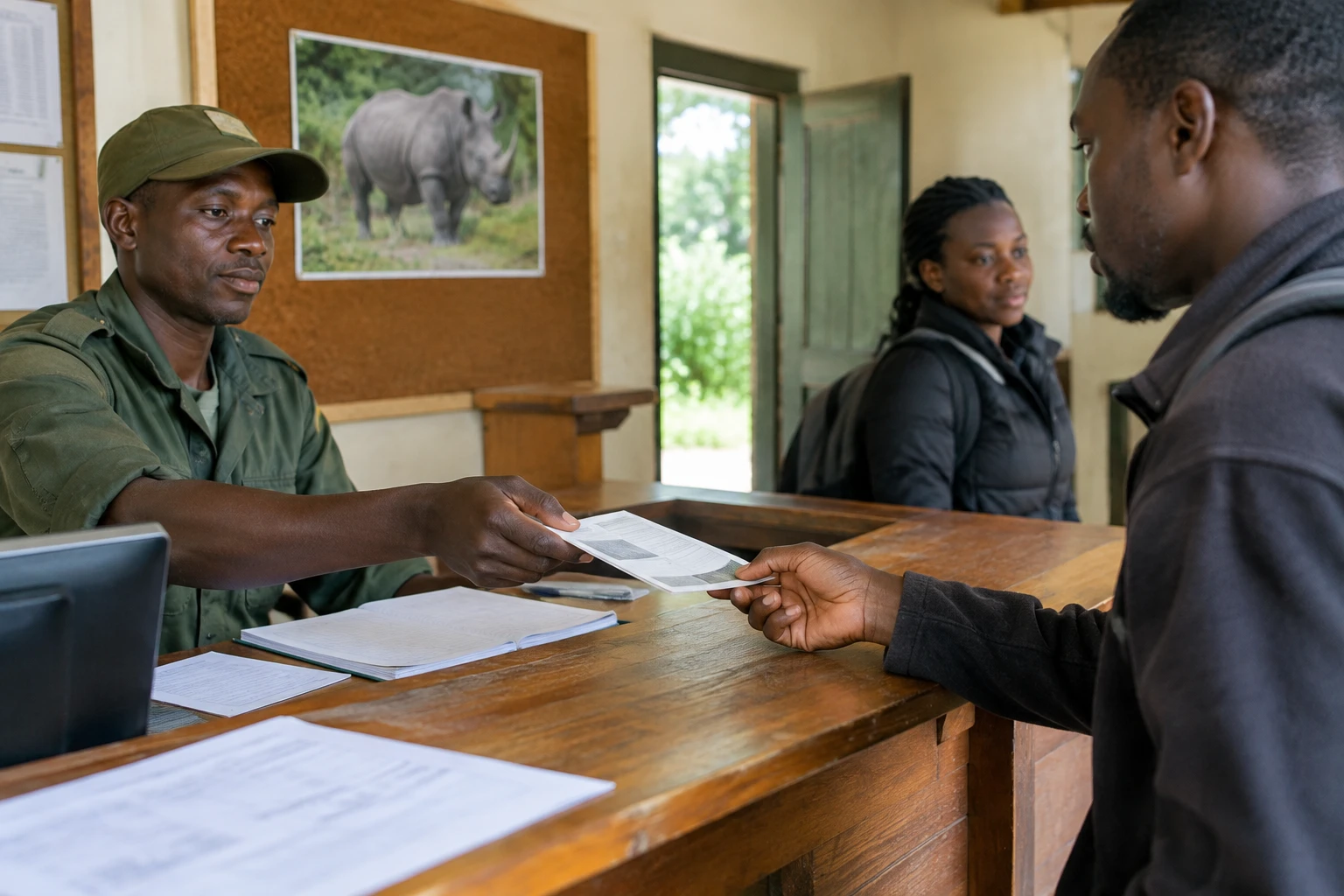
About 176 kilometres north of Kampala, a turn-off on the road to Murchison Falls offers the chance to track rhinos on foot with rangers. But Ziwa also tells a wider story of transformation: after the animals disappeared from the country, they are now helping to rebuild a population and prepare for their return to other protected areas in Uganda.
A guided visit at the pace of the terrain
The sanctuary is in Nakasongola District, along the route linking the capital with Murchison Falls National Park. The walk takes place in a small group, led by a ranger, who adjusts the route according to the vegetation and the animals’ location.
This is not a vehicle safari. Visitors proceed on foot and observe southern white rhinos in a protected environment. The guide determines the distance and gives safety instructions. This makes it possible to see the animals without turning their presence into a close-up spectacle.
Ziwa is also home to birds and other wildlife. For travellers heading to Murchison Falls, a stop here can combine wildlife observation with an understanding of conservation work. Uganda’s tourism information describes the guided walking tracking experience and places the site about 176 kilometres from Kampala.
From disappearance to breeding
The return of rhinos to Uganda is the result of a programme launched after decades of poaching and insecurity. The Global Environment Facility Small Grants Programme, hosted by the United Nations Development Programme, says the country’s last rhino was killed in 1983.
Ugandan conservationists established Rhino Fund Uganda in 1997 to organise the species’ return. Two southern white rhinos arrived from Kenya in 2001 and were initially placed at the Uganda Wildlife Education Centre. In 2005, four more joined them at Ziwa. Two additional animals, donated by Disney’s Animal Kingdom, arrived the following year.
These six animals formed the sanctuary’s breeding nucleus. The programme is run with the Uganda Wildlife Authority, the public body responsible for managing wildlife and protected areas. Historical records from the UN programme document its establishment, while the Ugandan authority confirms that the founding group enabled the population to grow.
Recent figures mark a change in scale. According to the Uganda Wildlife Authority, the country’s rhino population reached 59 in December 2025, following the arrival of eight more animals from South Africa. This national figure does not mean that all the rhinos live at Ziwa: four had already been transferred from Ziwa to Ajai Wildlife Reserve in the north of the country.
Ziwa becomes a starting point
For several years, Ziwa was the focus of most of the breeding programme. The next step is to distribute some of the animals to other protected habitats. In January 2026, the Ugandan authority announced the transfer of four southern white rhinos to Ajai, the first phase of a project to establish 20 there.
The aim is, in part, to reduce reliance on a single site and restore rhinos to areas where they once lived. However, a transfer alone does not guarantee the creation of a viable population. The animals’ adaptation must be monitored, their habitat protected, and sufficient staff and resources maintained on the ground.
In March 2026, four more rhinos from Ziwa were taken to Kidepo Valley National Park in the north-east. The Associated Press reported that the receiving site had facilities for protection and fire management. The move shows that Ziwa is no longer just a visitor destination: the sanctuary is also a breeding reserve for new populations.
Conservation, tourism and communities
The programme’s success is measured first by the animals’ safety and their ability to breed. It also depends on the day-to-day management of protected areas: ranger presence, anti-poaching surveillance, veterinary monitoring and the maintenance of suitable habitats. In both Ajai and Kidepo, these requirements come alongside the needs of communities living around the reserves.
Conservation can support tourism and local employment, but benefits are not automatic. They depend on how income and economic opportunities are distributed among sites, businesses and neighbouring communities. The challenge is therefore to reconcile wildlife protection with residents’ needs, without presenting one as achieved at the expense of the other.
For visitors, Ziwa offers a distinctive experience on the road to Murchison Falls. For Uganda’s authorities, the sanctuary is part of a national strategy to extend the presence of rhinos beyond a single area. The next results to watch will be the transferred groups’ adaptation, the implementation of the planned phases at Ajai and the continuity of protection at the new sites.
This trajectory also matters to East Africa, where wildlife and natural areas extend beyond national borders. Uganda, a member of the East African Community, thus links a local initiative to regional conservation and tourism issues. The challenge now is to turn documented population recovery into a lasting, safe presence that benefits the areas concerned.
Information verified with Tourism Uganda on Ziwa Rhino Sanctuary, the Global Environment Facility Small Grants Programme, the Uganda Wildlife Authority on the transfer to Ajai and the Associated Press on the transfer to Kidepo.