
 Egypt
 Libya
 Morocco
 Sudan
 Tunisia
 Benin
 Burkina Faso
 Cabo Verde
 Côte d'Ivoire
 Ghana
 Guinea
 Guinea-Bissau
 Liberia
 Mali
 Mauritania
 Niger
 Nigeria
 Senegal
 Sierra Leone
 The Gambia
 Togo
 Cameroon
 Central African Republic
 Chad
 DR Congo
 Equatorial Guinea
 Gabon
 Republic of the Congo
 São Tomé and Príncipe
 Burundi
 Comoros
 Djibouti
 Eritrea
 Ethiopia
 Kenya
 Madagascar
 Malawi
 Mauritius
 Mozambique
 Rwanda
 Seychelles
 Somalia
 South Sudan
 Tanzania
 Uganda
 Angola
 Botswana
 Eswatini
 Lesotho
 Namibia
 South Africa
 Zambia
 Zimbabwe
An electricity line beneath the Mediterranean is about more than a cable. For Algeria, it would raise a practical question: how can the country produce more renewable energy while meeting domestic needs and opening up new export markets?
The Medlink project, led by Zhero and also known as Algeria-Italia Link (AI-Link), has reached a consultation stage in Italy. But the announced capacity and output remain project targets, not electricity that is already available.
A proposed link between the Algerian Sahara and Italy
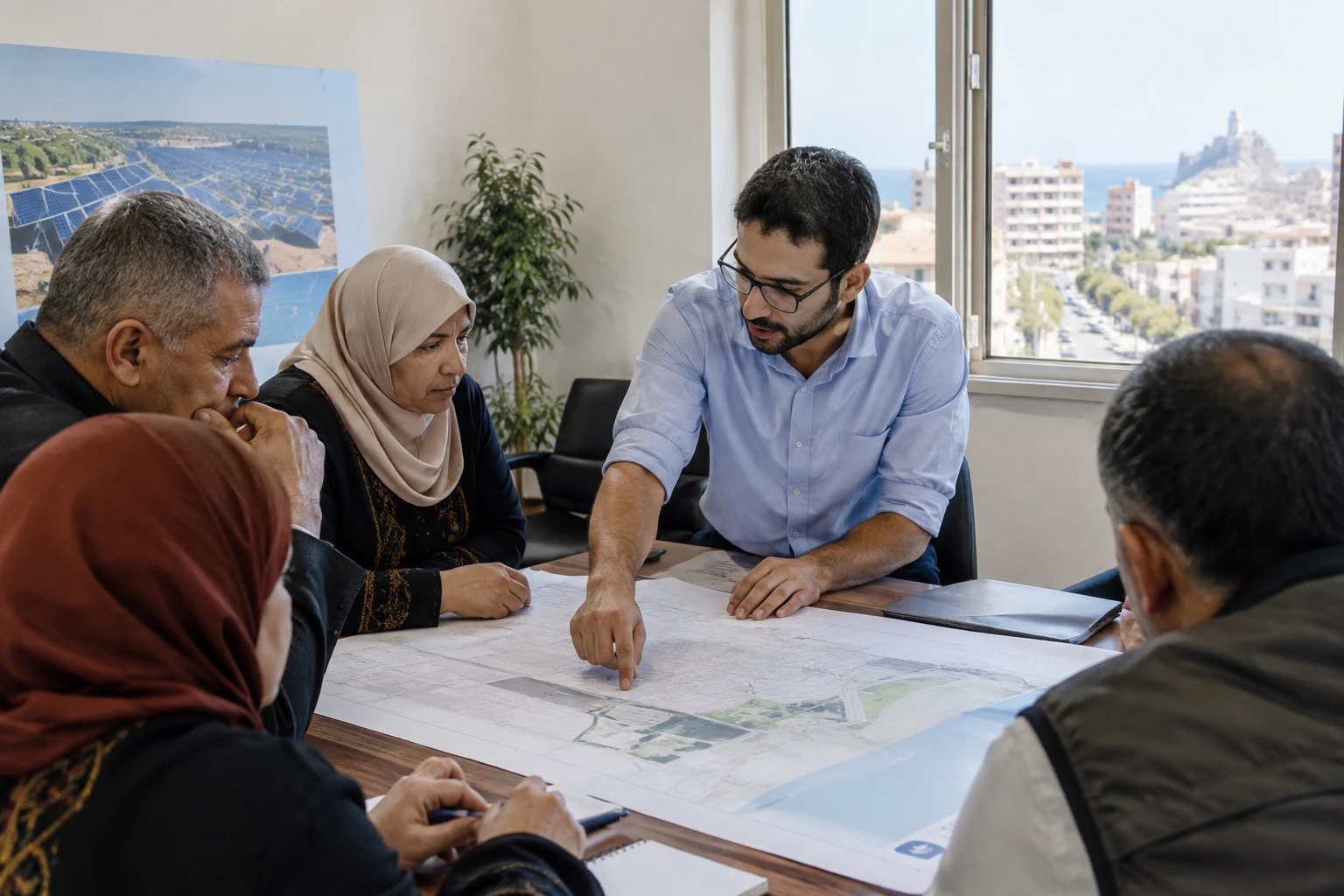
Public consultation in Italy opened on 16 October 2026 with an online meeting. Six in-person meetings are scheduled from 19 to 23 October in municipalities in Liguria, including La Spezia. Residents and local authorities can examine initial route and connection options, then submit comments.
This participation forms part of the authorisation procedure under Italy’s Ministry of the Environment and Energy Security. It is neither final authorisation nor a decision to build. The comments gathered may inform the assessment of the proposed onshore facilities in Italy.
According to specifications presented by Zhero and reported by Italian media outlet Telenord, AI-Link envisages at least 5 gigawatts of renewable generation in the Algerian desert. An undersea direct-current cable, about 900 kilometres long, could carry up to 2 gigawatts to the Italian grid. The developer estimates that electricity flows could exceed 10 terawatt-hours a year, equivalent, according to its calculation, to the consumption of around four million households.
These figures are the developer’s estimates. They describe planned capacity and future output, not a guaranteed volume. The reference to private financing does not, in itself, establish that all the necessary funds have already been secured.
A project built on cooperation already under way
The prospect of an electricity cable between Algeria and Italy is not new. In May 2022, President Abdelmadjid Tebboune raised the idea in Rome. That same year, discussions between Sonelgaz and the Italian authorities covered an undersea link estimated at between 1,000 and 2,000 megawatts, with the possibility of involving the European Commission in its financing.
The project has since taken on a regional dimension. Medlink refers not only to the Algerian-Italian cable: the broader initiative brings together Algeria and Tunisia in renewable generation and transmission projects to Europe. The European Commission sets out a target of around 10 gigawatts of solar and wind capacity, supported by batteries, to generate 30 terawatt-hours a year for local markets and export.
The Commission also cites 4 gigawatts of additional transfer capacity between North Africa and Europe. These figures cover the regional programme as a whole. They should not be confused with the 2 gigawatts announced for the AI-Link cable alone.
In 2025, Medlink Renewable Generation was included on the European list of cross-border renewable energy projects. This status makes the project eligible to apply for European support for studies or works through the Connecting Europe Facility. It does not guarantee that a grant will be awarded.
Benefits will also depend on choices in Algeria
For Algeria, the stakes go beyond selling electricity abroad. The country will need to develop solar and wind facilities, connect them to the grid and organise storage. These investments could support local skills and industrial activity. Their scale, however, will depend on financing decisions, contracts and the implementation timetable.
A central question is the balance between exports and domestic demand. The announced capacity figures alone do not indicate what share of the electricity generated would supply Algerian households and businesses. Benefits for local communities will also depend on the sites’ locations, associated infrastructure and the economic returns actually negotiated.
The Tunisian dimension also matters. The regional project envisages facilities and storage in Algeria and Tunisia, while the proposed links would strengthen exchanges with Italy. Coordination between the three countries, particularly on grids and market rules, will therefore be crucial.
The project forms part of an Algerian-Italian energy relationship already shaped by gas flows. An electricity interconnector would add another form of cooperation, but it requires new infrastructure and lasting agreements. For Algiers and Rome alike, local consultation and authorisations are distinct steps from political commitments.
From administrative timetable to delivery
The next stage to watch is regulatory: the comments gathered in Italy, along with environmental and technical studies, will need to inform the project’s assessment. Decisions on financing, grid connections, electricity contracts and cost-sharing will follow. Without these steps, production and export targets will remain projections.
Across North Africa, Medlink illustrates the possibility of linking renewable generation, local needs and cross-border trade. It also shows that energy integration cannot be brought about simply by announcing a line: it depends on national grids, cooperation between states and the place given to the populations concerned.
The stages of public consultation on AI-Link in Italy, the European Commission’s presentation of Medlink, Algerian-Italian discussions on the cable in 2022 and Medlink’s European status and regional targets.



