Algeria
 Egypt
 Libya
 Morocco
 Sudan
 Tunisia
 Benin
 Burkina Faso
 Cabo Verde
 Côte d'Ivoire
 Ghana
 Guinea
 Guinea-Bissau
 Liberia
 Mali
 Mauritania
 Niger
 Nigeria
 Senegal
 Sierra Leone
 The Gambia
 Togo
 Cameroon
 Central African Republic
 Chad
 Equatorial Guinea
 Gabon
 Republic of the Congo
 São Tomé and Príncipe
 Burundi
 Comoros
 Djibouti
 Eritrea
 Ethiopia
 Kenya
 Madagascar
 Malawi
 Mauritius
 Mozambique
 Rwanda
 Seychelles
 Somalia
 South Sudan
 Tanzania
 Uganda
 Angola
 Botswana
 Eswatini
 Lesotho
 Namibia
 South Africa
 Zambia
 Zimbabwe
A health response is not measured only by the sums pledged. It is also judged by the ability to track money through to teams, health centres and the populations concerned. In the Democratic Republic of the Congo (DRC), the gap between reported funding and documented spending is now raising an urgent question of transparency, as the Ebola outbreak continues to spread.
An outbreak putting systems to the test
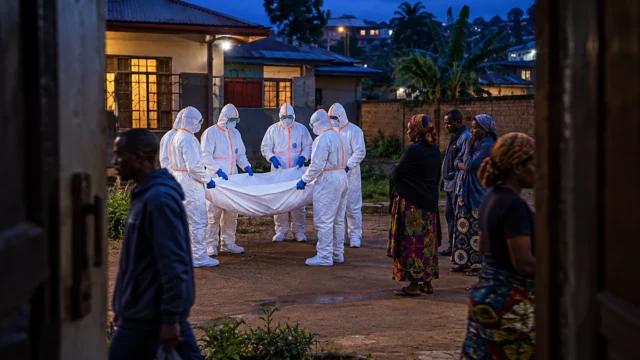
Declared on 15 May 2026, the DRC’s 17th Ebola outbreak is caused by the Bundibugyo virus. The World Health Organization (WHO) has classified it as a public health emergency of international concern, requiring coordination between countries. The disease has spread beyond Ituri, its initial epicentre, and reached eight Congolese provinces. On 18 October, authorities confirmed two cases, including one death, in Nord-Ubangi. The patients lived in the Wapinda health zone, near Bas-Uélé.
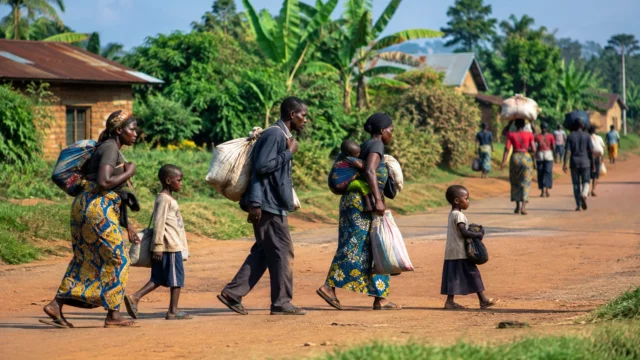
The response is taking place in an environment where cross-border travel, insecurity and difficult access to some localities complicate health surveillance. WHO also notes that, to date, there is no licensed vaccine or specific treatment for this strain. Rapid detection, contact tracing and the quality of care therefore depend largely on teams working in communities.
As of 18 October, the Associated Press reported at least 9,400 cases and more than 4,500 deaths since the outbreak began. These figures differ from the toll given in some earlier reports: they change as health updates are issued and should not be confused with confirmed cases alone. The Congolese health ministry publishes regular situation reports, including one dated 14 October.
Funding reported, but tracking incomplete
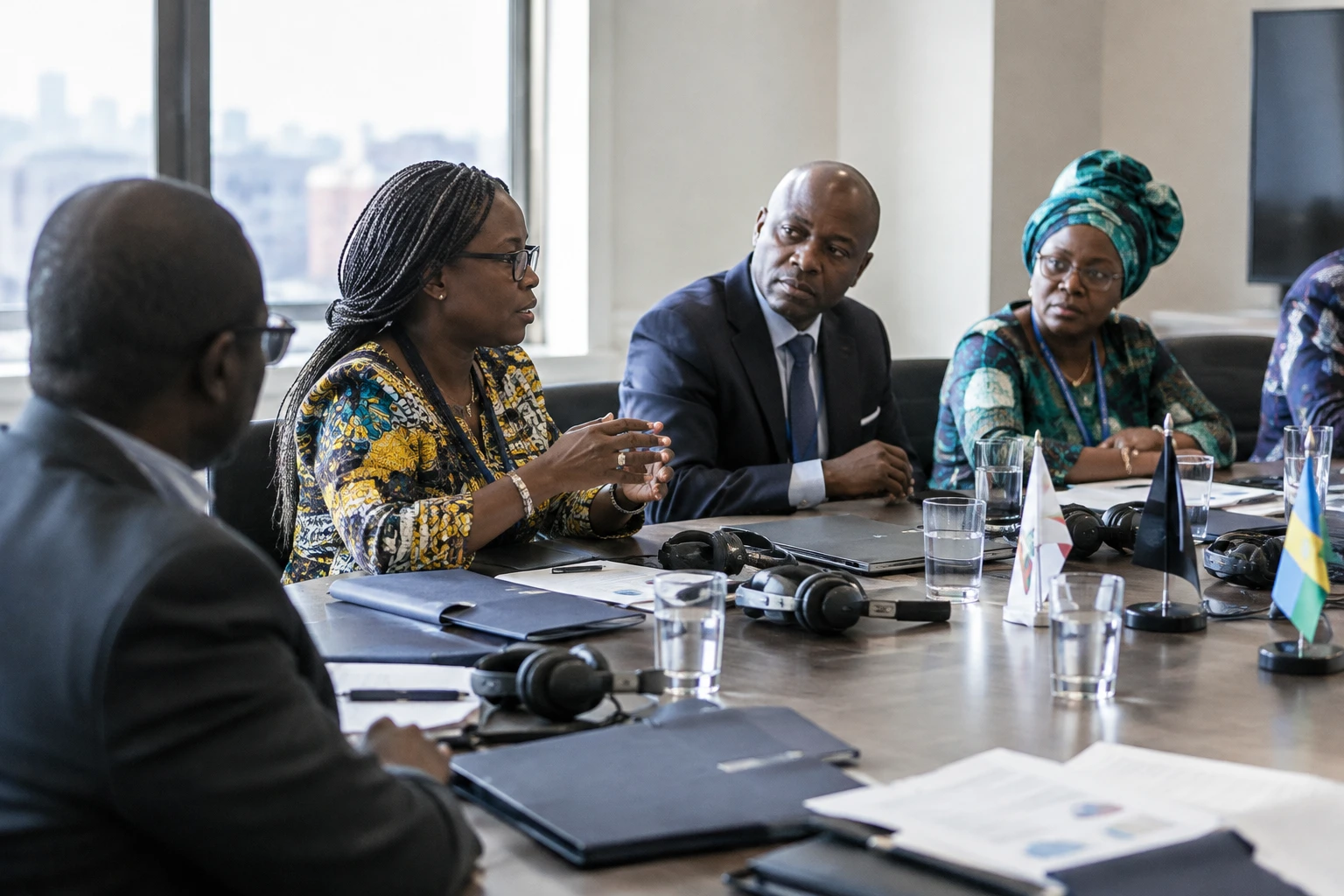
On 14 October in Kinshasa, Jean Kaseya, director-general of Africa CDC — the African Union’s public health agency — called on implementing partners to account for their funds. He said donors had indicated that they had disbursed nearly $962 million for the response, while only just over $200 million could be traced at a verification meeting. He described more than $700 million as funds “to be tracked down”, without presenting the gap as proof of embezzlement.
The published figures are not entirely consistent. In its account of the conference, Congolese media outlet Actualite.cd reported disbursements of $926.66 million, not $962 million. The National Institute of Public Health (INSP), for its part, reported that partners which had submitted information had received about $226.3 million, of which $127.4 million was declared spent. These discrepancies may reflect differences in scope or accounting methods. They make the publication of a common database, broken down by donor and partner, all the more necessary.
The problem also concerns the number of organisations reporting on their funds. On 15 October, Health Minister Roger Kamba told the Congolese Press Agency that 25 of 97 organisations had met accreditation requirements. The others cannot, he said, continue their field activities without this authorisation. Africa CDC and the Congolese authorities are therefore asking partners to document the sums they received and how they used them.
Traceability is not enough: what matters is what reaches the field
A sum not documented to the authorities is not automatically a sum that has been embezzled. Funding pledged by a donor may pass through several intermediaries, cover purchases or not yet have been spent. But until amounts received, committed and paid out are reconciled, public officials and communities cannot clearly assess what the resources have achieved.
This distinction is essential to avoid accusations without evidence. It does not lessen the obligation to account for funds. Jimmy Kande, president of the Pan-African Network for the Fight Against Corruption, called for independent clarification and a transparent monitoring mechanism. He also warned that a lack of traceability does not, on its own, prove embezzlement. His argument concerns governance: how can a response be assessed if those involved do not have a shared picture of resources and results?
The potential consequences go beyond accounting tables. If surveillance teams, healthcare workers or local facilities do not know what resources are available, they risk running short just as needs grow. In remote localities, access and communication difficulties can delay the delivery of supplies or patient follow-up. In Kinshasa, where national decisions and partnerships are coordinated, the challenge is also to ensure common rules are followed without interrupting essential services.
A Congolese and regional issue
Response funding does not necessarily pass through the public treasury: some is paid directly to the organisations carrying out operations. This form of funding can speed up the response, but it creates more management channels. The Congolese state must therefore coordinate the actors, verify supporting documents and publish comparable information. Donors and partner organisations must also explain the sums received, spent or still available.
The issue also concerns neighbouring countries. The outbreak has already crossed borders, and WHO is calling for stronger information-sharing and cross-border preparedness. Africa CDC can help harmonise monitoring rules between countries and partners, without replacing Congolese institutions. For affected communities, the priority remains an accessible and sustained response; for the authorities, the immediate task is to clarify the financial discrepancies while ensuring accreditation measures do not disrupt operations.
The next steps must answer two specific questions: how much did each organisation actually receive, and which services did the funds pay for? A public reconciliation of the figures, an independent audit and regular reporting would help distinguish accounting delays, unused funds and possible irregularities. At this stage, the available data warrant clarification and oversight, not a conclusion of embezzlement.