Algeria
 Egypt
 Libya
 Morocco
 Sudan
 Tunisia
 Benin
 Burkina Faso
 Cabo Verde
 Côte d'Ivoire
 Ghana
 Guinea
 Guinea-Bissau
 Liberia
 Mali
 Mauritania
 Niger
 Nigeria
 Senegal
 Sierra Leone
 The Gambia
 Togo
 Cameroon
 Central African Republic
 Chad
 Equatorial Guinea
 Gabon
 Republic of the Congo
 São Tomé and Príncipe
 Burundi
 Comoros
 Djibouti
 Eritrea
 Ethiopia
 Kenya
 Madagascar
 Malawi
 Mauritius
 Mozambique
 Rwanda
 Seychelles
 Somalia
 South Sudan
 Tanzania
 Uganda
 Angola
 Botswana
 Eswatini
 Lesotho
 Namibia
 South Africa
 Zambia
 Zimbabwe
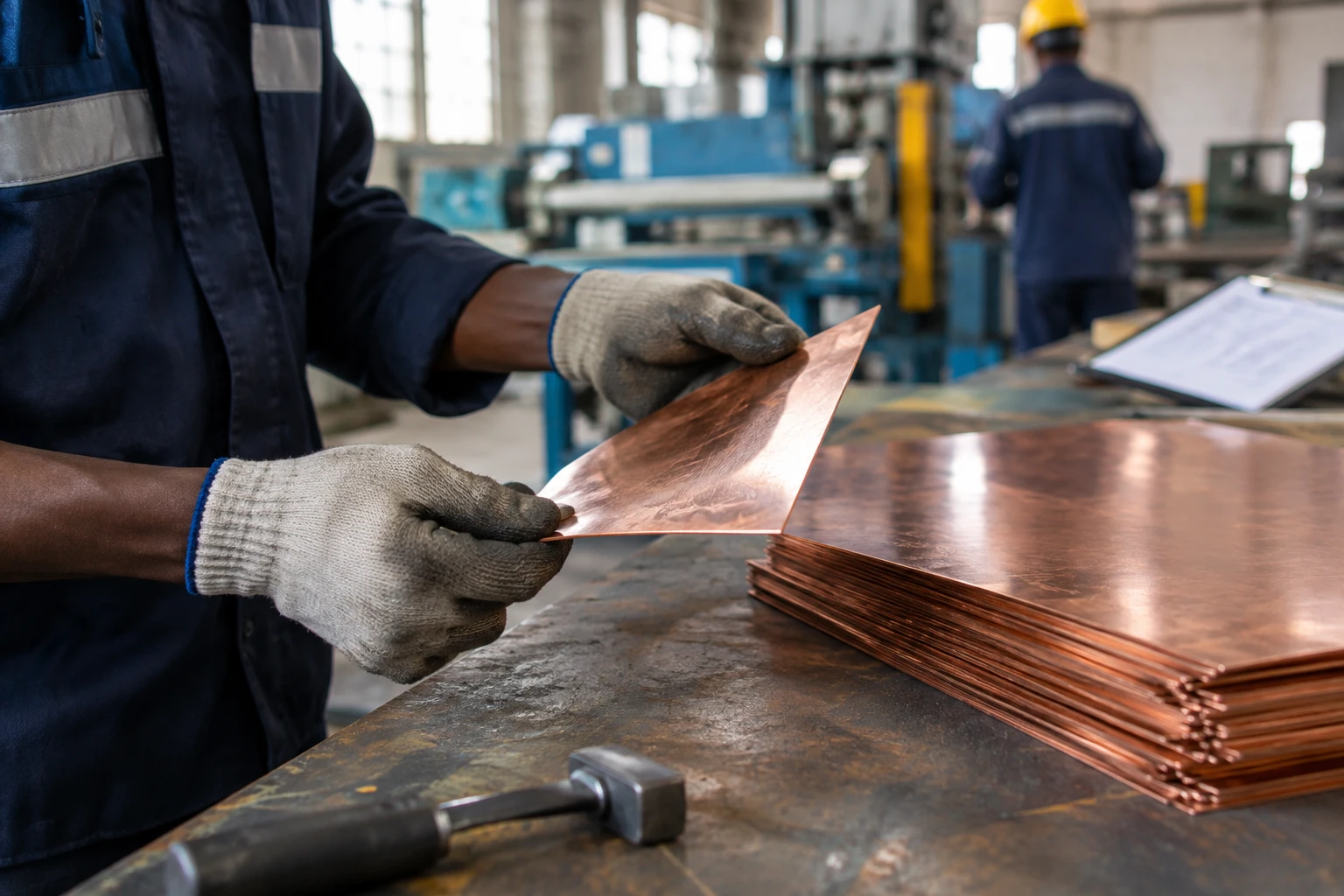
In Kinshasa, rising copper and cobalt exports are fuelling national growth. But they do not, in themselves, guarantee more factories, industrial jobs or products processed locally. This is the gap highlighted by recent changes in manufacturing in the Democratic Republic of the Congo (DR Congo).
Sustained growth, but little diversification
Between 2021 and 2025, the Congolese economy grew by an average of 7.2%, according to figures from the United Nations Economic Commission for Africa (ECA) cited in documents prepared for its October 2026 regional session. Yet manufacturing’s share of gross domestic product (GDP) fell from 13.9% in 2017 to 9.8% in 2025.
This 4.1 percentage-point decline does not prove that factories are producing less in absolute terms. It indicates that manufacturing accounts for a smaller share of the economy, particularly when mining activities grow more quickly. Manufacturing value added per capita also fell, from 66 to 57 constant 2020 dollars between 2017 and 2025, a decline of about 14%, according to United Nations Industrial Development Organization (UNIDO) data cited by the ECA.
The contrast is clear in the growth figures: the World Bank estimates that DR Congo’s GDP grew by 6.5% in 2024, mainly thanks to mining, particularly copper and cobalt. This annual rate is not directly comparable with the ECA’s 7.2% average for 2021-2025. It nevertheless confirms the weight of extractive industries in recent economic growth.
The challenge of processing minerals
The ECA links this trend to the structure of exports. When mining sales and their value rise faster than manufacturing output, factories’ relative share declines. Jean-Luc Mastaki, director of the ECA’s Subregional Office for Central Africa, described this pattern as an “extractive logic”, according to remarks reported at a press conference ahead of the session of the Intergovernmental Committee of Senior Officials and Experts.
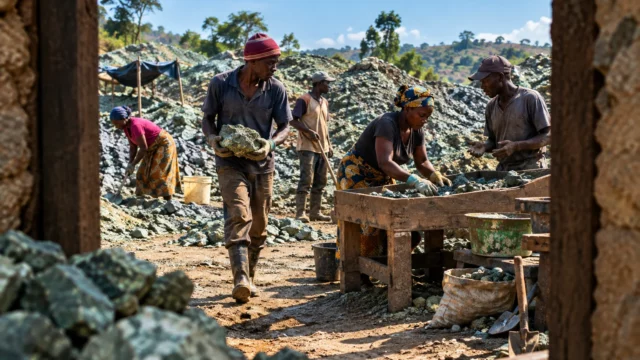
For businesses and workers, the issue goes beyond GDP statistics. Exporting minerals with little processing limits the stages of production carried out in the country: refining, component manufacturing, assembly and related industrial services. These activities can create value and jobs, provided infrastructure, skills and investment keep pace. The expected benefits are therefore neither automatic nor immediate.
DR Congo already has metallurgical capacity in copper and cobalt. The question is how to consolidate it and expand into more highly processed products. Such a path also depends on reliable access to electricity, freight transport, business financing and vocational training. These constraints do not affect all players in the same way: large mining groups can mobilise substantial capital, while small local businesses often have fewer resources to invest and access supply chains.
A shared challenge in Central Africa
The Congolese trend is part of a regional debate on economic diversification. The ECA reports that, from 2017 to 2025, manufacturing’s share of GDP rose from 5.9% to 7% in Angola and from 7.6% to 9.2% in Gabon. In Cameroon, it remained almost unchanged, edging up from 13.5% to 13.6%. These comparisons describe different national trajectories; on their own, they are not enough to measure the quality of jobs or the industrial production capacity of each country.
The issue was central to the 42nd session of the ECA’s Intergovernmental Committee of Senior Officials and Experts, held from 13 to 15 October 2026 in Yaoundé. The meeting is part of the 2021-2030 Decade of Economic Diversification, an extension of the Douala Consensus adopted in 2017. The ECA also links this agenda to the Central Africa Industrialisation and Economic Diversification Master Plan and the African Continental Free Trade Area, which aims to facilitate trade between African countries.
For DR Congo, regional integration is taking concrete form in the battery value chain project with Zambia. The two countries launched their cooperation in 2022 and designated special economic zones in Musompo, in Lualaba, and Ndola. A special economic zone is an area where specific rules and facilities are intended to attract productive activities. The project aims to link copper and cobalt resources to the processing stages required for battery manufacturing.
Industrial zones, but conditions must be met
Creating these zones does not guarantee their success. In a study published in October 2026, the International Institute for Sustainable Development and the Intergovernmental Forum on Mining, Minerals, Metals and Sustainable Development assess their ability to attract investment. The report highlights in particular the importance of energy supply, access to finance, predictable rules and better coordination between national and local authorities.
The authors recommend a phased approach: first strengthen existing processing and refining capacity, then develop battery materials and more complex production. This approach is a reminder that mineral abundance does not amount to industrial competitiveness. Results will also depend on the role given to Congolese businesses, local skills and infrastructure serving production areas beyond industrial sites.
Halfway through the regional decade, the key concern is therefore less the pace of growth than its composition. For DR Congo’s authorities, the challenge will be to turn some mining revenues and investment into lasting productive capacity. For the population, particularly outside major economic centres, the question will be whether this transformation leads to accessible jobs and opportunities for local businesses. DR Congo-Zambia cooperation and the reforms discussed in Yaoundé will provide indicators to watch in the coming years.
Background sources: United Nations Economic Commission for Africa, Central Africa session ; World Bank, data and analysis on DR Congo ; study on battery value chains in DR Congo and Zambia ; Intergovernmental Forum on Mining, report on the DR Congo-Zambia initiative.