Algeria
 Egypt
 Libya
 Morocco
 Sudan
 Tunisia
 Benin
 Burkina Faso
 Cabo Verde
 Côte d'Ivoire
 Ghana
 Guinea
 Guinea-Bissau
 Liberia
 Mali
 Niger
 Nigeria
 Senegal
 Sierra Leone
 The Gambia
 Togo
 Cameroon
 Central African Republic
 Chad
 DR Congo
 Equatorial Guinea
 Gabon
 Republic of the Congo
 São Tomé and Príncipe
 Burundi
 Comoros
 Djibouti
 Eritrea
 Ethiopia
 Kenya
 Madagascar
 Malawi
 Mauritius
 Mozambique
 Rwanda
 Seychelles
 Somalia
 South Sudan
 Tanzania
 Uganda
 Angola
 Botswana
 Eswatini
 Lesotho
 Namibia
 South Africa
 Zambia
 Zimbabwe
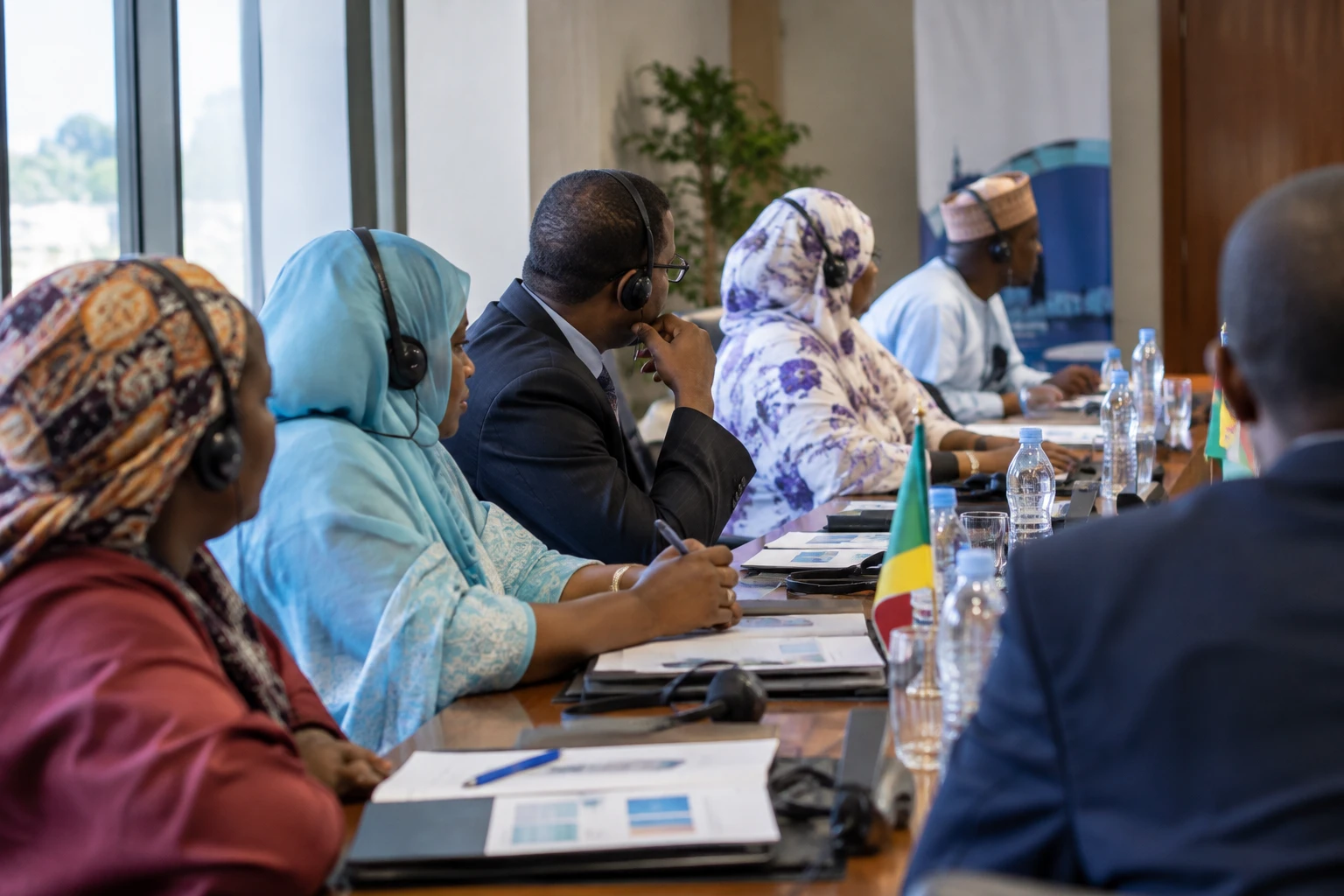
In Nouakchott and across the regions, the protection of women and girls also depends on rules that the justice system can apply clearly. In Mauritania, the Karama bill is back at the centre of debate following renewed mobilisation by organisations, while it still awaits a parliamentary outcome.
A bill debated for several years
The Karama bill — “dignity” in Arabic — aims to establish a specific framework to address several forms of violence against women and girls. It notably provides for the treatment of physical, sexual, psychological and economic violence, as well as rape, incest and sexual harassment.
The bill was approved by the Council of Ministers, but has not become law. A summary presented as part of the United Nations Universal Periodic Review states that Parliament rejected it twice and that the government subsequently withdrew the bill. Mauritanian organisations are now calling for it to be revived and adopted.
The debate did not begin this autumn. In December 2023, civil society organisations had already held a mobilisation in Nouakchott. In January 2024, the prime minister at the time, Mohamed Ould Bilal Massoud, was still presenting Karama as an additional legal tool. This sequence illustrates the gap between announcements, consultations and the effective adoption of a bill.
Organisations’ demands and the obstacles
At the end of September 2026, organisations and human rights advocates again called for the bill to be advanced, amid several reported sexual assault cases in recent weeks. These cases have fuelled concern, but the available information does not make it possible to establish a verified national picture. Reported cases should therefore not be turned into a quantified trend.
Organisation spokespeople highlight two issues: more precise rules for defining violence and better protection for victims during legal proceedings. In an interview published in September by the Mauritanian newspaper Le Calame, the president of the NGO AMANE explains that a clearer framework would also help organisations refer victims to services, train professionals and structure prevention efforts.
Criticism of the bill is rooted in particular in debate over whether some provisions are compatible with sharia, the country’s main legal reference. Supporters of Karama respond that protection from violence can be defended within a religious and national framework. In 2023, a legal expert at the Ministry of Social Action said the text had been revised and presented as consistent with the principles of Islam. The controversy is therefore also about the content and interpretation of the provisions, not just the principle of protection.
Between existing law and gaps in protection
It would nevertheless be inaccurate to speak of an absolute legal vacuum. The rape of women is already an offence under Mauritanian law. But several forms of domestic and sexual violence do not receive sufficiently comprehensive, specific treatment, and the application of existing rules remains an issue. The US human rights report for 2023 noted, for example, that marital rape was not criminalised and that prosecutions and convictions were applied unevenly.
Another difficulty lies in how sexual assault allegations may be handled in a context where relations outside marriage, known as “zina”, also fall under criminal law. Women’s rights activists warn of the risk that survivors may be accused rather than protected. This risk should be reported precisely: it is a concern expressed by human rights advocates, not an automatic consequence of every complaint.
In practice, access to justice depends on more than a law. Victims must be able to file complaints without fear, obtain care and support, and have access to an impartial investigation. These conditions can vary between Nouakchott and remote localities, depending on the availability of services, trained professionals and support facilities. Adopting a law would therefore not be enough without resources, accessible procedures and monitoring of its implementation.
A national and regional issue
Karama’s progress is also being followed internationally. The Universal Periodic Review document prepared for the United Nations reports recommendations from organisations calling for the bill’s adoption, the inclusion of online violence, and guarantees of protection, support and redress. These are recommendations, not a law already adopted or a judicial decision.
Regionally, Mauritania is a member of the African Union and the Arab Maghreb Union. It is not a member of ECOWAS, which it left in 2000. The debate thus extends beyond national borders without being conflated with West African institutions or timetables. It is part of African discussions about the effectiveness of laws protecting women, regional commitments and practical access to justice.
The next step to watch is institutional: will the government revise the bill, submit it to Parliament again or propose a different text? For Mauritanian women and men, progress will be measured less by announcements than by the guarantees ultimately enshrined in law, the services available in cities and regions, and the way complaints are received and investigated.