
 Egypt
 Libya
 Morocco
 Sudan
 Tunisia
 Benin
 Burkina Faso
 Cabo Verde
 Côte d'Ivoire
 Ghana
 Guinea
 Guinea-Bissau
 Liberia
 Mali
 Mauritania
 Niger
 Nigeria
 Senegal
 Sierra Leone
 The Gambia
 Togo
 Cameroon
 Central African Republic
 Chad
 DR Congo
 Equatorial Guinea
 Gabon
 Republic of the Congo
 São Tomé and Príncipe
 Burundi
 Comoros
 Djibouti
 Eritrea
 Ethiopia
 Kenya
 Madagascar
 Malawi
 Mauritius
 Mozambique
 Rwanda
 Seychelles
 Somalia
 South Sudan
 Tanzania
 Uganda
 Angola
 Botswana
 Eswatini
 Lesotho
 Namibia
 South Africa
 Zambia
 Zimbabwe
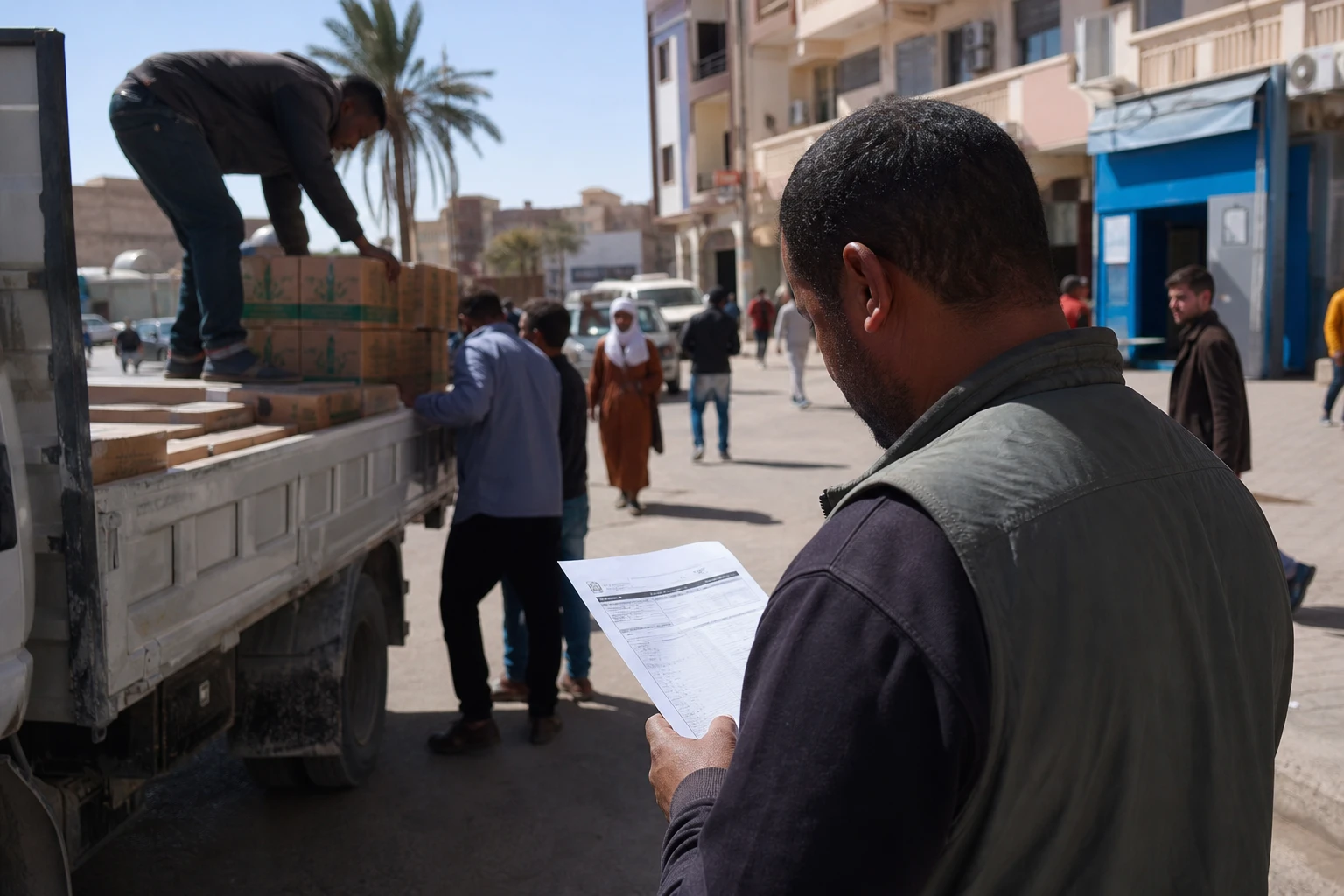
In Tamanrasset, the future will not be decided on the rails alone. It will also depend on the warehouses, customs posts, banking services and security that will enable goods to continue on their way to the Sahel. For Algeria, the rail link to the deep south is therefore as much a national development project as a bet on African trade.
A corridor starting in northern Algeria
The project is intended to link Algiers to Tamanrasset along a route of more than 2,000 kilometres. It forms part of a strategy to expand Algeria’s rail network, with connections planned to agricultural, industrial, mining and port areas.
The first operational phase covers the Laghouat–Ghardaïa–El Menia axis. The African Development Bank has identified two sections totalling about 495 kilometres: 265 kilometres between Laghouat and Ghardaïa, followed by 230 kilometres between Ghardaïa and El Menia. This infrastructure is intended to extend southwards the lines already developed in the north and the High Plateaux.
Algeria’s Ministry of Public Works and Basic Infrastructure is also monitoring preparatory stages for sections farther south, towards In Salah and Tamanrasset. In June 2026, Algeria announced that work on the Laghouat–Ghardaïa–El Menia section would begin in September of the same year. That timetable will need to be confirmed by the actual opening of construction sites.
The exact length of the corridor varies according to the scope used. Planning documents refer to more than 2,000 kilometres to Tamanrasset. Other plans include the prospect of a link to the Nigerien border, bringing the Algerian section of the trans-Saharan corridor to about 2,400 kilometres. The two figures do not necessarily refer to the same route.
Freight will be the real test
For businesses based in northern Algeria, the train’s appeal is primarily economic. Construction materials, packaged food products, industrial equipment and some heavy goods could be transported over long distances at a more predictable cost than by road.
However, rail will not automatically replace lorries. Operators will compare prices, journey times, the frequency of services and the quality of loading terminals. A fast line that is poorly suited to freight would offer exporters only limited advantages.
The choice of stations will also be crucial. They will need suitable platforms, storage areas, weighing systems and handling equipment. Without these facilities, goods will have to be transferred several times between rail and road. Each transfer then adds to costs and the risk of delays.
The project could also transform Tamanrasset’s economy. The city could host warehouses, maintenance workshops, transport services and packaging facilities. These activities would create more local value than a simple technical stop for trains.
The benefits will nonetheless depend on available land, vocational training and the ability of Algerian businesses to establish themselves in the deep south. Rail can bring Tamanrasset closer to northern markets. On its own, it cannot guarantee the region’s sustainable industrialisation.
Beyond Tamanrasset, a border still to be organised
The city is already a transit point on the Trans-Saharan Highway, a road linking Algeria with Niger, Nigeria, Mali, Chad and Tunisia. This infrastructure is the clearest overland extension of the future rail corridor.
For now, Algerian announcements concern sections within the country. No operational rail link to Niger is planned in the short term. Access to Sahelian markets would therefore be mainly by road from Tamanrasset or from logistics areas in the south.
This change in transport mode requires coordination between administrations. Customs procedures, border-post opening hours, health regulations and payment methods can have a greater impact on the final cost than the speed of the train.
A freight train that saves time between Algiers and Tamanrasset could lose that advantage if lorries wait several days at the border. The corridor’s smooth operation will therefore depend on practical agreements with neighbouring countries, not just on building railway lines.
Security is just as important. Operators will need to assess risks along Sahelian routes, insurance arrangements and the ability of states to protect commercial flows. The development of regional trade requires logistical continuity, but also sufficient certainty for businesses.
A project rooted in Algeria’s African reach
Algiers has for several years sought to strengthen its links with the Sahel. Discussions with Niger on the trans-Saharan gas pipeline concern energy. The railway is part of a different public policy, but both projects address the same question: how can geographical proximity be turned into regular, profitable trade?
The answer lies in integrated corridors. The African Development Bank sees the Trans-Saharan Highway as a means of connecting the Maghreb and West Africa. The challenge is no longer simply to build a road or a railway. It is to link infrastructure with ports, production areas and markets.
This approach aligns with the aims of the African Continental Free Trade Area, which seeks to facilitate trade between African economies. In practice, the benefits will depend on countries’ ability to cut border delays, harmonise documents and secure payments.
For southern Algerian regions, the project could improve access to services and domestic markets. For businesses in the north, it could open up new trade routes. For Sahelian partners, it offers the prospect of more direct access to ports and Algerian suppliers.
The next stage will therefore be twofold. Algeria will first have to show that work is progressing on the announced sections. It will then need to set out the role of freight, the logistics platforms and arrangements for co-operation with neighbouring countries. Only under these conditions can the line to Tamanrasset become an African corridor rather than isolated infrastructure in the desert.



