
 Algeria
 Egypt
 Libya
 Morocco
 Sudan
 Tunisia
 Benin
 Burkina Faso
 Cabo Verde
 Côte d'Ivoire
 Ghana
 Guinea
 Guinea-Bissau
 Liberia
 Mali
 Mauritania
 Niger
 Nigeria
 Senegal
 Sierra Leone
 The Gambia
 Togo
 Cameroon
 Central African Republic
 Chad
 Equatorial Guinea
 Gabon
 Republic of the Congo
 São Tomé and Príncipe
 Burundi
 Comoros
 Djibouti
 Eritrea
 Ethiopia
 Kenya
 Madagascar
 Malawi
 Mauritius
 Mozambique
 Rwanda
 Seychelles
 Somalia
 South Sudan
 Tanzania
 Uganda
 Angola
 Botswana
 Eswatini
 Lesotho
 Namibia
 South Africa
 Zambia
 Zimbabwe
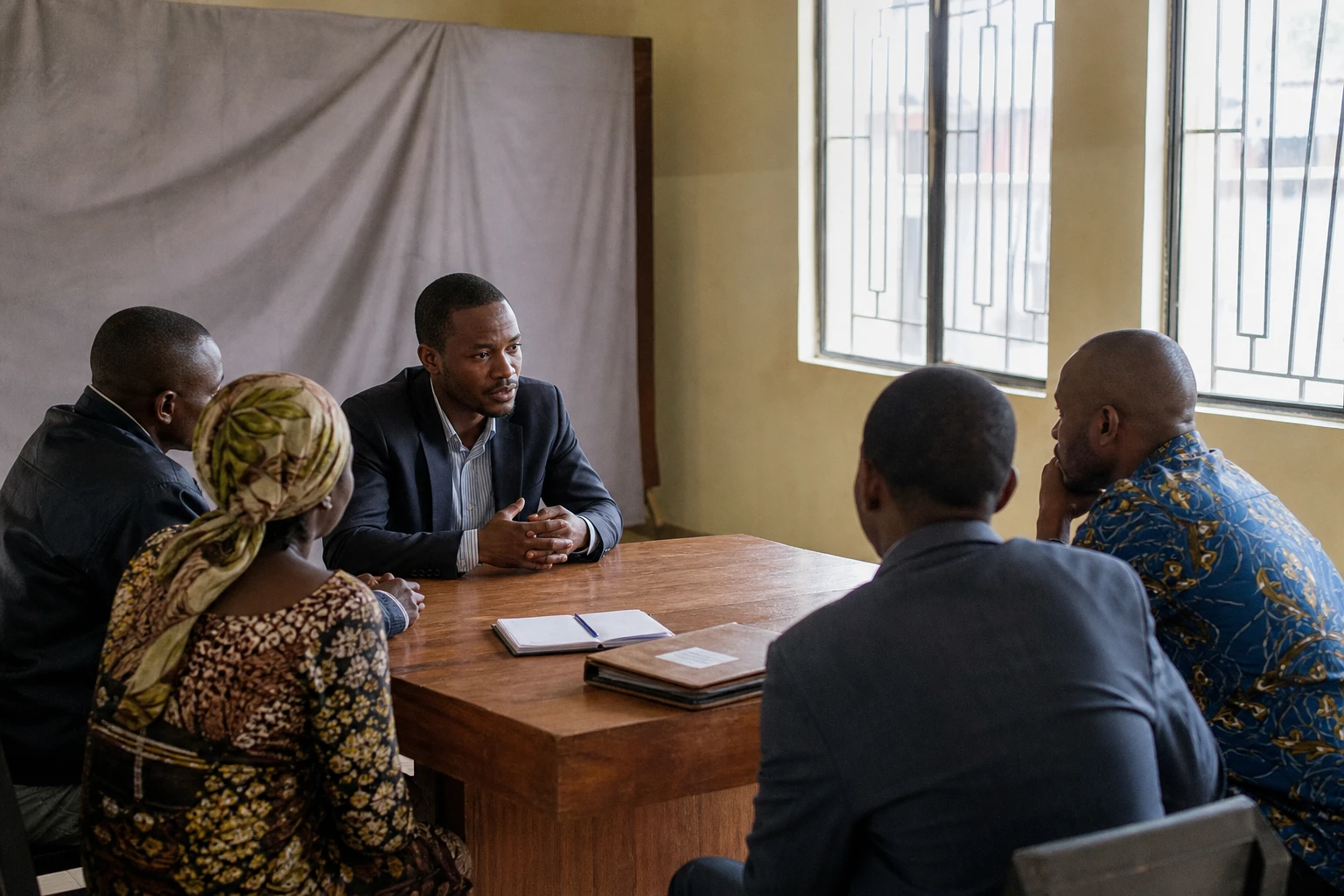
In the territories of Masisi and Rutshuru, civilians find themselves caught between competing military agendas. Operations carried out in the name of fighting the Democratic Forces for the Liberation of Rwanda (FDLR), a Rwandan armed group active in eastern Democratic Republic of the Congo, are not confined to combatants. They also affect villages, movement and relations between communities.
Operations extending far beyond the battlefield
The United Nations secretary-general’s report describes operations by the AFC/M23 against positions attributed to the FDLR and the Nyatura group in Masisi territory, North Kivu. The document mentions the discovery of at least 60 bodies on 17 June, following a military operation. It does not establish how many of the victims were combatants.
The UN nevertheless considers that the campaign against the FDLR continues to affect civilians systematically. These operations are said to have caused deaths and displacement, and further disrupted access to farmland. In a region where many families still rely on smallholdings, each offensive can therefore trigger a local economic crisis.
This caution is essential. Casualty figures in conflict zones remain difficult to verify. Roads are dangerous, witnesses move away and armed groups sometimes control access to communities. The figure of 60 bodies should therefore be understood as information reported by the United Nations, not as a definitive toll established by an independent judicial investigation.
Previous UN reports have already documented summary executions, arbitrary arrests, abductions and the destruction of homes in areas controlled or contested by the AFC/M23. The UN Group of Experts has also described the establishment of parallel administrations in several territories in North Kivu, including Masisi and Rutshuru.
FDLR also accused of abuses in Rutshuru
The report does not present the FDLR as a force protecting the population. It attributes several human rights abuses to the group in Rutshuru territory, as well as in Masisi, Nyiragongo and Walikale.
The victims are said to include community leaders and people suspected of co-operating with the AFC/M23. Reported incidents include targeted killings, enforced disappearances, extortion and abductions. Since 20 June, the FDLR are said to have been involved in at least 44 human rights and civilian protection incidents. These acts are reported to have affected 89 people, including 15 victims of summary executions.
These figures, too, are attributed to the UN report. They should not be read as an exhaustive measure of all violence committed in North Kivu. In rural areas, incidents are often reported late. Some families also refrain from filing complaints for fear of reprisals or because no judicial authority is accessible.
A regional conflict trapping the population
The rivalry between the AFC/M23 and the FDLR is rooted in a broader regional history. Kinshasa accuses Kigali of supporting the AFC/M23. Rwanda, in turn, says the FDLR’s presence in the Democratic Republic of the Congo poses a threat to its national security. The two governments therefore accuse each other of using armed groups as instruments of pressure.
The United Nations has established that the conflict involves several forces. The AFC/M23 has been accused of executions, arbitrary arrests, forced recruitment and displacement. The FDLR are also accused of violence against civilians. The Armed Forces of the Democratic Republic of the Congo and their local allies, including groups known as “ Wazalendo ”, have also faced allegations in various reports.
The multiplicity of actors makes protecting residents more difficult. In the same area, a family may be suspected of supporting one side, then face reprisals when control changes. Local officials, traditional leaders, traders and farmers can all become potential targets, even when they are not taking part in the fighting.
The consequences are not the same for everyone. Residents of villages near the front lines lose access to fields and markets. In Goma, the provincial capital of North Kivu, the arrival of displaced people is increasing pressure on housing, water, healthcare and incomes. In rural areas, the impact is felt more in abandoned crops, school closures and the collapse of trading networks.
Pressure on peace processes
The situation is testing diplomatic initiatives involving the Democratic Republic of the Congo and Rwanda. The East African Community, which includes several Great Lakes countries, and the Southern African Development Community (SADC) have both been involved in mediation or security efforts. These regional frameworks seek to prevent the conflict from spreading, but their effectiveness depends on military commitments being respected on the ground.
MONUSCO, the United Nations mission in the Democratic Republic of the Congo, continues to document human rights abuses and displacement. Its role remains limited, however, by access to areas controlled by armed groups and the rapid shifting of front lines.
The main challenge now is to draw a clear distinction between fighting armed groups and collectively punishing the population. Neutralising the FDLR cannot justify attacks on civilians suspected of supporting them. Likewise, the presence of the FDLR cannot serve as a blanket justification for abuses against residents or forced displacement.
Future reports will need to clarify the fate of those killed in Masisi on 17 June, the victims’ identities and individual responsibility. They will also need to monitor fighting reported in Masisi and Walikale, where the AFC/M23 is battling several armed groups. For Congolese living in these territories, the urgent needs remain tangible: to travel, farm, access healthcare and live without being associated with one side or the other.



