
 Egypt
 Libya
 Morocco
 Sudan
 Tunisia
 Benin
 Burkina Faso
 Cabo Verde
 Côte d'Ivoire
 Ghana
 Guinea
 Guinea-Bissau
 Liberia
 Mali
 Mauritania
 Niger
 Nigeria
 Senegal
 Sierra Leone
 The Gambia
 Togo
 Cameroon
 Central African Republic
 Chad
 DR Congo
 Equatorial Guinea
 Gabon
 Republic of the Congo
 São Tomé and Príncipe
 Burundi
 Comoros
 Djibouti
 Eritrea
 Ethiopia
 Kenya
 Madagascar
 Malawi
 Mauritius
 Mozambique
 Rwanda
 Seychelles
 Somalia
 South Sudan
 Tanzania
 Uganda
 Angola
 Botswana
 Eswatini
 Lesotho
 Namibia
 South Africa
 Zambia
 Zimbabwe
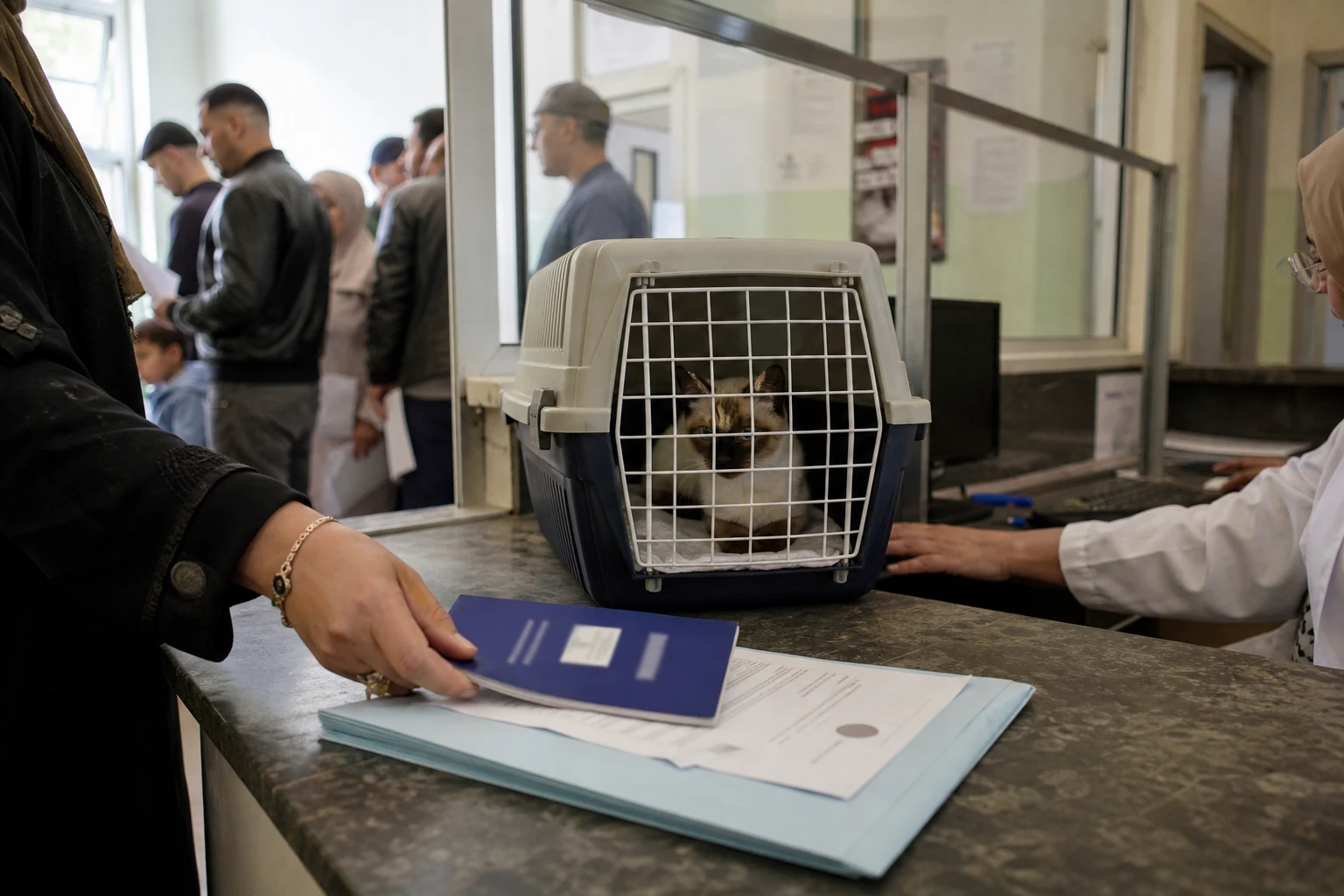
In Mons, an administrative matter has become a personal ordeal. Robert, a kitten born in Algeria and brought to Belgium in spring 2026, faces a lengthy quarantine, a return to his country of origin or euthanasia. The procedure concerns not his behaviour, but his health status on entering Belgian territory.
An animal arrived from Algeria without sufficient health guarantees
The owner, a resident of the Mons region, says she came across Robert on social media in May 2026. She is said to have paid 600 euros for the Siamese-type cat, now nine months old. The animal reportedly arrived in Belgium on 9 May, after travelling via Marseille.
The situation became more complicated during a veterinary consultation in July. The vet found that the cat had not received a valid rabies vaccination. The vet also noted irregularities in the passport presented for the animal.
The vet then alerted the Federal Agency for the Safety of the Food Chain, or AFSCA, the Belgian authority responsible in particular for the health inspection of animals and foodstuffs.
The owner says she believed she was acquiring an identified and properly vaccinated animal. She has since filed a complaint against the seller for fraud, according to reports in several Belgian and Algerian media outlets.
Why rabies triggers strict procedures
Belgium has been officially free of rabies since 2001. This status, however, depends on strict controls of animals arriving from countries outside the European Union, including Algeria.
To enter Belgium, a cat must be identified by a microchip and have received a valid rabies vaccination. The first injection can normally be given only from the age of 12 weeks. It becomes effective only after a waiting period of at least 21 days.
A kitten therefore generally cannot travel to Belgium before the age of 15 weeks. Depending on the country of origin, a rabies antibody titre test may also be required. This blood test checks whether the vaccination has produced a sufficient immune response.
The AFSCA says animals brought into the country without meeting these conditions may be isolated, quarantined, returned to their country of origin or, in certain situations, euthanised. These measures are intended to prevent the introduction of the rabies virus, a disease that is almost always fatal once symptoms appear.
Belgian official documents also state that an animal brought into the country illegally may be considered a potential risk, even when no clinical signs are observed. The absence of vaccination does not mean Robert is infected. It does, however, prevent the authorities from considering the risk sufficiently ruled out.
Three options proposed, at a cost that is hard to bear
According to the information available, the AFSCA has presented the owner with three options. The first is to place Robert in an approved quarantine centre for about four months. The stated cost would be 50 euros a day, or nearly 6,000 euros for the full period.
The second option would be to return the cat to Algeria. This possibility raises practical questions, however. The return itself would have to comply with the applicable health rules and ensure the animal was cared for in suitable conditions.
The third measure under consideration would be euthanasia if no compliant solution could be implemented. The owner rejects this prospect. She is asking for home quarantine to be allowed, but the AFSCA is said not to have accepted the proposal.
The difficulty is therefore not limited to veterinary law. It also concerns the affordability of health-protection measures. For a household on a modest income, a bill of several thousand euros can make the regulatory solution practically inaccessible.
Owner takes case to Council of State
The dispute has taken on a judicial dimension. The owner has applied to Belgium’s Council of State to seek suspension of the administrative decision. The court examines, among other things, the legality of acts taken by public authorities.
The information available does not yet establish the final outcome of the proceedings or the timetable for any decision. Nor does it confirm the practical arrangements for a possible return of Robert to Algeria.
An online petition has also gathered more than 3,000 signatures. Its organisers are calling for what they consider a more humane outcome, without questioning the need to prevent rabies.
The debate thus pits two imperatives against each other. On one side, the authorities must protect animal and public health. On the other, the administrative response must take account of the seller’s responsibility, the buyer’s possible good faith and the means actually available to her.
Case highlights risks of buying animals online
Robert’s case highlights the risks of buying animals on social media. A passport, a microchip or a seller’s assurance is not always enough to prove that an animal can legally enter the European Union.
Before any journey from Algeria, prospective owners should check European and Belgian requirements with a vet and the relevant authorities. The health timetable is crucial. A vaccination given too late, a missing test or an incomplete certificate can make the journey irregular.
Responsibility does not lie solely with the buyer. Sellers and intermediaries who present an animal as compliant can also expose buyers to financial losses and lengthy proceedings. In this type of cross-border transaction, a lack of prior checks can turn an adoption into a legal dispute.
For Robert, the next step will depend on the proceedings under way in Belgium. For the authorities, the challenge is to maintain strict health standards while determining whether a proportionate confinement solution can be put in place. Beyond this individual case, the affair highlights the need for clear information between Algeria, Belgium and pet owners crossing borders.



