Algeria
 Egypt
 Libya
 Morocco
 Sudan
 Tunisia
 Benin
 Burkina Faso
 Cabo Verde
 Côte d'Ivoire
 Ghana
 Guinea
 Guinea-Bissau
 Liberia
 Mali
 Mauritania
 Niger
 Nigeria
 Senegal
 Sierra Leone
 The Gambia
 Togo
 Cameroon
 Chad
 DR Congo
 Equatorial Guinea
 Gabon
 Republic of the Congo
 São Tomé and Príncipe
 Burundi
 Comoros
 Djibouti
 Eritrea
 Ethiopia
 Kenya
 Madagascar
 Malawi
 Mauritius
 Mozambique
 Rwanda
 Seychelles
 Somalia
 South Sudan
 Tanzania
 Uganda
 Angola
 Botswana
 Eswatini
 Lesotho
 Namibia
 South Africa
 Zambia
 Zimbabwe
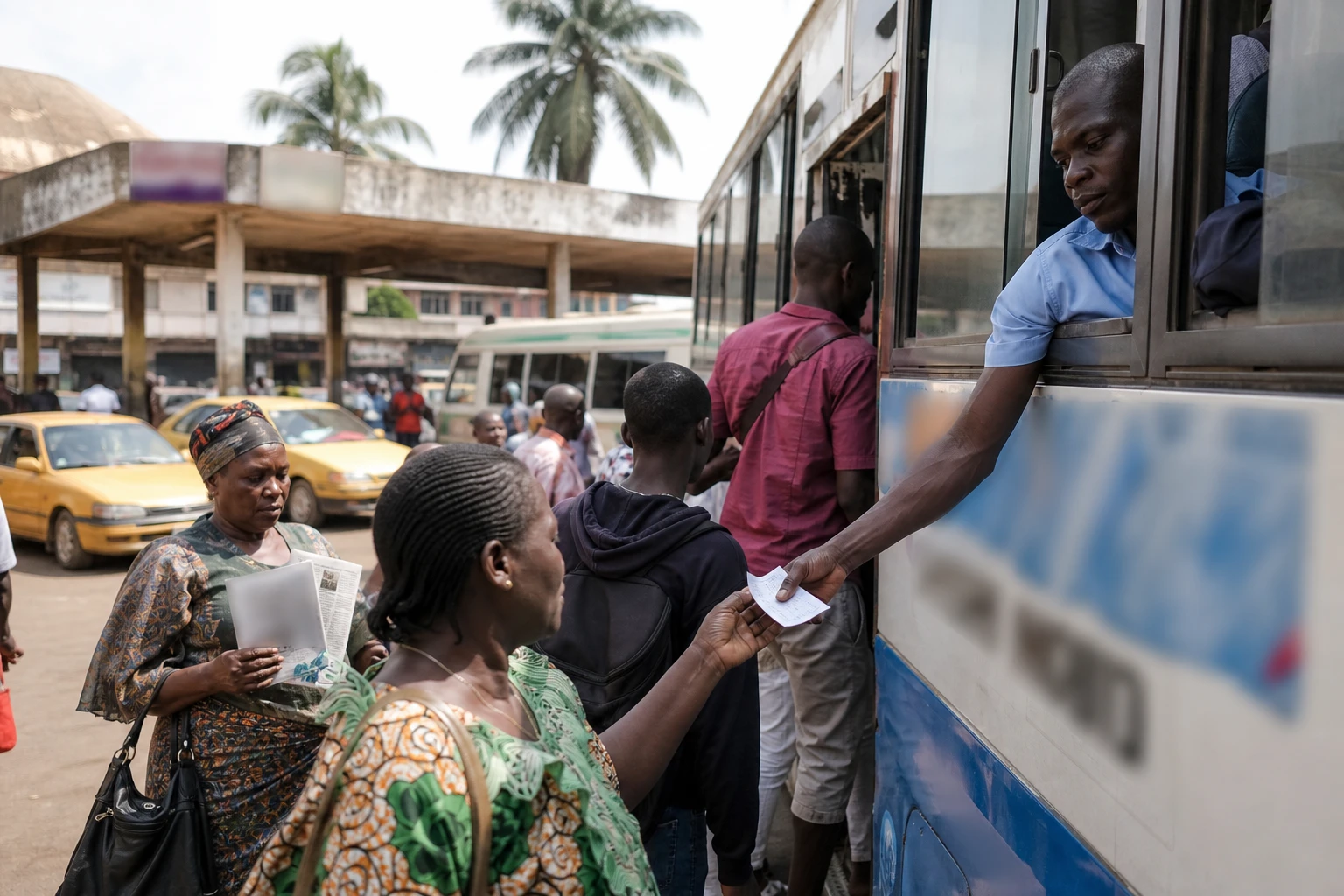
In Bangui, the verdict delivered in The Hague opens a new chapter in Central African victims’ long quest for justice. For the first time, a former Séléka official has been found guilty by the International Criminal Court (ICC) of crimes committed during the 2013 crisis.
A verdict focused on the OCRB prisons
On 23 September 2026, ICC judges found Mahamat Saïd Abdel Kani guilty of four crimes against humanity: imprisonment or severe deprivation of liberty, torture, persecution and other inhumane acts. The findings relate mainly to the Central Office for the Prevention of Banditry (OCRB), a security service based in Bangui.
According to the ruling delivered in The Hague, the crimes were committed between 12 April and 30 August 2013. At the time, Mahamat Saïd Abdel Kani was head of the OCRB, following the Séléka’s seizure of power. The rebel coalition had overthrown President François Bozizé in March that year.
The judges found the accused responsible for acts targeting people considered close to the former government. Detainees were allegedly held in cramped, dark and poorly ventilated underground cells. Testimony heard during the trial also described beatings, torture and interrogations conducted in degrading conditions.
The ICC, however, dismissed the war crimes charges. The majority of judges concluded that the relevant armed conflict had ended after the fall of François Bozizé. This legal distinction explains why Mahamat Saïd Abdel Kani was found guilty of crimes against humanity but acquitted of the war crimes charges.
The Chamber also dismissed some incidents for lack of sufficient evidence. The verdict therefore does not validate all the accusations against him. It establishes guilt only for the acts and legal classifications that the judges considered proven beyond reasonable doubt.
The first Séléka member convicted by the ICC
This case holds a particular place in the ICC’s Central African Republic docket. Mahamat Saïd Abdel Kani is the first former Séléka member to be found guilty by the court. Until now, the main convictions handed down in connection with the situation in the Central African Republic concerned officials associated with the anti-balaka militias.
Patrice-Edouard Ngaïssona and Alfred Yekatom, two figures from the anti-balaka camp, were convicted at first instance of crimes committed against civilians. This sequence of legal proceedings fuelled debate in the Central African Republic over the balance of prosecutions between the different sides in the crisis.
The new verdict does not close that debate. It does, however, deliver a judicial response to some victims of the Séléka. It also serves as a reminder that international criminal responsibility must apply to those suspected of crimes, regardless of their political camp, religious affiliation or role in the chain of command.
Mahamat Saïd Abdel Kani pleaded not guilty at the start of his trial. His lawyers challenged the reliability of the testimony and the direct link between their client and the violence committed at the OCRB. Under ICC rules, the Chamber’s decision may still be appealed.
International justice complements Central African mechanisms
The proceedings form part of a broader judicial framework. The ICC has been investigating international crimes committed in the Central African Republic since 2014. In parallel, the Special Criminal Court, established in Bangui with the support of national and international partners, tries serious crimes committed since 2003.
The two mechanisms do not pursue exactly the same people or cases. The ICC acts when it considers that the requirements of jurisdiction and gravity have been met. The Special Criminal Court, meanwhile, brings hearings closer to where the crimes were committed and to the communities directly affected.
This complementarity remains essential for victims. A trial in The Hague can establish responsibility at the highest levels. Proceedings in Bangui can make it easier to attend hearings, take part as civil parties and understand the verdict in the regions concerned.
Judicial proceedings alone, however, do not meet victims’ expectations. Acknowledgement of the facts must be followed by a proportionate sentence, remembrance efforts and concrete measures of reparation. The ICC still has to determine Mahamat Saïd Abdel Kani’s sentence at a separate hearing. The Chamber is to announce the date of that hearing.
Implications for the Central African Republic and CEMAC
In the Central African Republic, the verdict comes as the authorities seek to consolidate peace after several years of rebellions, political agreements and armed tensions. The country remains marked by a heavy concentration of institutions in Bangui, while many rural areas still depend on local balances of power and uneven security arrangements.
The consequences will therefore not be the same for everyone. In the capital, the ruling may raise the profile of OCRB victims and revive discussions about the responsibilities of former security forces. In the regions, people are more concerned with everyday security, the return of property, the return of displaced people and the possibility of effectively seeking justice.
The case is also of interest to the Economic and Monetary Community of Central Africa (CEMAC), which includes the Central African Republic, Cameroon, the Republic of the Congo, Gabon, Equatorial Guinea and Chad. Crises in the Central African Republic have regularly had cross-border effects, through population movements, arms flows and the movements of armed groups.
Regional judicial cooperation remains fragile, however. The arrest, transfer and trial of former officials often depend on political decisions, states’ ability to exchange information and the protection of witnesses. The ICC verdict shows that justice can take a long time, but can also reach people who have remained beyond the reach of national courts for years.
Next steps: sentencing and reparations
The conviction handed down on 23 September 2026 is not the final step. The Chamber must now consider factors relating to sentencing, including the gravity of the crimes, the accused’s role, the consequences for victims and any mitigating circumstances.
The Court will then rule on reparations, within the limits of its powers and available resources. For Central African victims, the challenge will be to turn a decision delivered thousands of kilometres from Bangui into tangible recognition of their suffering.
The judgment has already established an important principle: the violence committed during the 2013 crisis cannot be attributed to just one side. International justice is now examining responsibility arising from several armed trajectories. For the Central African Republic, the verdict’s significance will depend on what follows in the proceedings, as well as on the ability of national and regional institutions to embed the decision in lasting justice.
The International Criminal Court outlines the case against Mahamat Saïd Abdel Kani. The verdict was also reported by Human Rights Watch and Africanews.