
 Egypt
 Libya
 Morocco
 Sudan
 Tunisia
 Benin
 Burkina Faso
 Cabo Verde
 Côte d'Ivoire
 Ghana
 Guinea
 Guinea-Bissau
 Liberia
 Mali
 Mauritania
 Niger
 Nigeria
 Senegal
 Sierra Leone
 The Gambia
 Togo
 Cameroon
 Central African Republic
 Chad
 DR Congo
 Equatorial Guinea
 Gabon
 Republic of the Congo
 São Tomé and Príncipe
 Burundi
 Comoros
 Djibouti
 Eritrea
 Ethiopia
 Kenya
 Madagascar
 Malawi
 Mauritius
 Mozambique
 Rwanda
 Seychelles
 Somalia
 South Sudan
 Tanzania
 Uganda
 Angola
 Botswana
 Eswatini
 Lesotho
 Namibia
 South Africa
 Zambia
 Zimbabwe
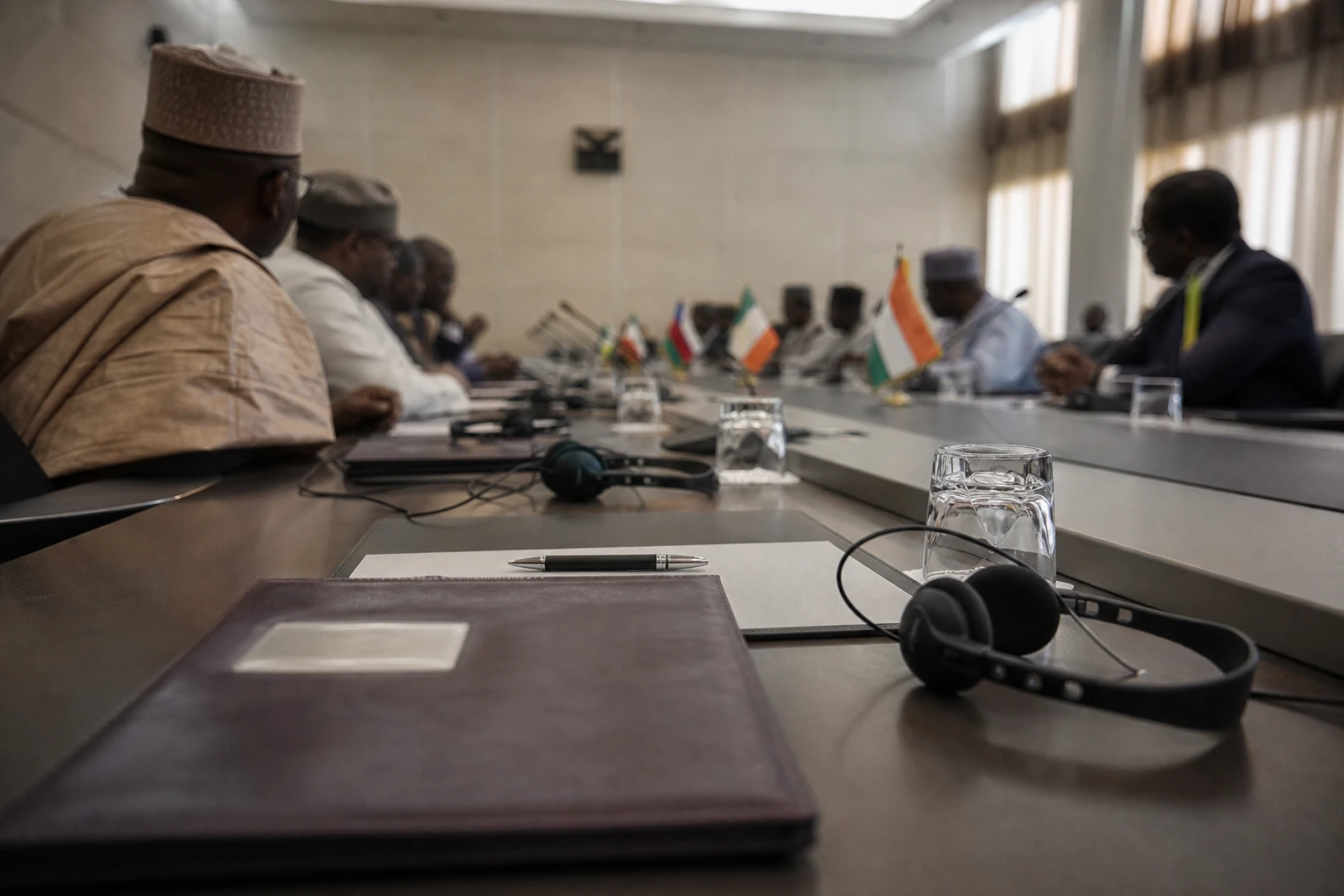
In Niamey, an internal warning that says far more than a simple military incident
In the Nigerien capital, a spell of tension within the armed forces cannot be read merely as a matter of discipline. It also reveals the fragility of a transitional government operating under security, political and diplomatic pressure. In Niger, every tremor in the army immediately weighs on state stability, security in Niamey and the already precarious balance in the Sahel.
Since the 2023 coup, the country has been living in a tense environment, with persistent jihadist attacks, military restructuring and a reshaping of its external alliances. The Economic Community of West African States, ECOWAS, has lost influence after Niamey’s break with several regional capitals, while new security partners have taken on a greater role in the regime’s day-to-day management.
What happened in Niamey
According to several corroborating sources, soldiers attempted to mutiny in Niamey on the night of 29 to 30 August 2026. The incident targeted sensitive sites, including the area around Diori Hamani International Airport and Air Base 101, a strategic point in Niger’s military apparatus. The authorities later said they had regained control, while several soldiers were reportedly arrested and gunfire was heard in the capital for several hours.
Algeria’s foreign ministry was among the first to respond, expressing its “full solidarity” with Niger on 29 August. On 30 August, Algiers confirmed that it had sent two fighter patrols, comprising four Su-30s, accompanied by a refuelling aircraft, at Niamey’s request. Nigerien authorities publicly thanked Algeria for its support.
At the same time, international media reported that Russian personnel in the country, operating under the name Africa Corps, had supported loyalist forces. This presence is no minor detail. It confirms that security for the regime in Niger now rests on a web of external alliances, beyond the national forces alone.
Why this internal crisis matters so much
This episode first highlights the pressure bearing on Niger’s army itself. The authorities in Niamey must manage insecurity in several parts of the country, protect critical sites and guard against divisions between units—all at once. In such a context, even a brief mutiny serves as a warning sign. It shows that authority still exists, but must be constantly reinforced.
It also highlights Niger’s growing dependence on external military support. Russia, through Africa Corps, appears as an on-the-ground partner for the junta. Algeria, for its part, is seeking to secure its southern neighbour and preserve a buffer zone south of its border. This dual involvement reflects a major fact: Niamey no longer treats its security as a strictly national matter.
For the population, the stakes are immediate. When a crisis erupts around an air base or Niamey airport, travel, economic activity and perceptions of risk can change in an instant. For traders, transport operators and the informal sector, which sustains a large share of urban households, even the slightest disruption can affect daily incomes. For the state, however, the objective is political: to avoid the appearance of a divided army and prevent the incident from encouraging further internal dissent.
The case of Nigerien journalist Moussa Kaka adds another layer to this climate. Reporters Without Borders says it has had no news of him since 31 August and is calling for an investigation to be opened. His disappearance, at an already tense time, is a reminder that security is not just about barracks. It also concerns the flow of information, press freedom and the ability of Nigeriens to know what is really happening in their country.
A signal for the whole Sahel
At the regional level, the affair goes beyond Niger alone. Since the political shift of 2023, the country has been part of a Sahelian space where alliances are being rapidly redrawn. Cooperation with Algiers, the Russian presence and a partial break with some West African frameworks are shaping a new landscape. This is not just a military issue. It is also a question of sovereignty, borders and control of trans-Saharan routes.
The continent-wide significance lies in this: Niger has become a testing ground for the reshaping of African security arrangements. States are seeking more flexible support, sometimes outside traditional frameworks. Algeria is advancing its doctrine of strategic neighbourhood. Russia is consolidating its presence. And regional institutions are watching a country whose stability now depends as much on internal power dynamics as on support from abroad.
What happens next will depend on how Niamey responds to this warning. Will the episode be closed with arrests and statements, or is it a symptom of deeper unease within Niger’s security apparatus? In the short term, the real question remains this: can the state regain the initiative without becoming even more dependent on its military partners?



