
 Egypt
 Libya
 Morocco
 Sudan
 Tunisia
 Benin
 Burkina Faso
 Cabo Verde
 Côte d'Ivoire
 Ghana
 Guinea
 Guinea-Bissau
 Liberia
 Mali
 Mauritania
 Niger
 Nigeria
 Senegal
 Sierra Leone
 The Gambia
 Togo
 Cameroon
 Central African Republic
 Chad
 DR Congo
 Equatorial Guinea
 Gabon
 Republic of the Congo
 São Tomé and Príncipe
 Burundi
 Comoros
 Djibouti
 Eritrea
 Ethiopia
 Kenya
 Madagascar
 Malawi
 Mauritius
 Mozambique
 Rwanda
 Seychelles
 Somalia
 South Sudan
 Tanzania
 Uganda
 Angola
 Botswana
 Eswatini
 Lesotho
 Namibia
 South Africa
 Zambia
 Zimbabwe
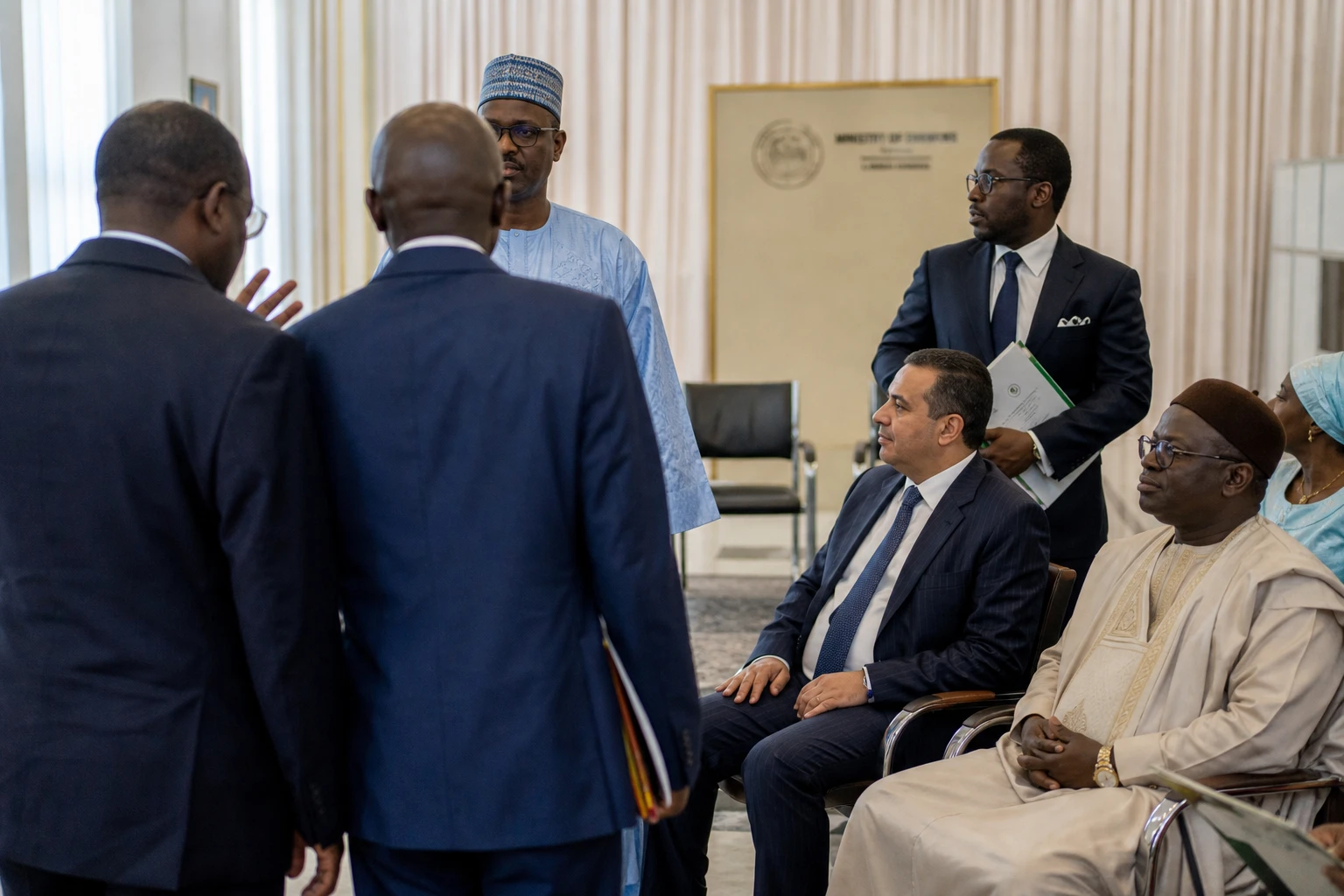
Bamako and Algiers draw closer, but major issues remain
The divide between Mali and Algeria is not merely diplomatic. It also concerns security in northern Mali, air traffic and the balance in a Sahelian region where every official gesture is viewed through the prism of regional power dynamics. Malian Prime Minister Abdoulaye Maïga’s visit to Algiers therefore comes at a moment of cautious easing of tensions, not automatic reconciliation.
The regional context remains marked by profound realignment. Mali has left ECOWAS, the Economic Community of West African States, of which it had been a member for decades, alongside Burkina Faso and Niger. The African Union has also closely followed Mali’s institutional crisis after the political changes that have taken place since 2020. In this context, Algeria remains a major neighbour, sharing a border with Mali, a historic mediator on the northern Mali issue and an indispensable player in Sahel-Maghreb stability.
What Bamako and Algiers are saying
The Malian prime minister arrived in Algiers on Monday 24 August 2026. He was welcomed by his Algerian counterpart, Sifi Ghrieb, and then received by President Abdelmadjid Tebboune. The Malian Prime Minister’s Office said Abdoulaye Maïga was carrying a message from the head of the transitional state, Assimi Goïta, to his Algerian counterpart. The trip was presented as a working visit at Algiers’ invitation.
This diplomatic sequence follows an initial easing of tensions that began in early August. On 9 August 2026, the two prime ministers held a telephone conversation, during which they said they wanted to inject new momentum into bilateral relations. A few days later, the Malian Prime Minister’s Office announced that the visit would be framed around direct dialogue, consultation and cooperation, against the backdrop of the return of ambassadors and the reopening of airspace, both decided in July.
This return to normality is significant. On 10 July 2026, Algiers reopened its airspace to Malian flights. On the same day, Bamako decided to send its ambassador back to Algiers and reopen its own airspace to aircraft arriving from or departing for Algeria. These decisions marked a break with the freeze that followed the crisis triggered by the drone incident at the border.
Why the visit matters to Mali
For Bamako, the stakes go beyond diplomatic protocol. Algeria remains a strategic neighbour for northern Mali, trans-Saharan trade and security discussions. In a country where the movement of people and goods has a significant impact on urban and rural economies alike, closing or reopening airspace has a tangible effect on costs, delays and the flow of trade.
The political precedent is also worth recalling. In 2024, Mali repudiated the Agreement for Peace and Reconciliation resulting from the Algiers process, signed in 2015. Algiers expressed regret, while the rupture weakened a framework that for years had served as a reference point for managing the rebellion in northern Mali. The drone crisis in 2025 then further hardened the tone, leading to the recall of ambassadors.
Caution remains necessary on this issue. Official statements now speak of fraternity, good neighbourliness and sovereignty. But the underlying issues have not disappeared: border security, the role of armed groups, trust between state institutions, and Algeria’s place as a possible mediator or a disputed interlocutor, depending on the circumstances. For the Malian authorities, the benefit is clear: to reopen a useful channel without abandoning their rhetoric of sovereignty. For Algiers, the aim is equally clear: to avoid a lasting rupture on its southern border and regain influence over a neighbourhood exposed to Sahelian crises.
A significance extending beyond the Bamako-Algiers axis
The visit also sends a message to the rest of the continent. It shows that in West Africa, regional arrangements now run through several circles at once: states, subregional unions, the African Union and, at times, ad hoc formats shaped by security emergencies. Mali, now outside ECOWAS, is seeking new room for manoeuvre. Algeria, for its part, remains focused on stability on its southern flank, as the Sahel becomes a central arena for diplomatic and security competition.
What happens next will depend less on public statements than on concrete actions. Continued dialogue, the technical resumption of cooperation, border management and the handling of future incidents will show whether the rapprochement initiated in Algiers can last. In a region where diplomatic ruptures spread quickly, normalisation between Bamako and Algiers will affect other balances, from the Maghreb to the central Sahel.



