Egypt
 Libya
 Morocco
 Sudan
 Tunisia
 Benin
 Burkina Faso
 Cabo Verde
 Côte d'Ivoire
 Ghana
 Guinea
 Guinea-Bissau
 Liberia
 Mali
 Mauritania
 Niger
 Nigeria
 Senegal
 Sierra Leone
 The Gambia
 Togo
 Cameroon
 Central African Republic
 Chad
 DR Congo
 Equatorial Guinea
 Gabon
 Republic of the Congo
 São Tomé and Príncipe
 Burundi
 Comoros
 Djibouti
 Eritrea
 Ethiopia
 Kenya
 Madagascar
 Malawi
 Mauritius
 Mozambique
 Rwanda
 Seychelles
 Somalia
 South Sudan
 Tanzania
 Uganda
 Angola
 Botswana
 Eswatini
 Lesotho
 Namibia
 South Africa
 Zambia
 Zimbabwe
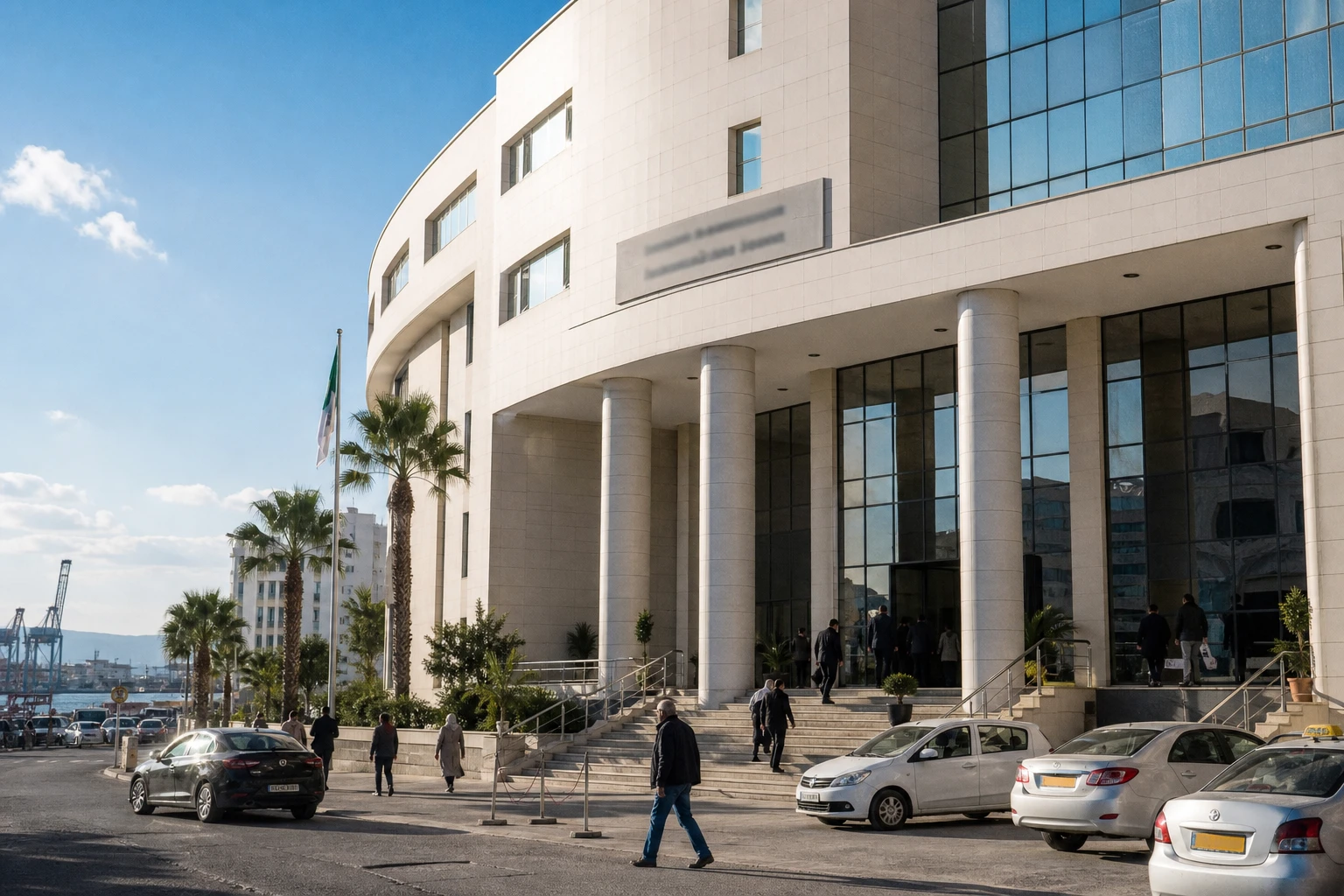
When ports speak as loudly as weapons
In North Africa, major powers are rarely judged by their rhetoric alone. They are also judged by the ports they control, the trade corridors they finance and the crises they fuel, or are accused of fuelling. It is precisely this combination that is driving an increasingly hard-line view of the United Arab Emirates in Algiers. This perspective is not abstract: it touches on the security of the Sahara, the balance of power in the Maghreb and the war in Sudan, in the east of the continent.
For Algeria, the question goes beyond a simple diplomatic rivalry. It speaks to a longstanding strategic intuition: an actor capable of investing heavily in civilian infrastructure can also, in certain contexts, become involved in military and political power struggles. It is this shift from commerce to coercion, or the suspicion of coercion, that is now being debated in Algiers and several other African capitals.
Algiers, Abu Dhabi and the Sudanese precedent
Tensions escalated in early 2024, when President Abdelmadjid Tebboune began publicly targeting what he presents as an Emirati role in several African flashpoints. On 28 July 2026, Algerian Radio again reported that he had denounced a “micro-state” sowing discord in certain countries, while asserting that Algeria would submit neither to pressure nor to threats. On 7 February 2026, Algiers also launched the procedure to terminate the air services agreement signed with the United Arab Emirates in 2013.
This hardening of the stance is part of a broader Algerian foreign policy. Algiers is seeking to preserve its room for manoeuvre in the Maghreb and the Sahel, and amid the reshaping of the Middle East. At the same time, it continues to engage with several Gulf partners, because Algerian diplomacy favours balance over a complete break. This nuance matters. It shows that Algiers is challenging a method, not necessarily all engagement with the region.
The case of Sudan has become the main point of reference for this perspective. On 25 May 2026, Human Rights Watch published an 83-page report alleging that hundreds of Colombian military contractors had been recruited by Global Security Services Group, an Abu Dhabi-based company, and then deployed to Sudan to support the Rapid Support Forces. The report draws on testimony, geolocated images and evidence corroborated by US sanctions imposed in December 2025 targeting a transnational recruitment network.
What the figures say about money, gold and ports
The UAE’s economic presence in Africa is substantial. A Financial Times analysis cited by several specialist sources puts announced investments since 2017 at more than $168 billion, with projects in ports, minerals, agriculture and energy. DP World and Abu Dhabi Ports operate or are developing terminals, free zones and logistics infrastructure in 13 African countries. These figures should, however, be treated with caution: they refer to announced investments, not necessarily capital actually disbursed in the amounts stated.
But the issue is not only economic. It is also strategic. On the Red Sea, in Berbera in Somaliland, in Bosaso in Puntland and at other transit points, port infrastructure can serve both trade and the projection of influence. This dynamic is reinforced in conflict zones, where a port, airport or road can become a means of controlling goods, people and sometimes weapons. That is where the line between logistics and security becomes blurred.
Sudan illustrates this mechanism in stark terms. Chatham House notes that gold production in areas controlled by the Sudanese army reached 64.36 tonnes in 2024, while 27.96 tonnes were officially exported. Swissaid, meanwhile, found that the UAE imported 29 tonnes of gold directly from Sudan in 2024, up from 17 tonnes the previous year, as well as volumes from Egypt, Chad and Libya. The picture is of a cross-border war economy, in which gold leaves the country through legal, semi-legal or clandestine channels.
The war is also fuelling legal disputes. On 5 May 2025, the International Court of Justice said it could not hear the case brought by Sudan against the United Arab Emirates because of Abu Dhabi’s reservation to Article IX of the Genocide Convention. The decision does not rule on the merits of the case. It only demonstrates the procedural limits of the dispute. Meanwhile, in February 2026 the UN fact-finding mission on Sudan concluded that the Rapid Support Forces’ violence in El-Fasher bore the “hallmarks of genocide”.
Why this issue also matters to North Africa
In Algiers, the debate is not solely about Sudan. It also concerns Libya, Western Sahara, Sahelian routes and, more broadly, how African capitals weigh the need for capital against the risk of interference. In the Maghreb, Algeria advocates a strict sovereignty-based approach. It supports the principle of non-intervention and views with suspicion any external actor capable of unsettling regional balances by financing allies, controlling ports or supporting parallel armed forces.
The continental significance is clear. The African Union, regional organisations and states bordering the Red Sea face the same question: how can they welcome Gulf capital without allowing it to redraw security arrangements, spheres of influence and rent-seeking networks? Africa is not a passive backdrop. It negotiates, refuses, arbitrates and sometimes imposes sanctions. The current controversy above all underscores that an investment is never just an investment when it involves a strategic port, a gold mine or a war that moves private armies and foreign fighters.
For Algeria, the immediate challenge is therefore twofold. On the one hand, it must consolidate a regional reading of the crises that has borne out its warnings since 2024. On the other, it must prevent its confrontation with Abu Dhabi from closing useful channels with the rest of the Gulf. This tension between diplomatic caution and strategic resolve is now shaping Algeria’s position in an Africa where money, ports and conflicts often move together.