Algeria
 Egypt
 Libya
 Morocco
 Sudan
 Tunisia
 Benin
 Burkina Faso
 Cabo Verde
 Côte d'Ivoire
 Ghana
 Guinea
 Guinea-Bissau
 Liberia
 Mali
 Mauritania
 Niger
 Nigeria
 Senegal
 Sierra Leone
 The Gambia
 Togo
 Cameroon
 Central African Republic
 Chad
 Equatorial Guinea
 Gabon
 Republic of the Congo
 São Tomé and Príncipe
 Burundi
 Comoros
 Djibouti
 Eritrea
 Ethiopia
 Kenya
 Madagascar
 Malawi
 Mauritius
 Mozambique
 Rwanda
 Seychelles
 Somalia
 South Sudan
 Tanzania
 Uganda
 Angola
 Botswana
 Eswatini
 Lesotho
 Namibia
 South Africa
 Zambia
 Zimbabwe
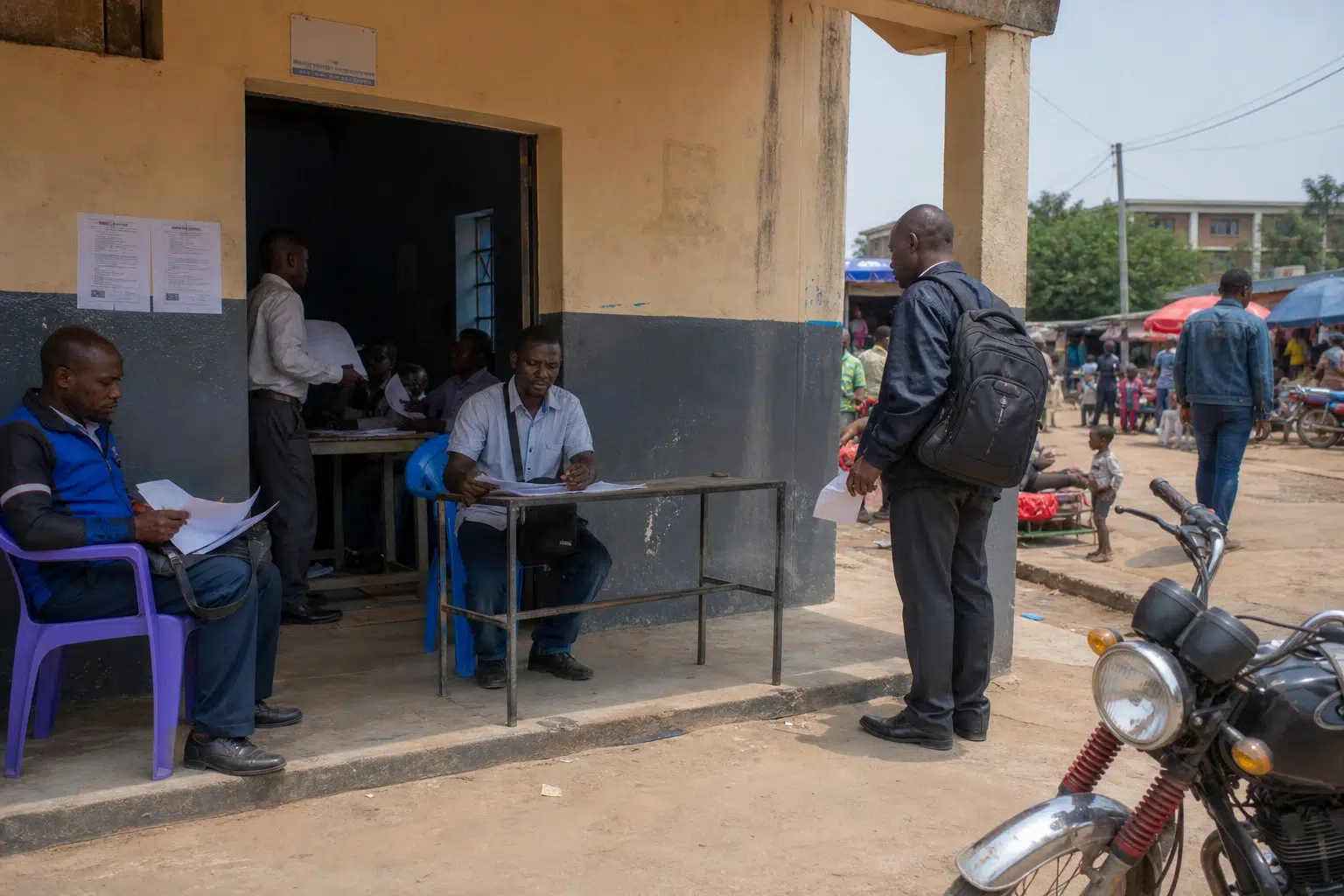
As front lines shift, civilians remain on the front line
In eastern Democratic Republic of the Congo, people in Ituri and North Kivu live with a simple worry: where will the next attack strike? When an armed group loses ground to military operations, the danger does not always disappear. It moves. It fragments. And villages, roads and markets often pay the price.
This is one of the key conclusions of a report published on 28 January 2026 by the Congolese research institute Ebuteli, examining the reorganisation of the Allied Democratic Forces, better known by the acronym ADF. The report describes a group that left its historic stronghold around Beni to expand into Irumu, Mambasa and Lubero, following pressure from joint offensives with the Ugandan army under Operation Shujaa, launched in 2021.
A local conflict in a wider regional arena
The crisis is not confined to a single territory. In the DRC, the ADF are part of a patchwork of conflicts that also affect Ituri and North Kivu and, more broadly, the border area with Uganda. The country is a member of the East African Community, while Operation Shujaa brings together Congolese and Ugandan forces. This regional dimension matters because it shows that the threat cannot be addressed by a single army or in a single province.
The ADF, founded in Uganda in the late 1990s before retreating to the DRC after Kampala’s strikes, pledged allegiance to Islamic State in 2019, according to several corroborating sources. Since then, they have regularly been described as a branch of the network in Central Africa. On the ground, however, their approach remains primarily that of a group rooted in the security gaps of eastern Congo: attacks on villages, kidnappings, looting, intimidation of communities and movement in small groups.
What the situation on the ground shows: dispersal, adaptation, terror
The core of Ebuteli’s analysis is clear: the ADF are not responding to military operations with a conventional strategy of retaliation. Their main aim is to spread terror, empty areas, retain room to manoeuvre and survive in a more challenging environment. The report says the offensives have forced the group to leave some of its historic areas of influence, without neutralising it. The fighters have adapted by moving in small groups that are harder to detect.
This reading is consistent with other recent findings. In March 2026, local sources and Congolese media were already reporting the ADF’s advance towards new locations in Ituri, with attacks on civilians and kidnappings. In May 2026, the Association presse spécialisée and the Congolese Press Agency were still reporting victims in the areas of Mambasa, Irumu and Beni, evidence that military pressure has not ended the abuses.
The picture presented by the United Nations points in the same direction. In a report made public in spring 2026, the Secretary-General said that between December 2025 and March 2026, the ADF had killed at least 431 civilians, including 72 women and 3 children, in North Kivu and Ituri. The figure underscores the scale of the tragedy, but also the need for caution: in eastern DRC, death tolls often change as areas become accessible.
Why the ADF target civilians
Ebuteli’s report emphasises one essential point: the group’s power no longer rests solely on its weapons, but on its ability to impose fear. In the areas it passes through, it seeks to control movement, levy illegal taxes, abduct residents and make everyday life unpredictable. This strategy directly affects families, farmers, traders and pupils. When a road becomes dangerous, the local economy slows. When fields can no longer be reached, harvests and incomes collapse.
The situation also weighs on public services. The Congolese armed forces, often engaged on several fronts at once, have to contend with other urgent security challenges in the east of the country. Political attention often focuses on the most visible crises, such as the M23 conflict in the Kivus, while the ADF continue to strike in Ituri and the far north of North Kivu. This competition between fronts creates opportunities for armed groups.
It is also worth noting that the ADF do not exploit the same social dynamics everywhere. In Beni, they benefited for a long time from a longer-standing foothold. In Ituri, their more recent arrival has limited their ability to draw on pre-existing community conflicts. But this relative weakness has not made them any less dangerous. It has simply shifted their methods towards greater mobility, kidnappings and targeted violence against defenceless civilians.
What the DRC should watch in the coming months
The significance of this shift extends beyond the DRC alone. The ADF have become a regional security issue on the Ugandan border, in an area traversed by fighters, displaced people, traders and security forces. For Kinshasa, the question is no longer simply how to “retake” towns. It is about restoring a lasting public presence, better co-ordinating operations, preventing security vacuums and supporting local authorities and civil society. That is where the real protection of civilians will be decided.
For Central Africa and the continent as a whole, the case is a reminder of a frequently underestimated fact: an armed group can lose ground without losing its capacity to cause harm. As long as areas abandoned by the state remain porous, shifting front lines mean violence shifts too. This is what eastern Congo has seen for years. The next field reports will have to confirm or revise this picture, as operations unfold, populations move and new attacks are reported in Ituri and North Kivu.