Algeria
 Egypt
 Libya
 Morocco
 Sudan
 Tunisia
 Benin
 Burkina Faso
 Cabo Verde
 Côte d'Ivoire
 Ghana
 Guinea
 Guinea-Bissau
 Liberia
 Mali
 Mauritania
 Niger
 Nigeria
 Senegal
 Sierra Leone
 The Gambia
 Togo
 Cameroon
 Central African Republic
 Chad
 DR Congo
 Equatorial Guinea
 Gabon
 Republic of the Congo
 São Tomé and Príncipe
 Burundi
 Comoros
 Djibouti
 Eritrea
 Ethiopia
 Kenya
 Madagascar
 Malawi
 Mauritius
 Mozambique
 Rwanda
 Seychelles
 Somalia
 South Sudan
 Tanzania
 Angola
 Botswana
 Eswatini
 Lesotho
 Namibia
 South Africa
 Zambia
 Zimbabwe
When rail progress lags behind trade needs
In Uganda, infrastructure is not just a matter of concrete and railways. It directly affects transport costs, the speed of exports and Kampala’s ability to connect its markets with those of Kenya, Rwanda, South Sudan and the DRC. In a landlocked country, every financing decision therefore weighs on the real economy, as well as public debt and fiscal headroom.
The Ugandan government is seeking to avoid a familiar paradox: funding roads that are essential in the short term while pursuing a strategic railway project that is more costly and takes longer, but is intended to transform regional trade over the long term. This twin pressure sheds light on the new phase under way in Kampala, where the executive must balance logistical urgency with financial sustainability.
A patchwork financing structure for a long-term project
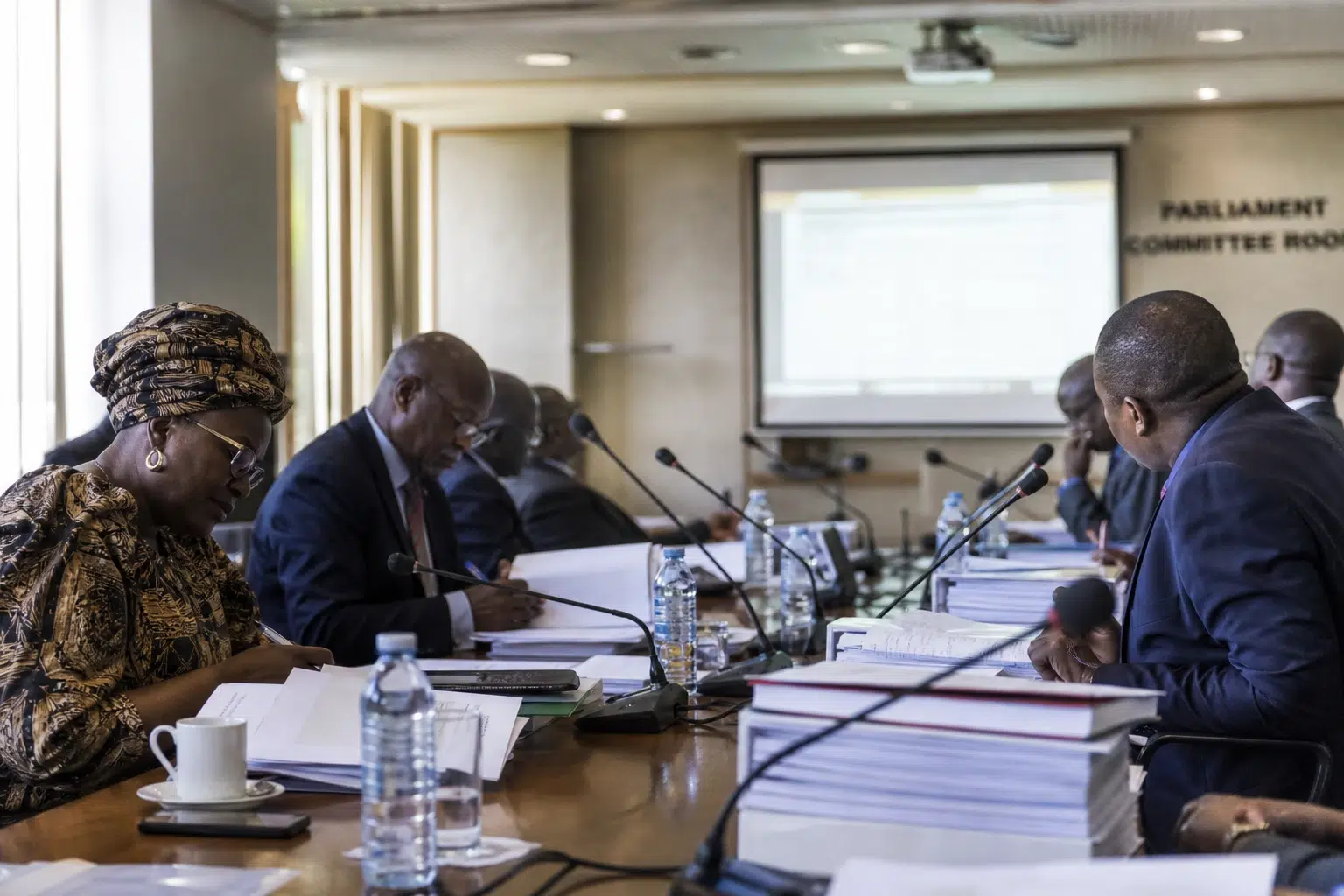
On 11 August 2026, Uganda’s Ministry of Finance submitted a borrowing request to Parliament to support several road projects. The document refers to borrowing of up to €207.77 million, or about 842.71 billion Ugandan shillings. Henry Musasizi presented the case to the National Economy Committee, which reviews public credit requests before they go to a plenary sitting.
The choice is significant. It comes as Kampala is also pursuing financial closure for the Standard Gauge Railway, the standard-gauge line intended to connect Kampala to Malaba on the Kenyan border. According to the Ministry of Finance, the project is to be structured around several sources: 60% through export credit agencies, 25% through development finance institutions and 15% through the country’s first sovereign sukuk, a loan compliant with Islamic finance principles.
The same document states that €650.75 million in funding for the railway was approved by the Islamic Development Bank in June 2026. Kampala is now targeting financial closure in November 2026. This fragmented structure reflects a simple reality: Uganda cannot rely on a single lender to fund everything, or fit it all into a single timetable.
Uganda’s railway is also part of a regional strategy. In Kenya, construction of the Naivasha-Kisumu-Malaba extension began in March 2026, and physical works started in early July 2026, according to Kenya Railways and the Kenyan Ministry of Transport. This progress matters to Kampala because it brings the Ugandan border closer to a modernised corridor to the port of Mombasa.
Public debt, fiscal pressure and political trade-offs
The use of multiple financing sources is also explained by the state of public finances. The International Monetary Fund projects Uganda’s gross public debt at 55.5% of GDP for the 2026/27 financial year and close to 60% by 2030/31. In its July 2026 consultation, the institution also noted that spending pressures persisted and that the overall deficit was expected to widen further.
In other words, the government is seeking room to manoeuvre. A single, large, concentrated loan would have put greater strain on the state’s balance sheet. By spreading its funding sources, Kampala hopes to reduce dependence on a single creditor, smooth risks and make the project more acceptable to markets and Parliament. It is a way to reconcile two imperatives: accelerating infrastructure development and preserving fiscal credibility.
The problem is not limited to cash-flow balances. Ugandan authorities have acknowledged difficulties in absorbing and implementing loans. On 11 August 2026, the Ministry of Finance announced the creation of a dedicated project implementation unit to improve oversight of debt-financed spending. This is an important signal: in a country where international credit is available but projects sometimes progress slowly, the question is no longer just about signing agreements, but delivering them.
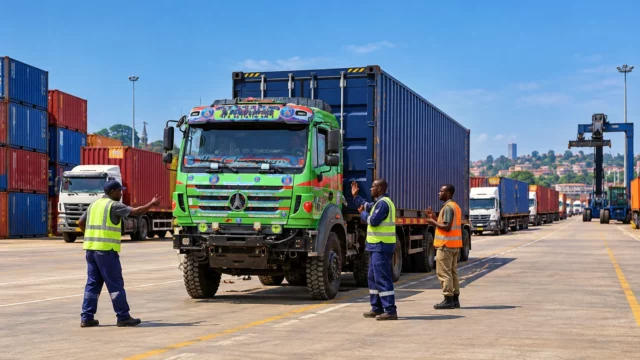
For households and businesses, the stakes are tangible. Roads cut journey times on domestic routes, particularly in the landlocked regions of the south-west and north. Rail, meanwhile, can lower freight costs, especially for heavy goods and export or transit traffic. In an economy where road transport remains dominant and costly, the standard-gauge railway could reduce the logistics bill.
What this case says about East Africa
Ultimately, the Ugandan case extends beyond its borders. The East African Community, which includes Uganda and Kenya, sees improved access and physical integration as central to competitiveness. An efficient railway corridor can facilitate trade across the region, ease pressure on roads and strengthen Kampala’s position in East African logistics chains.
There is also a continental dimension. The African Union has for several years promoted the integration of transport infrastructure, in connection with the African Continental Free Trade Area, which can only fulfil its potential if goods move more freely. Uganda illustrates a common situation in Africa: states want to build modern corridors, but must do so amid high debt, limited resources and dependence on external financing.
The next steps will come down to three dates and a test of credibility. First, Kampala’s ability to finalise SGR funding by November 2026. Next, the actual pace of implementation of the road projects for which credit has already been sought. Finally, coordination with Kenya, whose progress on the Naivasha-Kisumu-Malaba corridor partly determines the usefulness of the Ugandan section. If these elements come together, Uganda will be able to turn a complex budgetary issue into a tool for regional integration.