Algeria
 Egypt
 Libya
 Morocco
 Sudan
 Tunisia
 Benin
 Burkina Faso
 Cabo Verde
 Côte d'Ivoire
 Ghana
 Guinea
 Guinea-Bissau
 Liberia
 Mali
 Mauritania
 Niger
 Nigeria
 Senegal
 Sierra Leone
 The Gambia
 Togo
 Cameroon
 Central African Republic
 Chad
 Equatorial Guinea
 Gabon
 Republic of the Congo
 São Tomé and Príncipe
 Burundi
 Comoros
 Djibouti
 Eritrea
 Ethiopia
 Kenya
 Madagascar
 Malawi
 Mauritius
 Mozambique
 Rwanda
 Seychelles
 Somalia
 South Sudan
 Tanzania
 Uganda
 Angola
 Botswana
 Eswatini
 Lesotho
 Namibia
 South Africa
 Zambia
 Zimbabwe
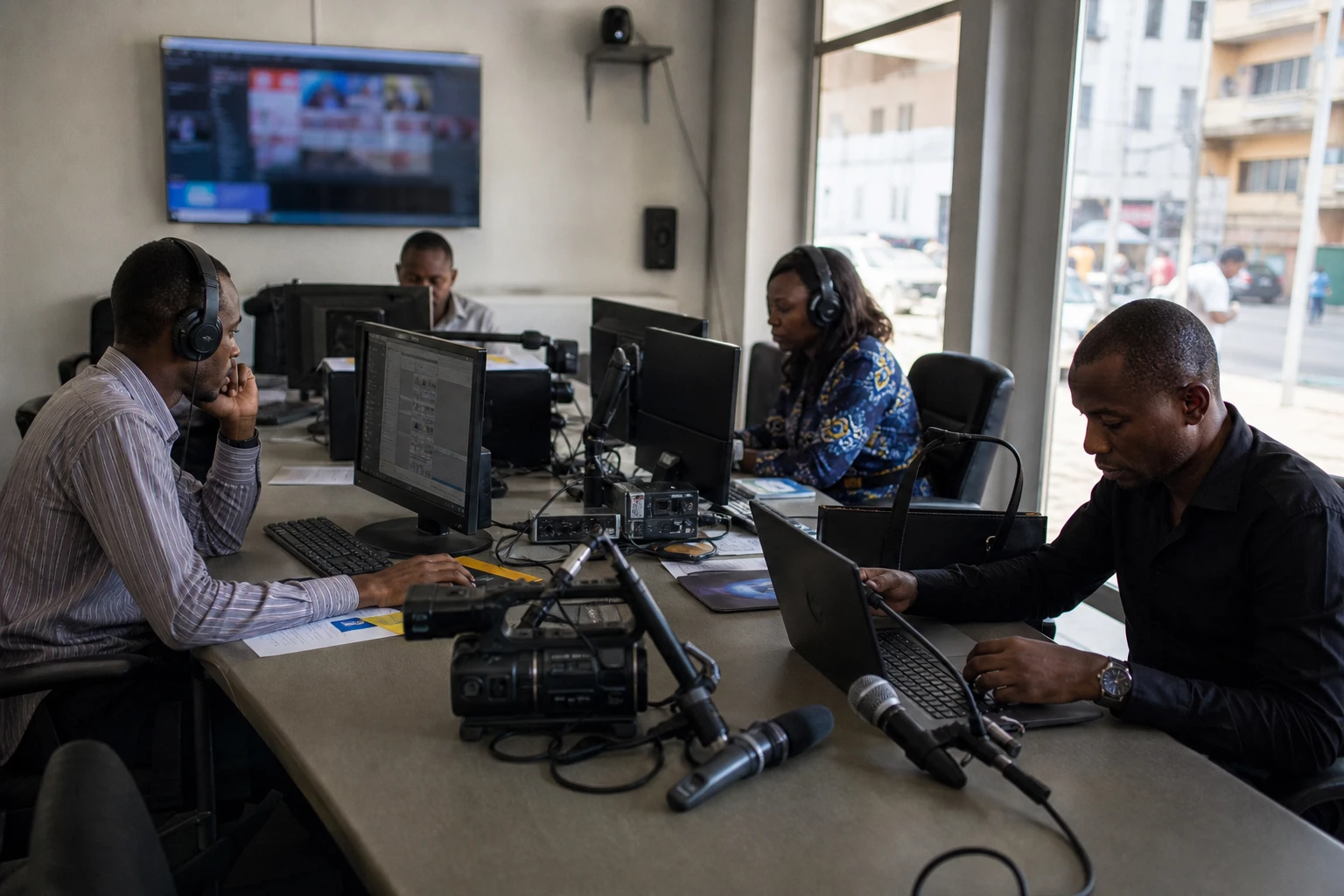
In Kinshasa, national dialogue is already a test of approach
In the Democratic Republic of the Congo, the word “dialogue” is no longer enough to reassure. It can open a door, but it can also conceal a battle over red lines. From Kinshasa, the government wants first to build a united domestic front against the war in the east. The opposition, meanwhile, wants broader discussions that also address governance, institutions and the Constitution. The two sides are therefore talking about the same table, but not the same menu.
The context is fraught. The DRC remains involved in several diplomatic processes concerning the east of the country, including the Washington and Doha processes, while security tensions continue to weigh on political life in Kinshasa and the eastern provinces. Against this backdrop, President Félix Tshisekedi reaffirmed on 29 June 2026 that no lasting peace could be built at the expense of Congolese sovereignty. The government subsequently presented dialogue as a tool for national cohesion, not as a chance to overhaul the institutions established after the 2023 elections.
On 17 July 2026, after a meeting with religious leaders, the Presidency formally announced its intention to organise an inclusive national dialogue. Cardinal Fridolin Ambongo said the head of state had opted for this approach. Shortly afterwards, government spokesman Patrick Muyaya insisted on a strict framework: dialogue must serve to strengthen unity, not provide a platform for positions deemed favourable to aggression against the DRC. This line was reiterated in early August, when the minister demanded a clear commitment against “the enemy”.
In response to this security-focused approach, the C64 coalition, which includes Martin Fayulu, Jean-Marc Kabund, Moïse Katumbi, Augustin Matata Ponyo and Delly Sesanga, is advocating a different framework. It wants dialogue to address five crises at once: security, governance, the electoral process, social conditions and the constitutional crisis. For the coalition, the Constitution remains a red line, and no consultation can be used as a backdoor to impose a revision. On 20 July, the C64 even postponed its planned march in Kinshasa, while giving the government until 15 August to convene what it considers credible talks.
The heart of the disagreement lies in the agenda. For Kinshasa, the priority is to strengthen the state in the face of what it describes as aggression. For the opposition, there can be no lasting cohesion without addressing the legitimacy of institutions, governance practices and the rules of the constitutional game. The disagreement also concerns the process: who takes part, and in what capacity? Delly Sesanga has called for the debate not to be restricted in advance. Martin Fayulu, for his part, has called for Joseph Kabila and Corneille Nangaa to be at the table, arguing that their responsibilities in the crisis should be discussed publicly. The government, meanwhile, has suggested that those linked to the aggression should not be allowed to dictate the national agenda.
For Congolese people, the stakes go beyond political sparring. A dialogue focused narrowly on security could produce useful short-term steps, particularly if the situation in the east requires a minimum level of unity. But a dialogue that is too tightly controlled risks fuelling mistrust among the opposition and part of the urban public, especially in Kinshasa, where political mobilisation remains strong. Conversely, very broad consultations could provide a forum for national realignment, but would require strong guarantees on the balance of participants, freedom of debate and protection against the discussions being used for other ends. The process’s credibility will be decided there.
A Congolese issue with regional resonance
The issue’s significance extends beyond the DRC’s borders. In the Great Lakes region, every Congolese crisis affects relations with Rwanda, Burundi and Uganda, as well as the balance within the African Union and ongoing mediation efforts. The fact that religious leaders, opposition figures and the government have all embraced the idea of dialogue shows that in the DRC, resolving a crisis rarely comes down to a single institution. It is more often a matter of multiple political, religious and diplomatic channels. Félix Tshisekedi has yet to publish the final format for the talks, but has already warned that they will not resemble previous Congolese dialogues.
What happens next will be closely watched. The C64 has announced a nationwide march on 15 September against any change to the Constitution, a sign that the political battle is not over. If the government wants to prevent dialogue from becoming a mere slogan, it will have to set out the participants, agenda, safeguards and expected outcomes. Otherwise, the talks could join the long list of political meetings announced in Kinshasa that never produce lasting consensus. In a country so central to Central Africa, the outcome will matter far beyond the Congolese capital.