Egypt
 Libya
 Morocco
 Sudan
 Tunisia
 Benin
 Burkina Faso
 Cabo Verde
 Côte d'Ivoire
 Ghana
 Guinea
 Guinea-Bissau
 Liberia
 Mali
 Mauritania
 Niger
 Nigeria
 Senegal
 Sierra Leone
 The Gambia
 Togo
 Cameroon
 Central African Republic
 Chad
 DR Congo
 Equatorial Guinea
 Gabon
 Republic of the Congo
 São Tomé and Príncipe
 Burundi
 Comoros
 Djibouti
 Eritrea
 Ethiopia
 Kenya
 Madagascar
 Malawi
 Mauritius
 Mozambique
 Rwanda
 Seychelles
 Somalia
 South Sudan
 Tanzania
 Uganda
 Angola
 Botswana
 Eswatini
 Lesotho
 Namibia
 South Africa
 Zambia
 Zimbabwe
At Kafra, a project that goes beyond oil
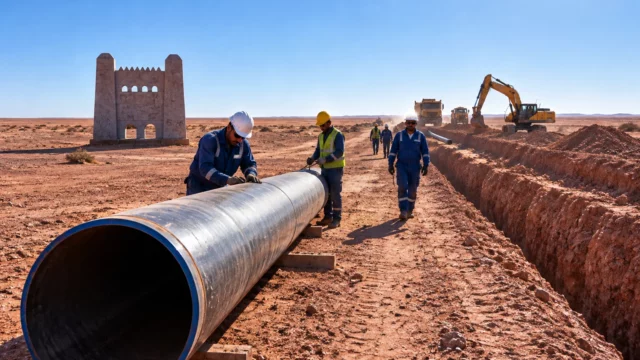
In northern Niger, the first drilling operations on the Kafra South-East 1 block tell a story that goes beyond a technical operation. They signal political resolve: to turn a border long seen as the edge of the territory into a zone of economic value. For Niamey, the stakes are clear. The aim is not simply to search for crude, but to generate revenue, create skilled jobs and open a new channel of cooperation with Algiers.
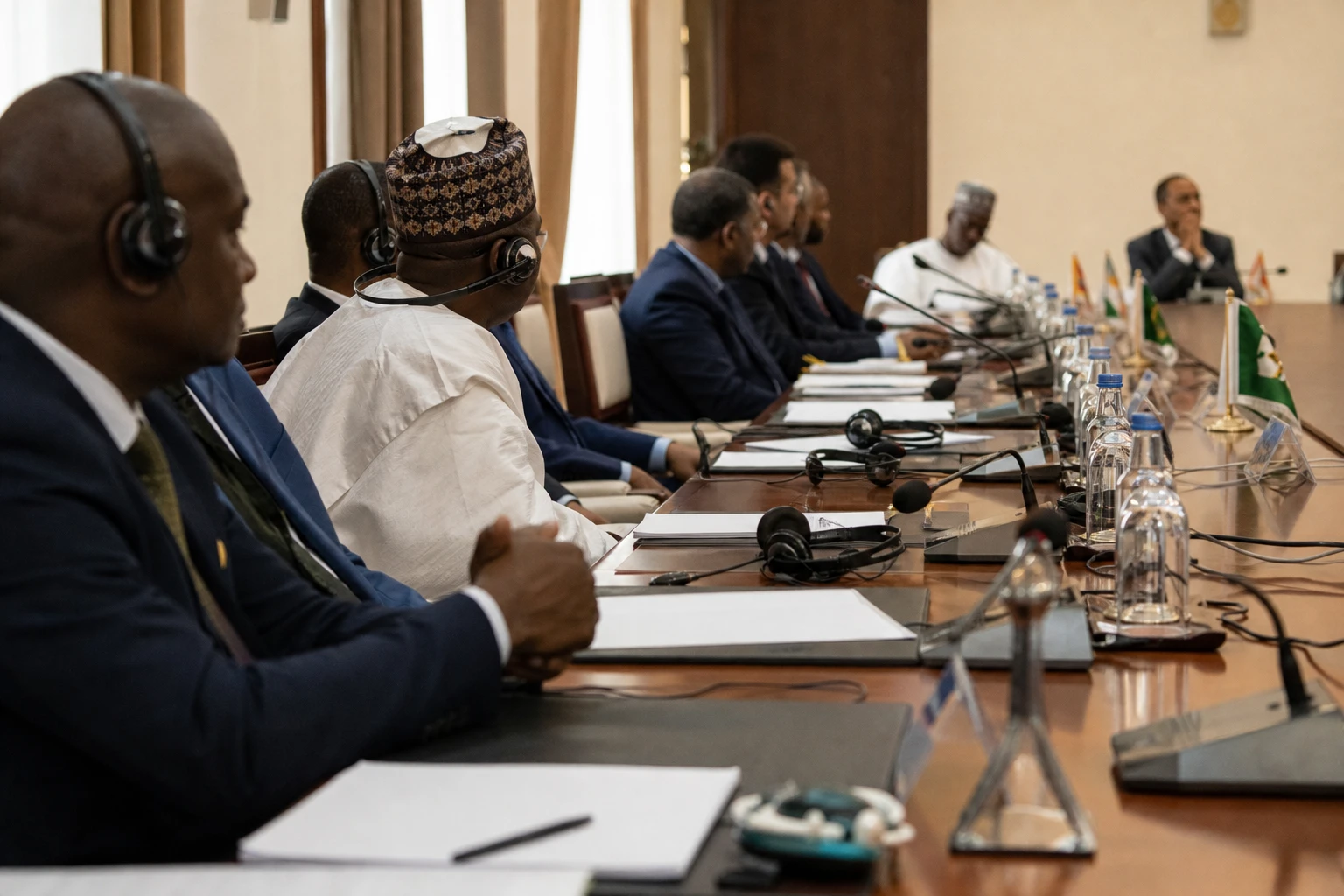
This phase is part of a carefully managed rapprochement between Niger and Algeria. Since January 2026, contacts have intensified around hydrocarbons, training and the Trans-Saharan Gas Pipeline, a major infrastructure project designed to link Nigeria to Algeria through Niger. On 2 June 2026, in Algiers, the two countries took another step by signing three memorandums of understanding between Niger’s national oil company, SONIDEP, and subsidiaries of the Sonatrach group. One of the agreements specifically concerns oil drilling in Niger. The Nigerien Press Agency described this step as a strengthening of the bilateral energy partnership.
What the facts show, and what they change
The launch announced on Thursday 13 August 2026 concerns drilling work that could reach a depth of 3,900 metres, carried out with the participation of SIPEX Niger and ENAFOR, the Algerian drilling company linked to Sonatrach. ENAFOR’s Nigerien subsidiary describes the Kafra block as a development project intended to serve energy cooperation between the two countries. Its institutional presentation confirms the Nigerien roots of this activity.
Geologically, the project did not begin in August. It dates back to an older contractual framework. In February 2022, Sonatrach had already announced the signing of an updated production-sharing contract for the Kafra block with the Nigerien authorities. The Algerian company said at the time that earlier drilling work had revealed the presence of oil, providing the basis for reviving the project. This timeline shows that the current work is not an isolated announcement, but the restart of a project that was prepared over a long period, delayed and then reactivated.
The deposit targeted is described by Nigerien authorities as a promising block, with estimated reserves of 260 million barrels. This figure should be treated with caution: it is an official estimate, not production already available. Niger’s Minister of Petroleum, Hamadou Tini, said in June 2026 that Niger has 44 oil blocks, 35 of them open to investors, and that the potential resources of the Kafra basin are far greater than the area currently being worked. The ANP reported these figures in a review interview.
The project’s immediate impact is primarily financial. If the drilling results confirm the announced potential, Niger could strengthen a still-narrow oil base and reduce its heavy dependence on imports of refined products, customs revenue and a few export segments. For the state, a new field would also provide greater bargaining power with technical and commercial partners. For national companies—SONIDEP on the Nigerien side and Sonatrach on the Algerian side—it is an opportunity to consolidate a regional value chain in which engineering, drilling and production are no longer sourced from far away.
But the impact will not be the same for everyone. In Niamey, official rhetoric emphasises economic sovereignty. In the north, the effects will depend above all on the actual availability of services, site security and local content—that is, the share of contracts, subcontracting and training reserved for Nigerien businesses and workers. Without these mechanisms, an oil project can generate rents without building a lasting industrial base. That is precisely why Prime Minister Ali Mahaman Lamine Zeine recently called for local content to become a lever for economic sovereignty in the oil sector.
The choice of northern Niger is no accident. The Kafra area lies in a Saharan belt close to the Algerian border. Its geography gives the project an immediate regional dimension. It links Niger to Algeria, but also to another strategic undertaking: the Trans-Saharan Gas Pipeline. Backed by Nigeria and running through Niger, the project returned to the centre of discussions in 2026. It places Niamey at the heart of a broader West African and Saharan energy framework, in which Niger is no longer merely a transit country but an indispensable partner along the route.
A signal for West Africa and the Maghreb
For the region, the Kafra project says something broader: African energy alliances are also being reshaped outside traditional frameworks. Algeria is seeking a foothold in the Sahel and a continental extension of its oil expertise. Niger sees a way to diversify its partners as its diplomatic and economic balances are redrawn. This bilateral cooperation does not erase power imbalances, but it shows that a Sahelian state can negotiate industrial upgrading with a Maghreb neighbour without going through external intermediaries.
What happens next will depend on three factors. First, the quality of the drilling and confirmation of the block’s potential. Second, the two states’ ability to meet their deadlines, as announcements have continued since January. Finally, how the project fits with Niger’s other energy priorities: refining, storage, domestic supply and local value addition. At this stage, Kafra is not yet a source of revenue. It is a technical, political and regional promise. Its real value will be measured by what it leaves Niger, beyond the drilling itself.
On a continent where energy projects are often viewed solely through the lens of exports, the Nigerien case points to another perspective: the gradual mastery of value chains, from the Saharan north to the capitals, and the ability of African states to build useful, practical and sustained cooperation with one another.