Algeria
 Egypt
 Libya
 Morocco
 Sudan
 Tunisia
 Benin
 Burkina Faso
 Cabo Verde
 Côte d'Ivoire
 Ghana
 Guinea
 Guinea-Bissau
 Liberia
 Mali
 Mauritania
 Niger
 Nigeria
 Senegal
 Sierra Leone
 The Gambia
 Togo
 Cameroon
 Central African Republic
 Chad
 Equatorial Guinea
 Gabon
 Republic of the Congo
 São Tomé and Príncipe
 Burundi
 Comoros
 Djibouti
 Eritrea
 Ethiopia
 Kenya
 Madagascar
 Malawi
 Mauritius
 Mozambique
 Rwanda
 Seychelles
 Somalia
 South Sudan
 Tanzania
 Uganda
 Angola
 Botswana
 Eswatini
 Lesotho
 Namibia
 South Africa
 Zambia
 Zimbabwe
Constitutional battle gains momentum in Kinshasa
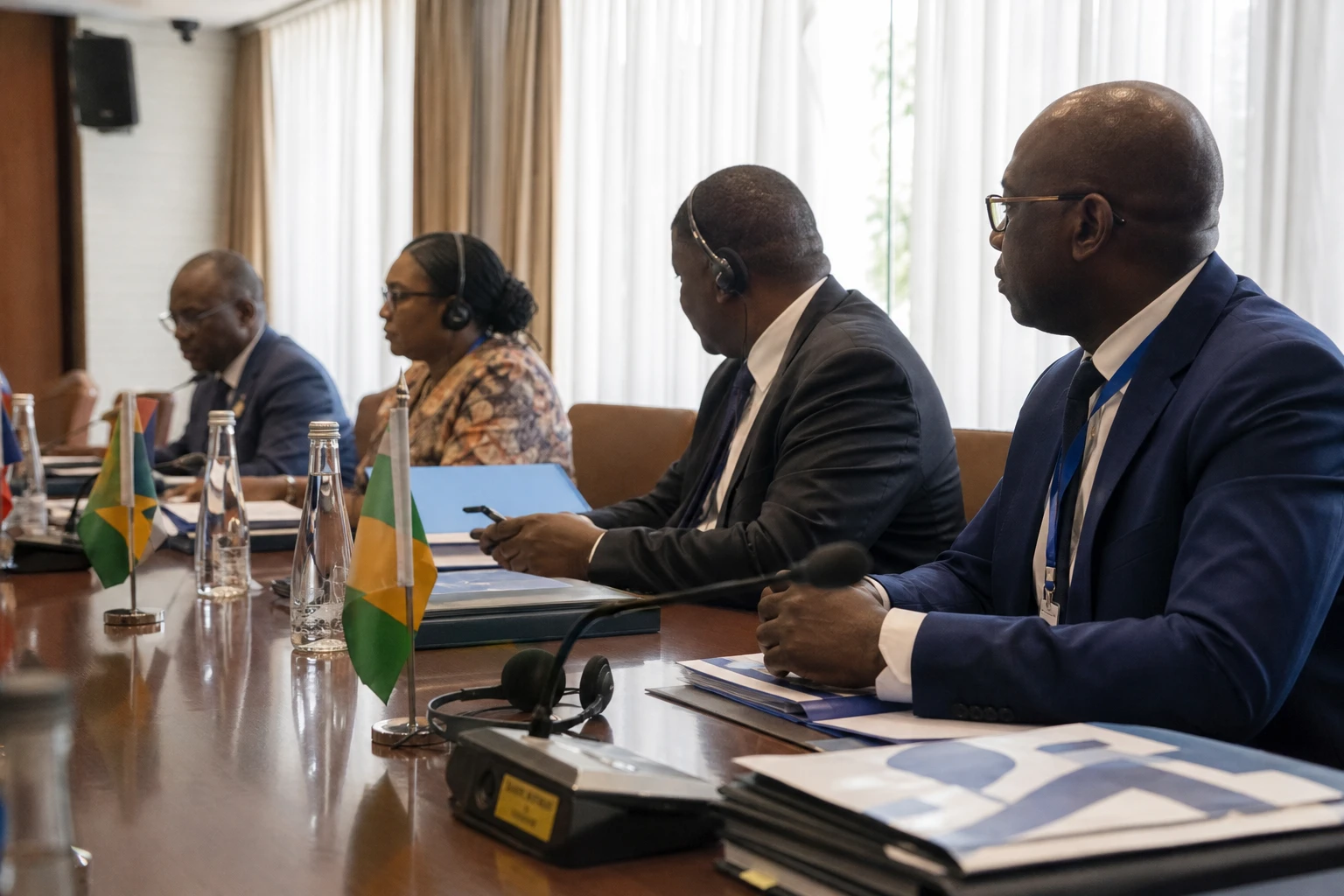
In the Congolese capital, debate over the Constitution is no longer simply a matter for legal experts. It has become a political test, with the authorities saying they want to launch an inclusive national dialogue, while the opposition fears that reform of the fundamental text could reopen the question of a third term. The Democratic Republic of the Congo, a vast country in Central Africa, thus finds itself at the crossroads of two competing approaches: the search for national consensus and the fear of institutional upheaval.
The issue goes to the heart of Congo’s institutional balance. The current Constitution, promulgated in 2006 and revised in 2011, limits the president to two five-year terms and locks certain articles, including those protecting the term limit. This is precisely the safeguard the opposition cites to denounce any attempt to revise or replace the text.
What the C64 accuses the authorities of
Meeting in Kinshasa, the Article 64 Coalition for the Defence of the Constitutional Order, known as the C64, said the commitments made by the authorities had failed to convince it. The platform includes Martin Fayulu, Moïse Katumbi, Delly Sesanga, Jean-Marc Kabund and Matata Ponyo. It was formed in spring 2026 around a clear position: to reject any challenge to the 2006 Constitution and oppose what it sees as an open path towards a third term for Félix Tshisekedi.
The coalition bases its position on a strict reading of Articles 70 and 220. The first limits the head of state to two terms. The second protects provisions considered unamendable. For the opposition, these two articles constitute a red line. In the president’s camp, the debate remains more political than legal, as the question of a possible national dialogue was put back at the centre of the debate after Félix Tshisekedi met representatives of religious denominations in Kinshasa on 17 July.
After its meeting, the C64 maintained the pressure. It set 15 September as the date for its next mobilisation and wants to make it a visible moment of protest across the country. In Kinshasa, the announced gatherings are to converge on the People’s Palace, the seat of Parliament. The date is no coincidence: it coincides with the start of the parliamentary session, when institutional power dynamics become clearer.
The coalition also considers that sending the proposal back to Parliament does not amount to abandoning or withdrawing the constitutional project. In other words, it believes the danger remains as long as no formal renunciation has been made. This interpretation explains its radical tone. It also reflects deep mistrust of the institutions tasked with arbitration, particularly the Constitutional Court, which the opposition regularly accuses of being too close to the authorities.
Why the timing is politically sensitive
The issue goes beyond rivalry between political camps. In the DRC, institutional questions are intertwined with a fraught security and regional context. The country has been a member of SADC since 1998 and of the East African Community since 2022. It also plays a role in the African Union’s continental debates, where its stability matters to Central Africa and the Great Lakes region as a whole. A political crisis in Kinshasa rarely stays confined to Kinshasa.
This is one of the most sensitive aspects of the standoff. A conflict over the Constitution can paralyse government action, strain relations between institutions and divert attention from the country’s urgent needs: security in the east, purchasing power, public services, the movement of goods and confidence in the electoral process. For city dwellers, the battle is often played out in the streets, at rallies and in public statements. In rural areas, it translates more starkly into the state’s remoteness and the fragility of local administration.
The divide is also generational and social. The C64 parties speak to some urban voters, who are politically engaged and closely focused on the duration of those in power. The government, for its part, stresses the idea of an inclusive dialogue, backed by religious denominations, to prevent the protests from turning into an open crisis. Between the two, much of the population is mainly asking for stability, wages paid on time and a functioning state.
The calendar adds another layer of tension. According to the C64, 15 September is to serve as a show of strength just as Parliament resumes its work. In a capital such as Kinshasa, where mass mobilisations often carry as much weight as written laws, the streets can once again become a symbolic arbiter. But the outcome of the power struggle will depend above all on the actors’ ability to turn confrontation into a credible framework for negotiations.
A Congolese issue, but not only a Congolese one
The DRC is not the only African country where the Constitution has become a battleground for political struggle. But its population size, strategic position and ties to several regional organisations give this issue particular resonance. Across the continent, an episode of this kind in Congo is being watched closely because it touches on a central question: the duration of political power and the predictability of a transfer of power. The African Union says it brings together 55 member states and promotes the continent’s political integration; in this context, constitutional stability is never purely a domestic matter.
Over the coming weeks, attention will focus on three points. First, the form the dialogue promised by the authorities will take. Second, how Parliament handles the constitutional issue when it resumes. Finally, the C64’s ability to maintain genuine unity among its most prominent figures. In Congo’s often fragmented political landscape, the cohesion of the opposition matters as much as the authorities’ strategy.
At heart, the episode says something broader about the DRC: Congolese democracy makes progress when the rules of the game are accepted by all, but is exposed to risk whenever one side of the political arena suspects the other of wanting to change the rules in the middle of the game. That is where, far beyond Kinshasa, part of the precedent other African capitals will remember is being set.