Algeria
 Egypt
 Libya
 Morocco
 Sudan
 Tunisia
 Benin
 Burkina Faso
 Cabo Verde
 Côte d'Ivoire
 Ghana
 Guinea
 Guinea-Bissau
 Liberia
 Mali
 Mauritania
 Niger
 Nigeria
 Senegal
 Sierra Leone
 The Gambia
 Togo
 Cameroon
 Central African Republic
 Chad
 DR Congo
 Equatorial Guinea
 Gabon
 Republic of the Congo
 São Tomé and Príncipe
 Burundi
 Comoros
 Djibouti
 Eritrea
 Ethiopia
 Kenya
 Madagascar
 Malawi
 Mauritius
 Mozambique
 Rwanda
 Seychelles
 Somalia
 South Sudan
 Tanzania
 Uganda
 Angola
 Botswana
 Eswatini
 Lesotho
 Namibia
 Zambia
 Zimbabwe

When an abandoned mine becomes a deadly trap again
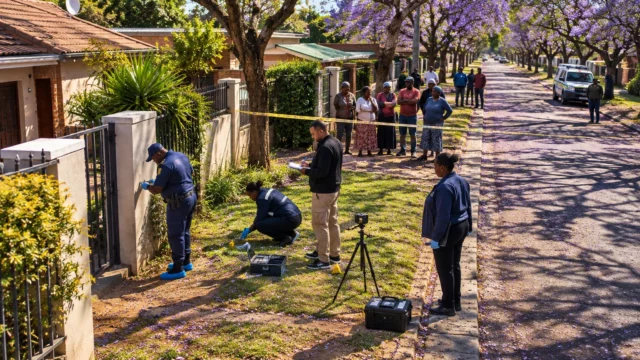
In Rustenburg, in South Africa’s North West province, the ground has once again highlighted a familiar danger: mining sites left unsupervised but never entirely deserted. On Monday evening, the collapse of an excavation at a former mining site killed at least 14 artisanal miners and injured eight others, according to an initial toll confirmed by police. The victims were working illegally at the site. Authorities also say they are continuing searches to check whether anyone else remains trapped.
The location is significant. Rustenburg lies about 130 kilometres north-west of Johannesburg, at the heart of a strategic platinum-mining area. In this part of South Africa, legal extraction has coexisted for years with clandestine activity at closed shafts, abandoned galleries and reworked mine dumps. This is where artisanal miners, often called zama zamas, search for remnants of gold, platinum or other minerals, in conditions that almost always evade state control.
What the authorities have established
On Tuesday, North West police corrected an initial account circulating about a collapsed shaft. In fact, it was an open excavation at a former dump site, whose walls collapsed on the workers. The distinction matters because it describes a makeshift and extremely unstable method of mining, very different from a conventional underground gallery collapse. The North West province is treating the investigation as a criminal case, as well as pursuing a line of inquiry linked to illegal mining activities.
Initial police findings indicate that most of the victims were nationals of neighbouring Lesotho. At this stage, that indication is attributed to investigators and does not rule out further identity checks still under way. In several mining disasters in South Africa in recent years, the presence of workers from Lesotho, Zimbabwe or Mozambique has already complicated searches, notifications to families and the identification of bodies.
Acting provincial commissioner Major-General Arthur Adams said law enforcement was not conducting only a criminal investigation. It was also seeking to document the networks and illegal activities around the site. This dimension is central. Behind the deaths there is almost always a wider chain: recruiters, resellers, smugglers, local intermediaries and, sometimes, organised criminal groups.
Why North West remains a sensitive area
North West has long been one of the areas most exposed to tensions linked to mining. The province is home to major legal operations, but also closed sites, high unemployment and parallel networks that thrive on the residual value of minerals. In Rustenburg and the surrounding area, police operations have multiplied in recent months. They target both incursions into mining sites and the associated logistics: tools, explosives, fuel, provisions, weapons and transport.
This underground economy affects more than the miners themselves. It has an impact on local communities, small businesses, public services and the safety of neighbourhoods near former mining sites. In the province’s peri-urban areas, residents often bear the indirect consequences: intimidation, cable theft, violence between groups, pressure on clinics and a sense of abandonment around former mining sites. The phenomenon also weighs on legal miners, who face production losses and additional security costs.
The term zama zamas has become common in South Africa to describe these clandestine miners. Literally, the expression conveys the idea of “trying one’s luck” again and again. But the term does not describe a homogeneous group. It includes vulnerable South Africans, nationals of neighbouring countries, young men, sometimes armed networks and sometimes simply workers with no other source of income. It would therefore be misleading to reduce the issue to migration. The heart of the problem remains the illegal mineral economy and the persistent weakness of controls over thousands of disused sites.
A security response that is not enough on its own
President Cyril Ramaphosa has made the fight against organised crime and illegal mining one of the pillars of the national security response. In 2026, the executive confirmed the deployment of the army alongside police in several provinces, including North West, as part of a co-ordinated operation against gangs, trafficking and illegal mines. The government has reiterated the constitutional basis for the intervention, presenting the measure as temporary support for law enforcement.
On the ground, there have been results. The operations known as Operation Prosper and Operation Vala Umgodi have led to arrests, equipment seizures and the detention of people in the country irregularly in several provinces. But these crackdowns do not resolve the underlying issue: as long as abandoned sites remain accessible, demand for minerals remains strong and unemployment drives men to take these risks, clandestine activity will return.
The events in Rustenburg also highlight a reality that is often underestimated: the boundaries between mine security, organised crime and social vulnerability have become highly porous. South African authorities are not dealing only with incursions on mining concessions. They must manage areas where legal extraction, the informal economy and the cross-border movement of workers and goods constantly intersect. This is a national challenge, but also a regional one, in a southern Africa where labour mobility, income disparities and dependence on mining remain deeply intertwined.
A local case with regional ramifications
For South Africa, the stakes go beyond the death toll. The country must show that it can secure its mining assets without treating poor workers as a secondary concern. For Lesotho, if identification of the victims confirms this lead, the tragedy will once again point to the exodus of Basotho workers towards the South African labour market, legal or otherwise. For the Southern African Development Community, SADC, the issue concerns the movement of people, police co-operation and shared responsibility for networks that exploit weaknesses at borders.
Rustenburg thus joins a grim series that has marked the country: Stilfontein, Buffelsfontein, Virginia, followed by other police operations around disused mines. Each episode raises the same question, broader than the incident itself: how can South Africa move beyond a model in which depleted sites continue to swallow lives, even as mining remains one of the pillars of the country’s contemporary economy? The response cannot be solely a police one. It must also be social, industrial and regional.