Algeria
 Egypt
 Libya
 Morocco
 Sudan
 Tunisia
 Benin
 Burkina Faso
 Cabo Verde
 Côte d'Ivoire
 Ghana
 Guinea
 Guinea-Bissau
 Liberia
 Mali
 Mauritania
 Niger
 Nigeria
 Senegal
 Sierra Leone
 The Gambia
 Togo
 Cameroon
 Central African Republic
 Chad
 DR Congo
 Equatorial Guinea
 Gabon
 Republic of the Congo
 São Tomé and Príncipe
 Burundi
 Comoros
 Djibouti
 Eritrea
 Ethiopia
 Kenya
 Madagascar
 Malawi
 Mauritius
 Mozambique
 Rwanda
 Seychelles
 Somalia
 South Sudan
 Tanzania
 Uganda
 Angola
 Botswana
 Eswatini
 Lesotho
 Namibia
 Zambia
 Zimbabwe
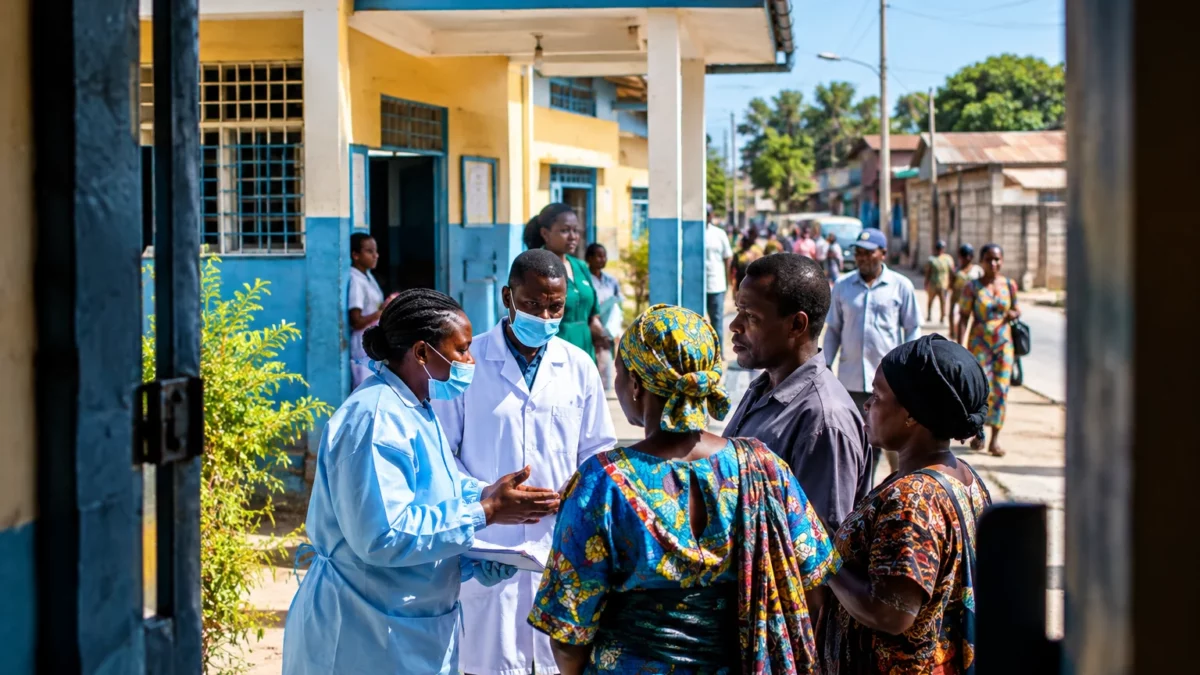
This week, several issues underscore how decisions taken at national level can have repercussions beyond borders: an epidemic engaging the health systems of several countries, tensions between neighbours in the Horn of Africa, and political milestones closely watched by their citizens.
National crises with regional consequences
In southern Africa, two separate shootings left at least 17 people dead during the night of 15 to 16 November 2026. Nine people were killed near Pretoria, South Africa’s capital, and eight others near Pietermaritzburg, in KwaZulu-Natal province. Authorities are investigating the circumstances and searching for suspects. Initial information does not establish a link between the two attacks.
The killings come in a country that has long faced high levels of violent crime. They bring questions of neighbourhood security and law enforcement’s ability to prevent attacks back to the fore. But the information available does not yet establish the perpetrators’ motives. It is therefore important not to reduce these events to a single explanation or conflate the two scenes.
Further north, relations between Ethiopia and Sudan are becoming strained. The two states accuse each other of supporting armed groups active on their respective territories. These accusations remain disputed and must be distinguished from established facts. They nonetheless come amid an already fragile regional environment: Sudan has been at war since April 2023, while Ethiopia faces several internal conflict hotspots. A deterioration in bilateral relations would complicate cross-border movements and mediation efforts.
The border between the two countries is not merely a diplomatic issue. Clashes and tensions can affect people living in border areas, displaced people and trade. At this stage, the reciprocal accusations are not enough to establish either government’s direct involvement in the fighting. Caution remains essential as diplomatic efforts and regional conflict-prevention mechanisms come under particular strain.
Access to communities is also key to the Ebola response
In the Democratic Republic of the Congo (DRC), the Ebola outbreak caused by the Bundibugyo virus remains a major health emergency. As of 15 November, Africa CDC, the African Union’s public health agency, reported more than 11,000 cases and more than 5,400 deaths. These figures relate to the outbreak monitored over several months and were reported by the continental body, which is coordinating the health response with the World Health Organization.
The toll alone does not measure the scale of the work required. Cases must be detected quickly, contacts traced, sick people isolated and accessible care provided. Reaching remote or hard-to-access communities is a central challenge. Congolese authorities and their partners must also maintain residents’ trust: information, local care and taking account of local realities are integral to the response.
The outbreak also has a cross-border dimension. Movement between countries makes surveillance and coordination between health authorities essential, without justifying the stigmatisation of travellers or the communities concerned. Africa CDC and the WHO are supporting a joint response with exposed countries. The situation is a reminder that detection and treatment capacity must be strengthened over the long term, not only during epidemic peaks.
Elections, justice and representation on the agenda
In Cape Verde, a West African archipelago whose capital is Praia, José Maria Neves has been re-elected for a second term. Provisional results published on 16 November gave him about 64% of the vote. The election was contested by the incumbent president and five other candidates. Neves said he wanted to be the president of all Cape Verdeans and to pursue his priorities in employment, health and education. The final validation of the results remains a step to watch.
In The Gambia, the campaign for the 5 December presidential election opens on 16 November, according to the Independent Electoral Commission. It is due to run until 3 December. The period will test the electoral institutions and the candidates’ ability to conduct a peaceful contest. The vote is a major political milestone for this small West African country, a member of ECOWAS, the regional organisation that plays a role in cooperation and crisis prevention.
In Mozambique, the Supreme Court is due to open the trial of opposition figure Venâncio Mondlane in Maputo on 17 November. He faces five charges related to the protests that followed the 2024 election. The case is sensitive: the legal proceedings are taking place amid political contestation and debate over civil liberties. The charges must be presented as allegations, not as established facts before the verdict. The transparency of the hearings and respect for legal safeguards will affect confidence in the justice system.
At continental level, the 9th Pan-African Youth Forum is taking place from 16 to 19 November at the African Union headquarters in Addis Ababa, Ethiopia. Discussions focus in particular on employment, education and entrepreneurship, as the African Youth Charter marks its 20th anniversary. The challenge goes beyond declarations: young people expect public policies and institutions to offer concrete prospects in economies and societies that differ greatly from one country to another.
Morocco will host the 23rd edition of its International Film Festival in Marrakech from 20 to 28 November. The programme will bring together films from several countries and place cinema among the spaces for dialogue and cultural exchange. The event is also a reminder that pan-African current affairs are not limited to political and health crises: cultural industries contribute to how societies are represented and to bringing audiences together.
Francophonie between diplomacy and compromise
Meeting in Phnom Penh on 15 and 16 November, leaders of the member states and governments of the International Organisation of La Francophonie decided to extend the term of its secretary-general by 12 months. The election of a successor has therefore been postponed until 2027. The decision comes amid tensions between Kinshasa and Kigali, against the backdrop of conflict in the east of the DRC. It is an institutional compromise: postponing the choice of a leader buys time, but does not resolve the political disagreements surrounding the organisation.
For African member countries, La Francophonie is both a forum for linguistic cooperation and a diplomatic platform. What happens next will therefore depend as much on the internal electoral timetable as on members’ ability to maintain dialogue despite their differences. Other milestones this week will be just as revealing: the course of the epidemic in the DRC, the progress of the campaign in The Gambia and the safeguards offered in the Maputo trial.