Algeria
 Egypt
 Libya
 Morocco
 Sudan
 Tunisia
 Benin
 Burkina Faso
 Cabo Verde
 Côte d'Ivoire
 Ghana
 Guinea
 Guinea-Bissau
 Liberia
 Mali
 Mauritania
 Niger
 Nigeria
 Senegal
 Sierra Leone
 The Gambia
 Togo
 Cameroon
 Central African Republic
 Chad
 DR Congo
 Equatorial Guinea
 Gabon
 Republic of the Congo
 São Tomé and Príncipe
 Burundi
 Comoros
 Djibouti
 Eritrea
 Ethiopia
 Kenya
 Madagascar
 Malawi
 Mauritius
 Mozambique
 Rwanda
 Seychelles
 Somalia
 South Sudan
 Tanzania
 Uganda
 Angola
 Botswana
 Eswatini
 Lesotho
 Namibia
 Zambia
 Zimbabwe
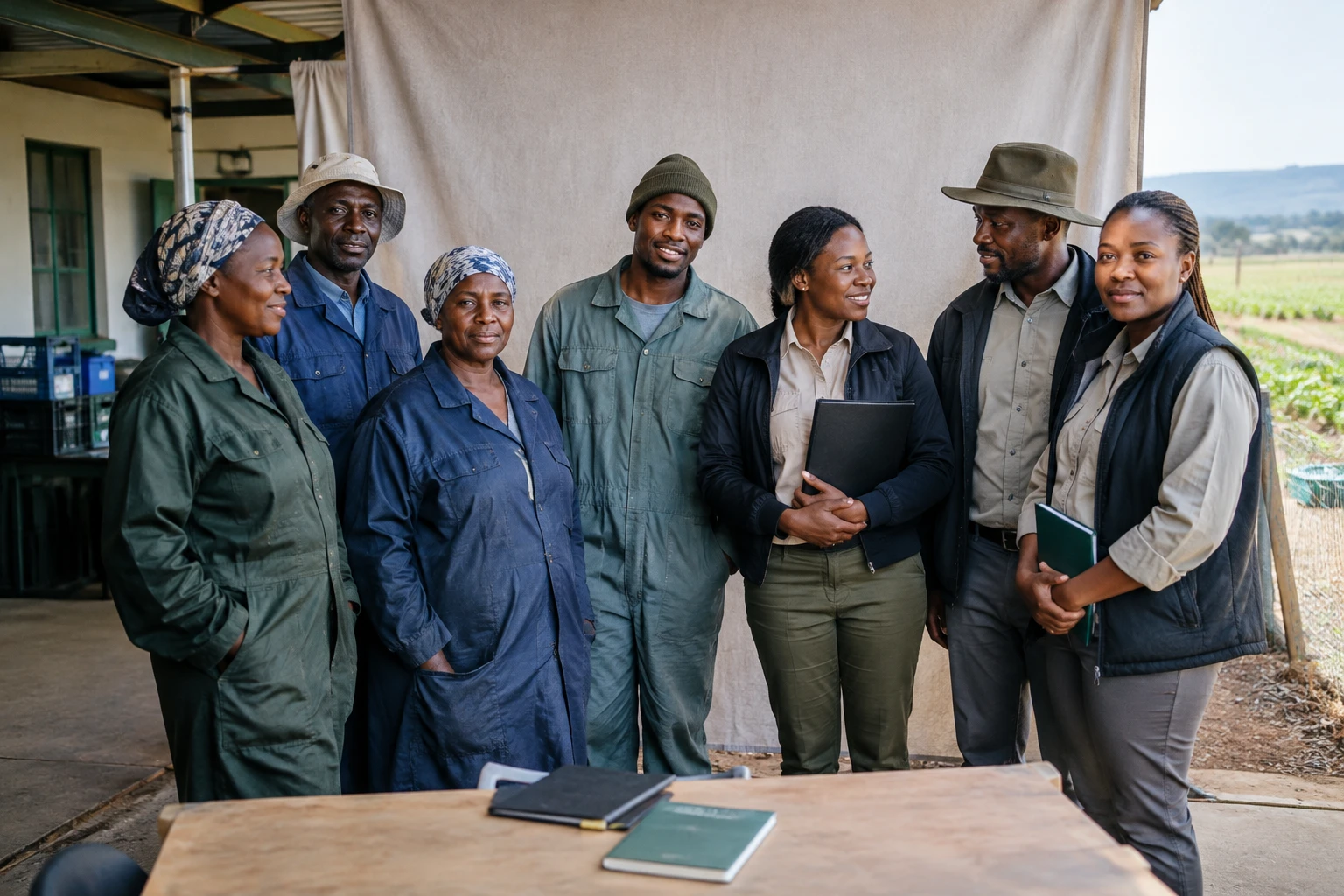
Handing out title deeds is not enough to make a farm viable. For black farmers who have waited for years for lasting access to land, the challenge is also to finance seeds, access water and sell their produce. It is this practical test that will determine the success of South Africa’s new phase of land redistribution.
A reform rooted in South Africa’s land history
The land question remains one of the heaviest legacies of colonialism and apartheid. The Natives Land Act of 1913 restricted the land rights of black people, before the 1936 law expanded the areas reserved for them. These measures accompanied evictions and a lasting concentration of property ownership. Democracy opened the way to restitution, redistribution and the protection of rights, but progress on these three fronts has been uneven.
South Africa’s constitution requires the state to promote more equitable access to land. It also recognises the rights of people and communities dispossessed under racial laws. In practice, access to farmland remains unequal, while many restitution claims are still unresolved. The government therefore presents redistribution as a matter of historical justice, but also as a lever for production, employment and food security.
The issue has also taken centre stage in recent political debate, particularly around the expropriation law and the terms of reform. The programme announced here concerns land acquired by the state over the years for redistribution. According to information made public, it does not involve a general expropriation of privately owned land.
2.5 million hectares announced, with title deeds
President Cyril Ramaphosa said in 2026 that the state was beginning to release about 2.5 million hectares of public land to black farmers. The ministry responsible for land reform has begun allocating the land with title deeds, according to a presidential statement delivered during a visit to a farm in the Eastern Cape province. The initiative is part of the Proactive Land Acquisition Strategy, the public programme for acquiring land for redistribution.
This change in status matters. Under previous arrangements, beneficiaries could farm public land under leases without becoming its owners. A title deed can strengthen their tenure security and capacity to invest. It may also make some financing procedures easier, although ownership alone does not guarantee access to credit.
The government presents the release of this land as a way to develop a new generation of commercial farms owned by black farmers. However, the announced area does not mean that all the land is immediately available, uniform or suited to the same types of production. It remains essential to publish its location, condition, agricultural potential and allocation criteria.
Production figures previously cited by agricultural economist Wandile Sihlobo, an adviser to the president, should be read as projections rather than as an established outcome. He estimated that putting the land portfolio to use could increase agricultural production. The proportion of unused land and the potential gains will, however, depend on each parcel, water resources and the investments made.
Land cannot replace finance or market access
Starting out requires far more than a title deed. Farmers often need equipment, inputs, passable roads, technical advice and buyers. Water is crucial, particularly in a country facing episodes of drought and wide variations in agricultural conditions between provinces. Without this support, a transferred plot may remain underused or become a financial burden.
This concern has been raised in public debate by representatives of black farmers. They want access to land to be accompanied by technical support, professional networks and suitable financing. The government cites, among other measures, the Land Bank’s blended finance facility, which combines public grants and loans. But the scale of need, the pace of disbursements and the terms of access will determine its real impact.
The selection of beneficiaries will also affect the programme’s credibility. Transparent rules are needed to assess applicants, take account of both experience and new projects, and prevent favouritism or speculation. Women and young farmers must also be able to access land and resources, rather than remain on the margins of ownership transfers.
The impact will not be the same everywhere. In rural areas, new farms could support employment and local businesses. But commercial farms do not all create the same number of jobs, and benefits may be concentrated among owners or in already established supply chains. Small-scale producers, farm workers and neighbouring communities will also depend on production choices, employment conditions and the sharing of water.
A South African issue with implications beyond its borders
South African agriculture is already geared towards foreign markets. In 2025, agricultural exports reached a record level, according to public statements by the government, and about half of production is destined for export markets. The African continent accounts for a significant share of these markets. Bringing new producers into supply chains could therefore broaden the benefits of agricultural trade, provided they can meet standards, secure financing and gain access to logistics.
For SADC — the Southern African Development Community, which brings together countries in the region — South Africa’s ability to produce and trade agricultural goods has implications for regional trade. But rising exports do not automatically guarantee better food security for South African households. Local prices, the crops chosen and producers’ access to domestic markets will also matter.
The next step, then, will be less about announcing an area than producing a verifiable assessment: how many hectares have actually changed hands, who received them, which farms are operating and what support they have been given. For farmers, the test will be turning a title deed into a viable business. For the government, it will be showing that reform can address a historic inequality without leaving new owners to face the costs and risks of production alone.