
 Algeria
 Egypt
 Libya
 Morocco
 Sudan
 Tunisia
 Benin
 Burkina Faso
 Cabo Verde
 Côte d'Ivoire
 Ghana
 Guinea
 Guinea-Bissau
 Liberia
 Mali
 Mauritania
 Niger
 Nigeria
 Senegal
 Sierra Leone
 The Gambia
 Togo
 Cameroon
 Central African Republic
 Chad
 DR Congo
 Equatorial Guinea
 Gabon
 Republic of the Congo
 São Tomé and Príncipe
 Burundi
 Comoros
 Djibouti
 Eritrea
 Ethiopia
 Kenya
 Madagascar
 Malawi
 Mauritius
 Mozambique
 Rwanda
 Seychelles
 Somalia
 South Sudan
 Tanzania
 Uganda
 Angola
 Botswana
 Eswatini
 Lesotho
 Namibia
 Zambia
 Zimbabwe
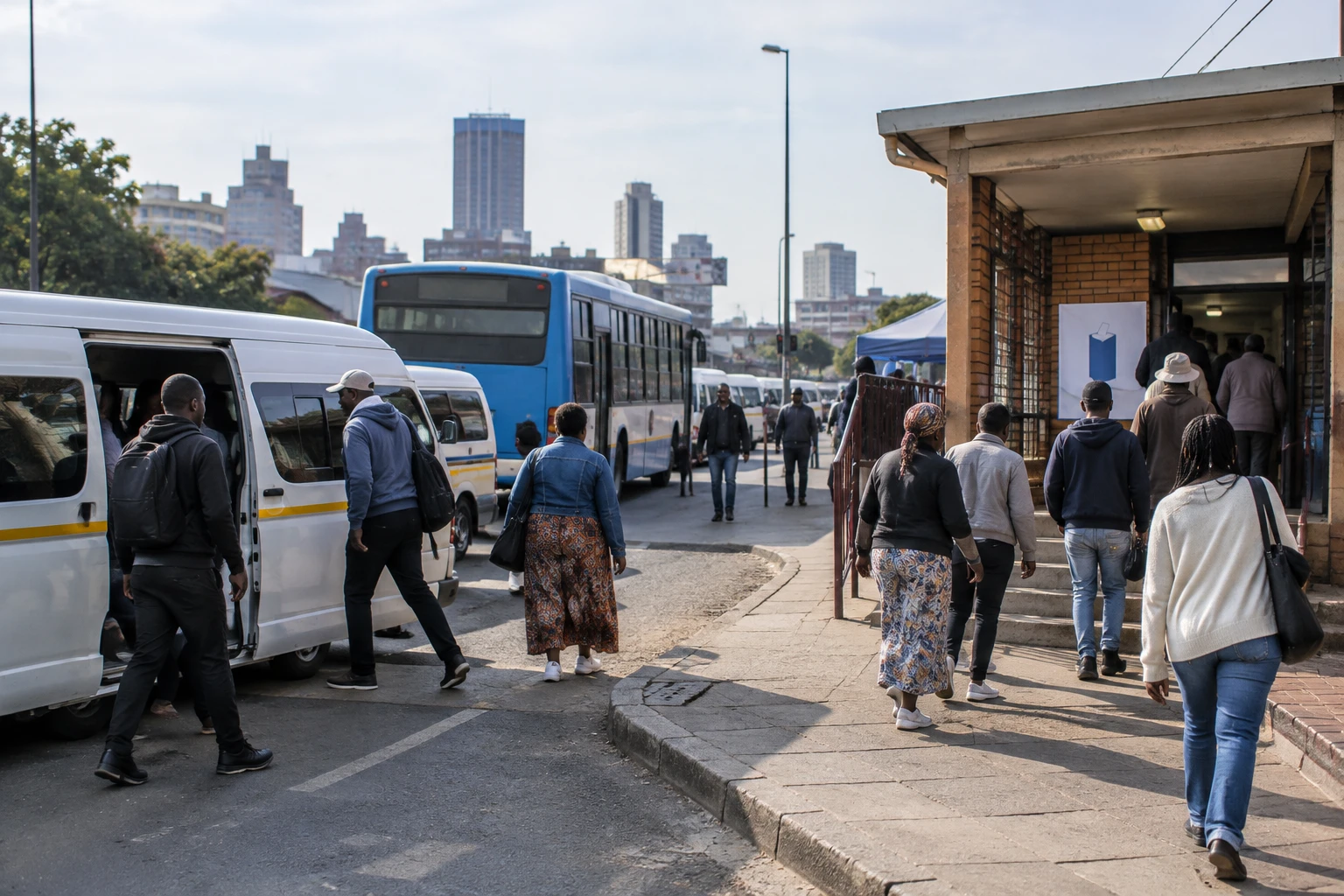
From Johannesburg neighbourhoods to small municipalities, the local elections turn on everyday realities: water from the tap, maintained roads and rubbish collection. Provisional results from the 4 November vote point to a major retreat by the ANC, but also to a fragmented local landscape in which winning votes does not guarantee the ability to govern.
Local government at the heart of everyday life
In South Africa, municipal councils oversee essential services: water distribution, sanitation, roads and rubbish collection. Voters do not choose their mayor directly. They elect councillors, who then appoint municipal executives and may have to negotiate coalitions.
The vote comes after a national turning point. In 2024, the African National Congress (ANC), in power since the end of apartheid, lost its majority in Parliament for the first time. It has governed since then with the Democratic Alliance (DA) and other parties. In the 2021 local elections, the ANC had already fallen to just over 45% of the vote, its worst municipal result to date.
The issues vary from one area to another. In major cities, infrastructure management and coalition stability carry considerable weight. In Pretoria, the country’s capital, campaign debates focused in particular on water supply. In less urbanised municipalities, regular access to services and the ability of local administrations to meet people’s needs also remain crucial.
Vote count confirms ANC retreat
South Africans voted on Wednesday 4 November 2026. As of 7 November, the Independent Electoral Commission (IEC) results dashboard showed that 99% of votes had been counted. The figures remained provisional: 209 of the 213 municipalities had been tallied, and seat allocations had not been completed everywhere.
At that stage, the ANC had 30.83% of the vote, compared with 24.59% for the DA. The change from 2021 was marked: the ANC was down 14.76 percentage points, while the DA was up 2.93 points. These official provisional figures confirm trends reported by independent media as the count progressed. They should not, however, be mistaken for a final declaration of results.
The uMkhonto weSizwe (MK) party, founded by former president Jacob Zuma, had 9.69%. The Economic Freedom Fighters (EFF) came in at 6.24%, and ActionSA at 5.68%. The spread of votes among several parties is making local councils harder for any single party to control.
The major cities illustrate this fragmentation. In Johannesburg, the ANC was ahead according to the IEC dashboard, but without an absolute majority on the council. In Tshwane, the DA was also leading without securing a majority on its own. In eThekwini, which includes Durban, MK was in the lead, but far short of the seats needed to govern alone. In Cape Town, by contrast, the DA had a majority on the council.
Majorities to negotiate, services to deliver
The number of votes secured nationally is therefore not enough to determine who will lead each city. Seats, alliances and agreements between councillors will decide the make-up of municipal executives. The election dashboard listed 135 councils without an absolute majority among the 209 municipalities counted. In several major cities, negotiations between parties will be necessary.
For residents, the stakes go beyond competition between political organisations. An unstable coalition can delay budget decisions or complicate the continuation of projects. Conversely, a lasting majority does not in itself guarantee better services. Elected representatives will be judged on their ability to repair networks, carry out maintenance and account for how municipal funds are used.
The ANC’s difficulties cannot be reduced to a uniform national rebuke. Results vary from one province and city to another. The party remains the leading force in many municipalities, but can no longer take dominant electoral support for granted. The DA is gaining ground, while MK and other parties are creating stronger competition, particularly in KwaZulu-Natal.
This new balance of power is also testing relations between partners in the government of national unity. The ANC and the DA work together nationally while competing for municipal councils. This coexistence may enable some compromises, but it does not erase their differences or their competition for political leadership.
A signal for southern Africa and the next national election cycle
The municipal vote is not a direct referendum on the national government. It is nevertheless an important political indicator, with the next general election due in 2029, three years away. The ANC’s decline reinforces the view that its historic roots are no longer enough to preserve its dominance, while the DA’s gains do not automatically give it the means to govern alone.
At the regional level, South Africa remains a central player in the Southern African Development Community (SADC), a co-operation organisation for countries in southern Africa. The quality of its local institutions also matters: municipalities are the first level at which citizens can assess elected representatives’ accountability and the effectiveness of the administration in concrete terms.
The next step will be the IEC’s finalisation of the results, followed by the formation of councils and coalitions. The balance of power in major cities, particularly Johannesburg, Tshwane and eThekwini, will show whether parties can turn their vote share into governing agreements. The ANC now faces a twofold challenge: to win back trust and to demonstrate, municipality by municipality, that its administrations can provide the services people expect.



