
 Algeria
 Egypt
 Libya
 Morocco
 Sudan
 Tunisia
 Benin
 Burkina Faso
 Cabo Verde
 Côte d'Ivoire
 Ghana
 Guinea
 Guinea-Bissau
 Liberia
 Mali
 Mauritania
 Niger
 Nigeria
 Senegal
 Sierra Leone
 The Gambia
 Togo
 Cameroon
 Central African Republic
 Chad
 Equatorial Guinea
 Gabon
 Republic of the Congo
 São Tomé and Príncipe
 Burundi
 Comoros
 Djibouti
 Eritrea
 Ethiopia
 Kenya
 Madagascar
 Malawi
 Mauritius
 Mozambique
 Rwanda
 Seychelles
 Somalia
 South Sudan
 Tanzania
 Uganda
 Angola
 Botswana
 Eswatini
 Lesotho
 Namibia
 South Africa
 Zambia
 Zimbabwe
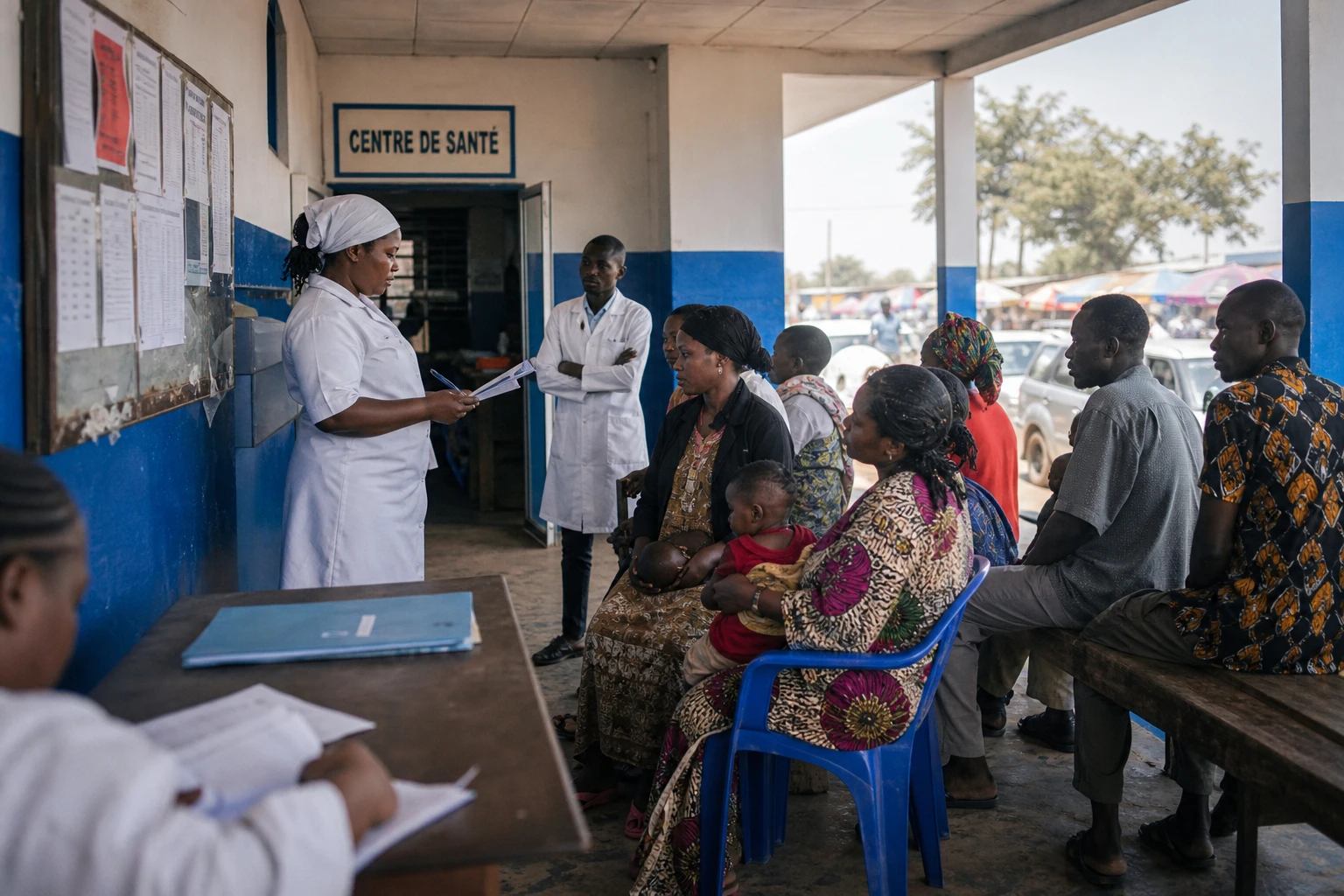
An alert that goes beyond the outbreak figures
In eastern Democratic Republic of the Congo, Ebola is about more than counting cases. The disease is also disrupting routine care, separating families and complicating daily life in an area already affected by population displacement and security tensions. In the affected health zones, it is not only the virus that is taking its toll, but the entire health ecosystem around it.
The issue is all the more sensitive because the current outbreak is centred in Ituri, in the north-east of the country, with spread into North Kivu and South Kivu. On 17 May 2026, the World Health Organization confirmed that it was an outbreak caused by the Bundibugyo virus, an Ebola strain for which there is no licensed vaccine or approved specific treatment.
Ituri, North Kivu, South Kivu: a health crisis in an area under pressure
Eastern Congo is not neutral ground for an epidemic response. Population movements, insecurity, fragile healthcare facilities and the coexistence of formal hospitals and informal health networks make surveillance more difficult. The WHO highlighted this when it declared the international emergency: the humanitarian crisis, high mobility and network of non-formal facilities increase the risk of spread.
The DRC has already learned to contain several Ebola outbreaks, notably in the provinces of North Kivu and Ituri in 2018-2019, and then during the outbreak declared over on 1 December 2025 in Kasai. This recent experience explains the authorities’ rapid response, but also shows that the memory of epidemics is not enough when roads are cut off, families are on the move and confidence in healthcare is wavering.
The facts: an outbreak larger than initially reported
As of 16 May 2026, the WHO reported eight laboratory-confirmed cases, 246 suspected cases and 80 suspected deaths in Ituri, at least in the areas of Bunia, Rwampara and Mongbwalu. Two confirmed cases had also been reported in Kampala, Uganda, in people who had come from the DRC, prompting the UN agency to classify the event as a public health emergency of international concern.
The figures then changed rapidly. On 8 June, the National Public Health Institute reported 515 confirmed cases and 91 deaths in Ituri, North Kivu and South Kivu. On 22 June, figures reported by international media and news agencies put the total at 1,003 confirmed cases and 254 deaths, with 100 recoveries and 365 patients hospitalised or isolated.
It is against this backdrop that the warning about children should be read. On 22 June, UNICEF said that about 2.95 million children and adolescents were exposed to risks in 31 health zones in eastern DRC. The organisation also said that, as of 19 June, people under 18 accounted for about 15% of confirmed cases and more than 25% of confirmed deaths in the east of the country. In Ituri, more than 130 children had already been orphaned.
These figures give weight to the UN’s remarks on the toll among children. The figure of more than 300 children dead should be understood as an estimate consolidated by UNICEF and repeated in UN communications, at a time when the outbreak had already grown substantially beyond the initial reports.
How the outbreak is affecting families, healthcare workers and pregnant women
The first consequence is a partial collapse in the use of healthcare services. The UN has reported a drop of more than 40% in consultations in the worst-affected areas, as fear of infection keeps patients away from health facilities. The problem is not limited to Ebola. It also affects vaccinations, childbirth, nutritional care and treatment for common illnesses.
Pregnant women are particularly exposed. In Bunia and other areas of Ituri, response teams are also monitoring high-risk pregnancies. The government has acknowledged, through its Minister of Humanitarian Affairs, that temporary nurseries and care arrangements are being set up for children separated from their parents or orphaned. The health response is therefore becoming a social response, as children must be protected without further disrupting families.
Healthcare workers are also paying a high price. The WHO has reported deaths among health workers in Mongbwalu, a sign of persistent gaps in infection prevention and control. When hospitals are fragile, part of the system remains informal and mistrust spreads faster than reliable information, the virus finds openings.
A regional response, and a test for central Africa and the Great Lakes
The response is not being managed in Kinshasa alone. It also depends on coordination with Uganda, border surveillance, support from Africa CDC and partners’ ability to work together. Africa CDC called for urgent regional coordination as early as 15 May, precisely because the outbreak had already crossed borders.
For the DRC, the stakes go beyond Ebola itself. The challenge is to show that a health system can still act quickly, drawing on its experience, the provincial authorities in Ituri and technical partners. For the population, the question is more immediate: being able to seek treatment without fear, protecting children, keeping maternity units open and limiting disruption to daily life.
At continental level, this outbreak is a reminder of a constant reality in the Great Lakes: a viral disease can quickly become a regional problem when trade routes, forced displacement and fragile health systems intersect. The UN, WHO, UNICEF and Africa CDC are now monitoring three fronts at once: transmission, child protection and the ability of essential services to keep going over time.



