Algeria
 Egypt
 Libya
 Sudan
 Tunisia
 Benin
 Burkina Faso
 Cabo Verde
 Côte d'Ivoire
 Ghana
 Guinea
 Guinea-Bissau
 Liberia
 Mali
 Mauritania
 Niger
 Nigeria
 Senegal
 Sierra Leone
 The Gambia
 Togo
 Cameroon
 Central African Republic
 Chad
 DR Congo
 Equatorial Guinea
 Gabon
 Republic of the Congo
 São Tomé and Príncipe
 Burundi
 Comoros
 Djibouti
 Eritrea
 Ethiopia
 Kenya
 Madagascar
 Malawi
 Mauritius
 Mozambique
 Rwanda
 Seychelles
 Somalia
 South Sudan
 Tanzania
 Uganda
 Angola
 Botswana
 Eswatini
 Lesotho
 Namibia
 South Africa
 Zambia
 Zimbabwe
A ribbon of asphalt, a political gesture
In Morocco, a road is almost never just a road. When it crosses the southern provinces, it also becomes a marker of sovereignty, development and diplomacy. The Tiznit-Dakhla expressway is another example: an infrastructure project has become a political signal directed at Washington, but also at the rest of the African continent.
In Morocco’s view, Dakhla is not simply a city on the Atlantic coast. It is part of a national strategy linking the north of the kingdom to its far south, and then to West Africa. Rabat sees it as an economic, logistical and symbolic corridor. Its critics, meanwhile, point out that this geography remains inseparable from the Western Sahara dispute, which is still unresolved internationally.
What the royal message says
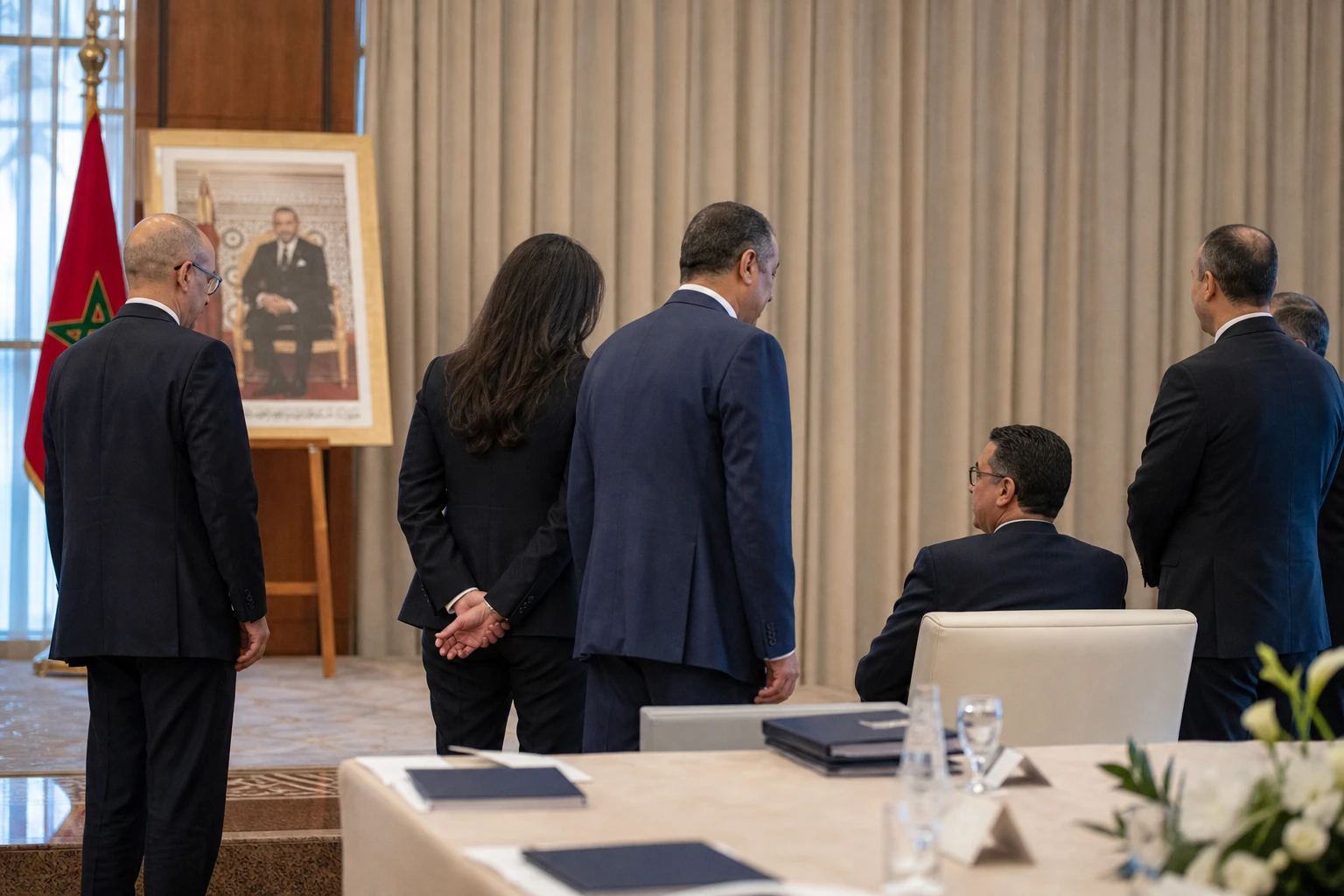
On 4 July 2026, Morocco’s foreign ministry published a message of congratulations from Mohammed VI to Donald Trump on the occasion of the US national holiday. The king said that relations between Morocco and the United States had never been “as rich and fruitful” as during Donald Trump’s two terms in office, and recalled US recognition of Moroccan sovereignty over the Sahara.
A few days later, Donald Trump shared a video on Truth Social presenting the Tiznit-Dakhla expressway as a motorway bearing his name. Several media outlets reported that its stated length was 1,055 kilometres, with an estimated cost of about $1 billion. Others noted that, on the Moroccan side, no conventional official announcement had yet been detailed when the video was published.
The royal letter, dated 2 July and published later, gives the gesture political weight. Mohammed VI presents the 2020 US recognition as a historic decision that, in his words, will remain in the memory of Moroccans. The wording reflects Rabat’s consistent approach: to make the Sahara a test of diplomatic loyalty, rather than simply a territorial dispute.
Western Sahara at the heart of the dispute
The route of the expressway is no accident. It enters Western Sahara, a territory that the UN has listed as a non-self-governing territory since 1963. The organisation also notes that the United Nations Mission for the Referendum in Western Sahara, MINURSO, was established in 1991 to monitor the ceasefire and prepare a self-determination consultation that has never taken place.
On the ground, Morocco controls most of the territory and refers to its “southern provinces”. The Polisario Front, meanwhile, advocates independence for the Sahrawi people and maintains a presence in another part of the disputed area. This division has fuelled one of the African continent’s longest-running conflicts for almost half a century.
Washington has already played a role in this equation. In December 2020, the United States recognised Moroccan sovereignty over Western Sahara as part of the rapprochement between Rabat and Tel Aviv. The decision remains one of Morocco’s main diplomatic assets in the Sahara dispute, even though it did not resolve the issue at the UN.
An infrastructure project designed for southern Morocco
Beyond its symbolism, the road reflects public policy. Morocco has invested for years in ports, roads, industrial zones and energy in its southern regions. Dakhla is conceived as a gateway linking the Atlantic, the Sahel and West African markets. The official discourse emphasises territorial continuity, the movement of goods and maritime access to the rest of the continent.
The choice has tangible effects. For the Moroccan authorities, it consolidates the South’s economic integration and makes Dakhla more attractive for logistics, fishing, services and tourism. For some residents, it could mean better access, more movement and more jobs linked to construction projects. But for Sahrawis who support self-determination, these major works can also be seen as a way of normalising a fait accompli.
The stakes therefore go beyond roads. They concern how a state projects its sovereignty in a disputed territory. They also concern the development narrative that Rabat sets against criticism: roads, ports, public services and investment are intended, according to Morocco’s position, to show that the Sahara is not a periphery but a driver of growth.
What this says about Moroccan diplomacy
At the continental level, the issue highlights how Morocco is now operating on several fronts. It is seeking to consolidate its Western alliances, strengthen ties with African countries that have opened consulates in Laayoune or Dakhla, and place the Sahara within a framework of South-South co-operation. This approach is consistent with Rabat’s Africa strategy, which relies as much on the economy and infrastructure as on diplomatic statements.
But the issue remains unresolved. The African Union recognises the Sahrawi Arab Democratic Republic, while several European governments have recently backed Morocco’s autonomy plan without going so far as to settle the question of sovereignty definitively. At the UN, debate remains focused on a political solution acceptable to the parties. At this stage, there is nothing to suggest the conflict is fading away.
The gesture’s continental significance is therefore clear. By linking Tiznit to Dakhla, Morocco is not simply building a coastal corridor. It is also reinforcing an African reading of its own geopolitics: that of a kingdom projecting itself towards the Atlantic, claiming the Sahara as part of its national framework and turning every major project into a diplomatic argument. The next developments to watch are official reactions, UN debates and the impact of this symbol on regional balances around Western Sahara.