Algeria
 Egypt
 Libya
 Morocco
 Sudan
 Tunisia
 Benin
 Burkina Faso
 Cabo Verde
 Côte d'Ivoire
 Ghana
 Guinea
 Guinea-Bissau
 Liberia
 Mali
 Mauritania
 Niger
 Nigeria
 Senegal
 Sierra Leone
 The Gambia
 Togo
 Cameroon
 Central African Republic
 Chad
 Equatorial Guinea
 Gabon
 Republic of the Congo
 São Tomé and Príncipe
 Burundi
 Comoros
 Djibouti
 Eritrea
 Ethiopia
 Kenya
 Madagascar
 Malawi
 Mauritius
 Mozambique
 Rwanda
 Seychelles
 Somalia
 South Sudan
 Tanzania
 Uganda
 Angola
 Botswana
 Eswatini
 Lesotho
 Namibia
 South Africa
 Zambia
 Zimbabwe
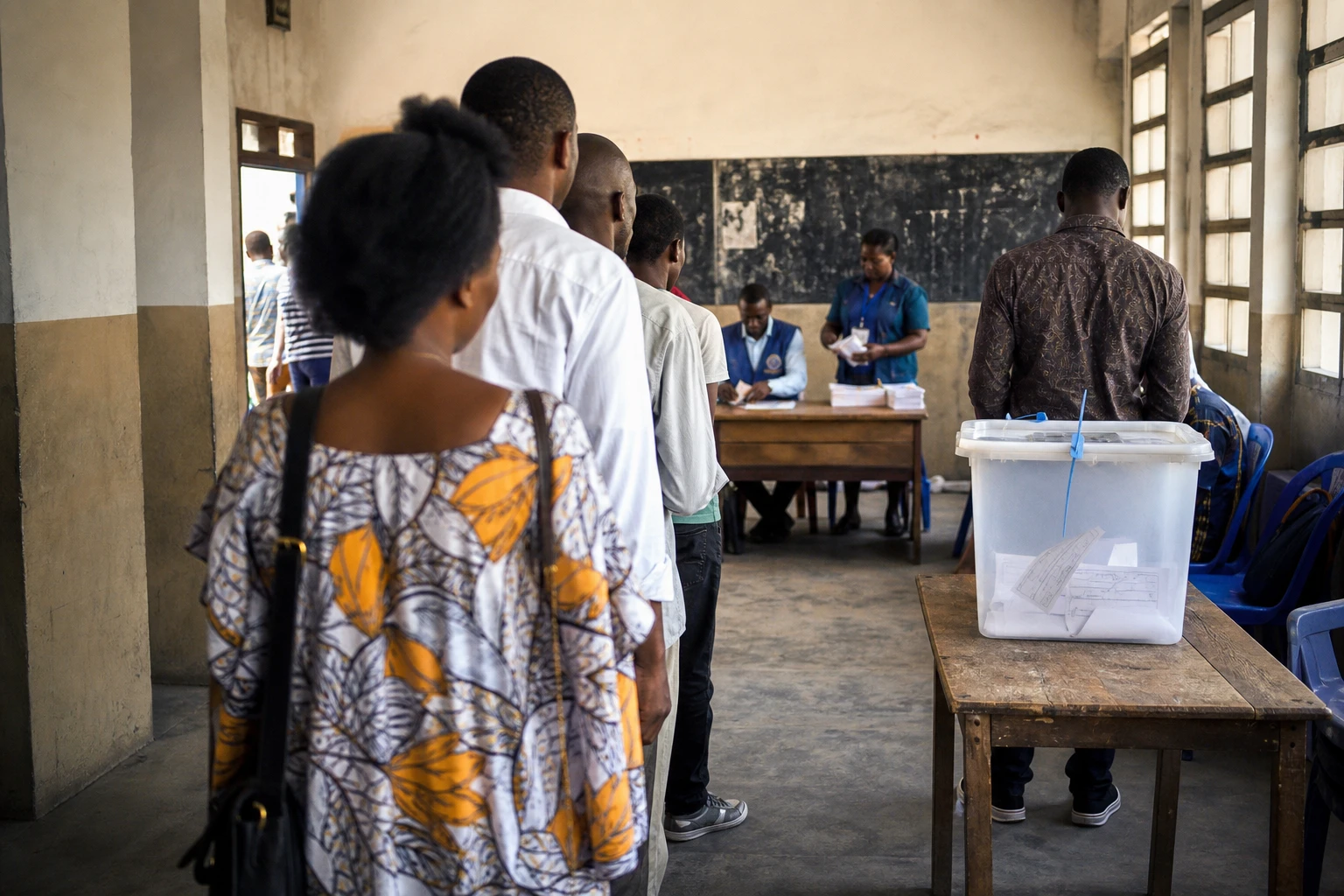
In the mines of the Democratic Republic of the Congo, a rule that looks simple on paper can become a real test of governance in practice. Since 1 August 2026, mining companies have been expected to open 10% of their share capital to Congolese nationals, including 5% to Congolese individuals and 5% to company employees. The debate is not just a legal one. It touches on how the country wants to retain a more tangible share of the wealth extracted from its subsoil.
A key sector for Kinshasa, a reform that requires shares to be counted
The mining sector remains one of the pillars of the Congolese public finances. In the 2026 draft finance law, the Budget Ministry says mining revenues accounted for an average of 32.55% of the state’s current revenues over a 10-year period, and nearly 50% in 2022. In other words, any change to the mining framework has a direct impact on Kinshasa, but also on mining provinces, subcontractors, employees and local communities.
The provision now entering the implementation phase stems from the 2018 revision of the Mining Code. The text stipulates that, to obtain an operating permit, an applicant must transfer to the state 10% of the shares making up its share capital, with those shares described as free of charges and non-dilutable. The mining regulations then specify that this 10% is divided between 5% for one or more Congolese nationals able to acquire the shares, and 5% for the company’s employees.
This provision is not new to Congolese law. What is changing is the move from intention to implementation. In February 2026, the Mines Ministry had already asked mining companies to confirm compliance with this obligation for the share reserved for Congolese workers. A moratorium was then set until 31 July 2026, ahead of the announced deadline of 1 August.
The question is no longer the principle, but the mechanism
In practice, several questions remain unanswered. How will Congolese beneficiaries outside the salaried workforce be selected? How can the shares reserved for nationals be kept from being captured by political associates, nominees or shell companies? And above all, what happens to a worker’s share if they leave the company? These questions recur among trade unions and civil society because they will determine the reform’s credibility.
Concerns also centre on the real cost of opening up the share capital. In mining projects, the initial investment remains high. The mining regulations provide for a system in which share capital, project value and ownership structure carry significant weight from the launch phase. In an economy where access to finance remains limited for most Congolese people, the question is simple: who will be able to buy these shares, and at what price? This is where the measure could either broaden local share ownership or reinforce concentration in the hands of an already privileged minority.
For several transparency advocates, the answer lies in a register of beneficial owners — a tool that makes it possible to identify the individuals who actually control a company. ITIE-RDC held a workshop in April 2026 on this draft text, in connection with the international requirement to disclose real ownership in the extractive industries. This initiative shows that transparency is no longer an abstract slogan. It is becoming a condition for the application of mining rules.
In the Congolese context, such a register would be particularly useful. It would make it possible to verify who holds the shares reserved for Congolese nationals, prevent opaque arrangements and limit conflicts of interest. Without this tool, the reform could be implemented in appearance while remaining captured behind the scenes. The challenge is therefore not merely administrative. It is political and concerns the ownership of assets. It touches on the balance of power between the state, mining companies, economic elites and workers.
What the reform could change, and what to watch
If rigorously implemented, this rule could change the relationship between mining companies and the host country. For the state, it offers a lever for economic sovereignty. For workers, it holds out the promise of a direct stake in company performance. For Congolese nationals able to acquire shares, it could create a new class of domestic shareholders in a sector long dominated by foreign or mixed structures.
But the opposite effect is also possible. Without clear criteria, the measure could encourage discretionary appointments, informal deals and legal disputes. Without transparency about beneficiaries, it could also deepen employees’ mistrust, as they may not understand the real value of their shares or the conditions for retaining them. Without precise arrangements for when an employment contract ends, a worker’s allocated share could become a source of dispute rather than an asset. These are the details that will determine whether the system succeeds or fails.
At regional level, DR Congo is also sending a signal to other resource-rich African countries: the question is no longer just how to tax mines, but how to distribute their ownership more fairly. In a context where raw materials fund the state, infrastructure and foreign exchange, local share ownership is once again becoming an instrument of public policy. What happens next will depend on two concrete steps: publishing the implementation mechanisms and establishing effective oversight of company ownership. That is where the significance of this reform will be decided, far beyond Kinshasa.