Algeria
 Egypt
 Libya
 Morocco
 Sudan
 Benin
 Burkina Faso
 Cabo Verde
 Côte d'Ivoire
 Ghana
 Guinea
 Guinea-Bissau
 Liberia
 Mali
 Mauritania
 Niger
 Nigeria
 Senegal
 Sierra Leone
 The Gambia
 Togo
 Cameroon
 Central African Republic
 Chad
 DR Congo
 Equatorial Guinea
 Gabon
 Republic of the Congo
 São Tomé and Príncipe
 Burundi
 Comoros
 Djibouti
 Eritrea
 Ethiopia
 Kenya
 Madagascar
 Malawi
 Mauritius
 Mozambique
 Rwanda
 Seychelles
 Somalia
 South Sudan
 Tanzania
 Uganda
 Angola
 Botswana
 Eswatini
 Lesotho
 Namibia
 South Africa
 Zambia
 Zimbabwe
A village emblematic of more than a postcard view
At Sidi Bou Saïd, the view over the Mediterranean has long drawn visitors. But the stakes go beyond white façades and blue shutters. For Tunisia, this village in the northern suburbs of Tunis is also becoming a practical test: how can a living, inhabited and heavily visited site be protected without freezing it in time or distorting its character? UNESCO’s decision brings global recognition. It also entails specific conservation obligations.
The inscription comes at a sensitive time for Tunisia’s heritage. The country already has major UNESCO sites, from the medina of Tunis and Carthage to Kairouan, Sousse, Dougga, El Jem, Kerkouane, the island of Djerba and Ichkeul. Sidi Bou Saïd joins this group in a North African region where heritage is at once a marker of identity, a tourism asset and a matter of urban planning.
Decision taken in Busan after years of Tunisian work
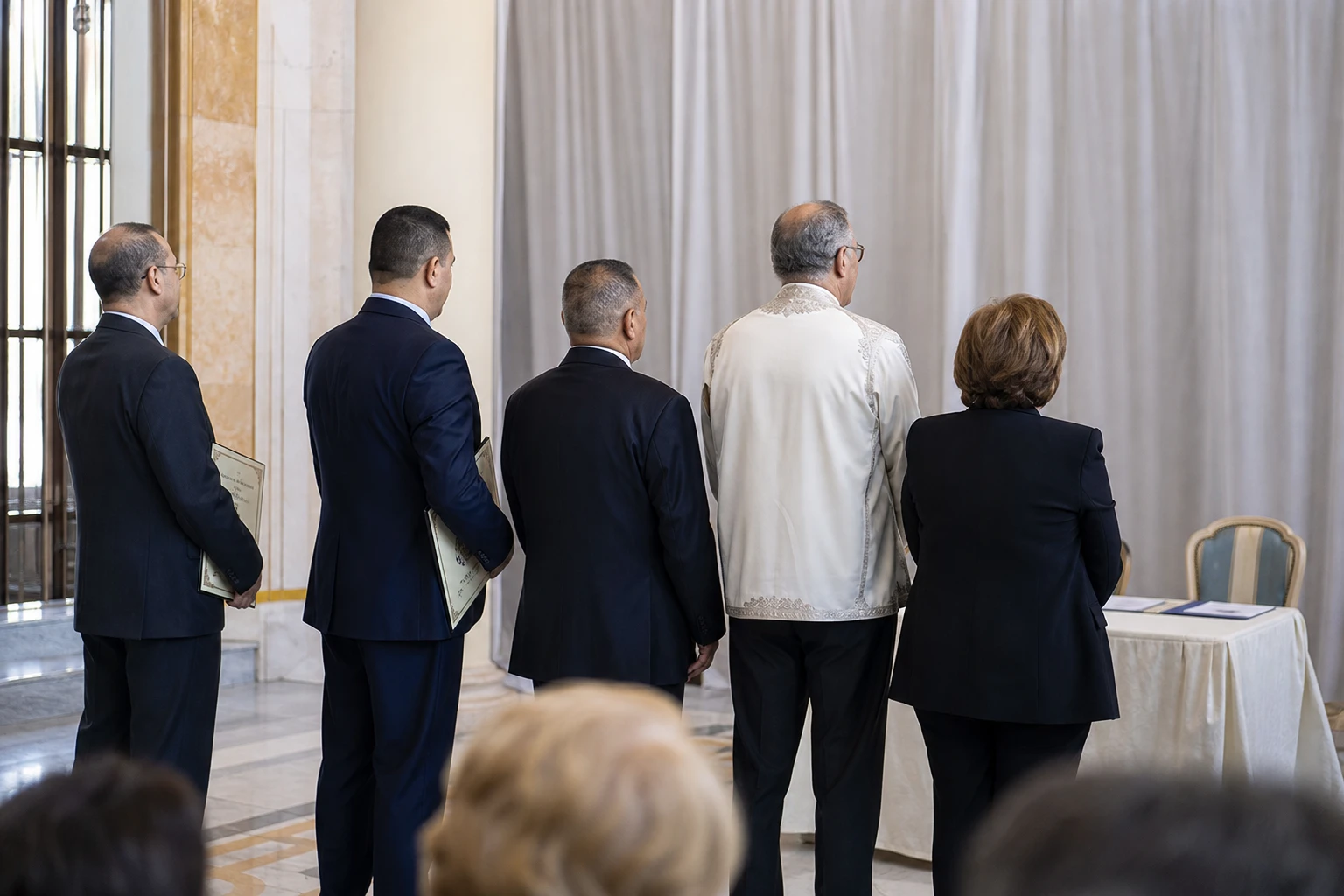
The UNESCO World Heritage Committee, meeting in Busan, Republic of Korea, from 19 to 29 July 2026, added the “Village of Sidi Bou Saïd” to the World Heritage List. UNESCO selected the site under criterion (iii), which recognises an exceptional testimony to a cultural tradition. The site’s official name was established as “Village of Sidi Bou Saïd”.
Tunisia’s bid did not come together in a few weeks. The process was authorised by President Kaïs Saïed in February 2024, then officially submitted to the World Heritage Centre. In February 2025, Tunisia had already added Sidi Bou Saïd to the definitive list of heritage in the Islamic world maintained by ICESCO, a diplomatic and heritage signal ahead of the UN decision. The bid was then advanced by the Ministry of Cultural Affairs, the National Heritage Institute and Tunisia’s Permanent Delegation to UNESCO.
In its assessment, UNESCO describes Sidi Bou Saïd as a sanctuary village that grew up around the mausoleum of Sidi Bou Saïd, a Sufi saint. The site was later consolidated by the Husainid beys, who established country residences there. It thus embodies the meeting of spiritual and political power in a form of Arab-Islamic urban planning centred on a religious site.
Heritage protection and urban pressure now go hand in hand
The recognition does not erase the site’s vulnerabilities. UNESCO says it faces instability linked to its geological nature and environmental factors. It also warns that tourist pressure is too high and could alter the village’s character. The committee has asked Tunisia to strengthen the monitoring of landslides, update crack maps, prepare an emergency plan and control incompatible construction.
These concerns are not theoretical. In late January 2026, after heavy rain and partial landslides, Tunisian authorities inspected damage in Sidi Bou Saïd. Homes and businesses had been affected. On 24 January 2026, local officials had already warned of unstable ground. On 29 January 2026, the head of state called for urgent measures to protect the site and prepare a new urban plan more in keeping with its architecture.
The January 2026 rains confirmed this vulnerability. The TAP news agency recorded 206 mm in Sidi Bou Saïd during a spell described as exceptionally wet for the north of the country. Heritage is therefore intertwined with climate, drainage, slopes and land management. For a village so exposed, conservation depends not only on heritage designation laws but also on works, maintenance and day-to-day urban controls.
What the inscription means for Tunisia and the region
For Tunisia, the inscription opens a window of international visibility. It could boost tourism, but it also raises the bar for management. The site is already protected under the 1915 Beylical decree and decree 85-1246 of 1985. UNESCO nonetheless stresses that legal protection is not enough if tourism strategy, land use and restoration do not keep pace. The country must submit a progress report to the World Heritage Centre by 1 December 2027.
The economic impact could be mixed. Shops, guides, artisans and local hotels may benefit from more visitors. But poorly managed crowds could also drive up rents, push some residents out and turn the village into a backdrop. This is precisely what UNESCO aims to prevent by calling for a tourism management strategy and a study of the site’s carrying capacity.
For residents, the issue is easier to put simply: preserve a place to live before preserving an image. The façades, lanes and views matter. But so does the social fabric. In Sidi Bou Saïd, heritage value also rests on the continuity of uses, spiritual practices and urban memory. That is what distinguishes a living site from a mere heritage backdrop.
Across Africa, the inscription reflects a broader trend: several countries on the continent are seeking recognition for their urban landscapes, medinas, traditional skills and sanctuaries as sites of universal importance. Tunisia, already represented in the UNESCO system with ten listed sites, according to the World Heritage Centre’s official website, shows that a North African site can be protected without being turned into a museum. The next step will be implementation. The credibility of this inscription will be tested there, in 2027 and then in 2028.