Algeria
 Egypt
 Libya
 Morocco
 Sudan
 Tunisia
 Benin
 Burkina Faso
 Cabo Verde
 Côte d'Ivoire
 Ghana
 Guinea
 Guinea-Bissau
 Liberia
 Mali
 Niger
 Nigeria
 Senegal
 Sierra Leone
 The Gambia
 Togo
 Cameroon
 Central African Republic
 Chad
 DR Congo
 Equatorial Guinea
 Gabon
 Republic of the Congo
 São Tomé and Príncipe
 Burundi
 Comoros
 Djibouti
 Eritrea
 Ethiopia
 Kenya
 Madagascar
 Malawi
 Mauritius
 Mozambique
 Rwanda
 Seychelles
 Somalia
 South Sudan
 Tanzania
 Uganda
 Angola
 Botswana
 Eswatini
 Lesotho
 Namibia
 South Africa
 Zambia
 Zimbabwe
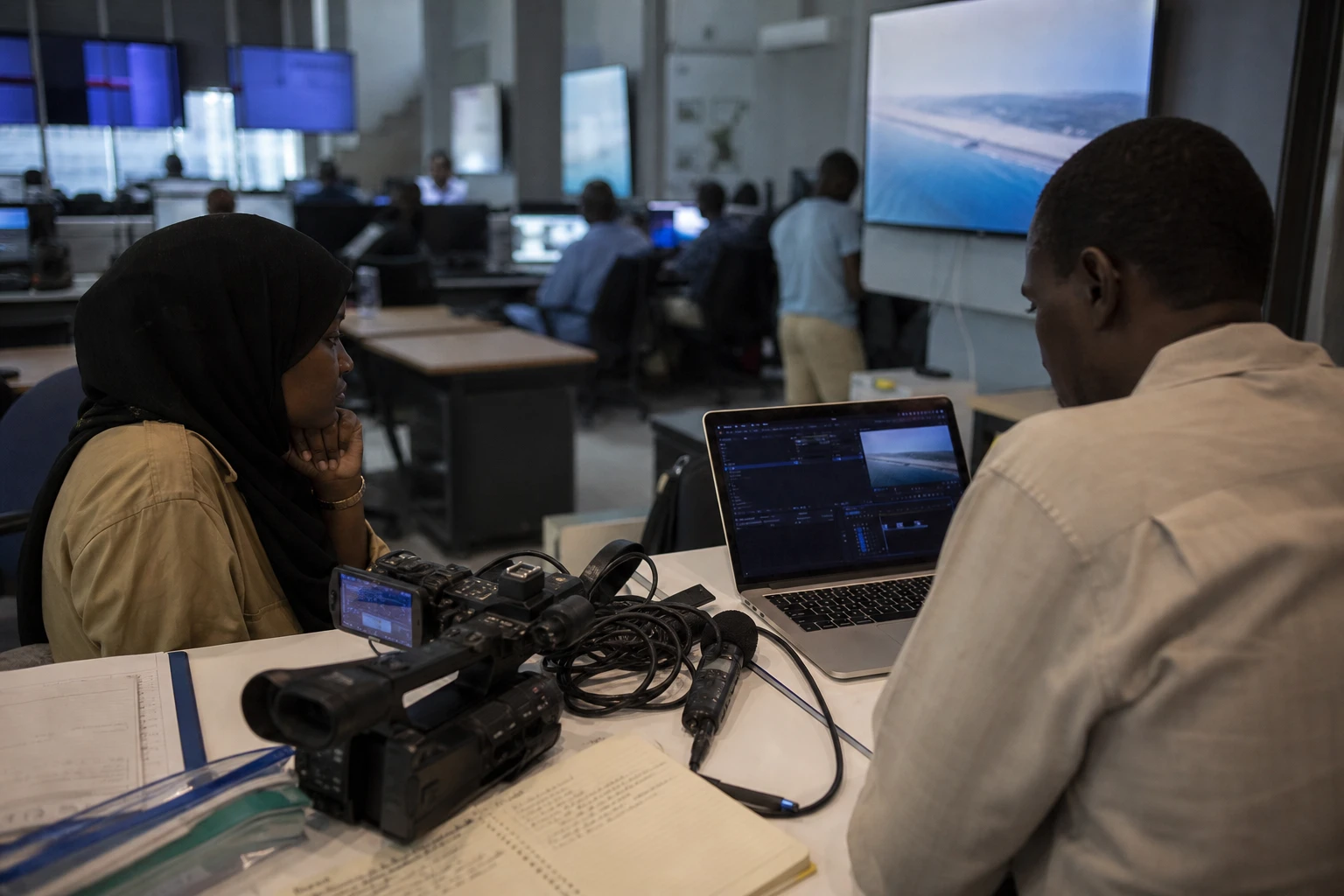
As the sea retreats, a livelihood retreats with it
On Mauritania’s coast, the question is not only how many fish remain in the water. It is also who will still be able to read the sea, follow the fish and catch them using techniques handed down by previous generations.
In the Banc d’Arguin National Park, in north-western Mauritania, the Imraguen occupy a distinctive place. Their traditional fishery, permitted in this vast protected area, relies on methods adapted to sandbanks, seagrass beds and the movements of fish, which are closely linked to the tides and upwelling — the process by which deep waters rise, enriching the ocean with nutrients. UNESCO ranks the site among West Africa’s most important marine ecosystems.
But this balance is eroding. Rising temperatures, pressure on fish stocks and the fragility of transmission between generations are now causing concern among park managers and international observers. The stakes go beyond a local way of life. They involve natural heritage, a coastal economy and a distinctive Mauritanian identity.
The Banc d’Arguin, natural and human heritage under pressure
The Banc d’Arguin is no ordinary reserve. Established in 1976 and protected by a national law passed in 2000, it is also a UNESCO World Heritage Site. Its significance lies in its biodiversity, its migratory birds and its role as a refuge for marine species essential to Mauritania’s coastal economy. The park was designed to reconcile conservation with local use, under a clear rule: Imraguen communities may fish there using traditional methods, but under strict supervision.
This arrangement carries considerable political weight. In Mauritania, fisheries play a major role in the national economy and food security. The United Nations Economic Commission for Europe noted in 2024 that overfishing, particularly linked to fishmeal production, deprives the population of affordable fish and undermines local balances. The issue is therefore not only environmental. It is also social and fiscal.
In Nouakchott, the authorities face a difficult balancing act. On the one hand, they must preserve a protected area that forms part of Mauritania’s international image. On the other, they must maintain economic opportunities for an industry that feeds cities, supports artisanal fishers and sometimes supplies regional markets. The Banc d’Arguin concentrates this tension between conservation and productive pressure.
The Imraguen face three vulnerabilities: climate, markets and transmission
The first shock is climate change. UNESCO considers it a major threat to the distribution of species and seagrass beds in the Banc d’Arguin, with direct effects on local communities. In a shallow coastal area, any change in temperature, currents or sea level can disrupt breeding cycles and fishing routes.
The second shock comes from fishing pressure. The park was designed to protect a scarce resource, but Mauritanian waters remain highly sought after. Park documents and international assessments stress that catches no longer depend solely on local expertise. They are also affected by industrial fishing, export networks and commercial uses that reduce the share available to communities.
The third shock is less visible, but perhaps more enduring. It concerns transmission. Imraguen fishing is not merely an economic activity. It is a body of techniques, rules and detailed knowledge of the sea, wind and tides. But when incomes are uncertain and young people see other possible paths, passing on this knowledge becomes more difficult. The FAO has previously described this society as a traditional community in transition, seeking to add value to its products without breaking with its identity.
This change is reshaping daily life. For fishers, it means greater uncertainty and less clarity about the future. For families, it can require diversifying their income, often through seasonal or more precarious work. For the state, it raises a question of governance: how can a living heritage be preserved without turning it into a mere cultural backdrop?
A local issue, but a regional warning
The Imraguen’s situation speaks to concerns far beyond Mauritania. Across West Africa, coastal areas face the same combination of pressures: pressure on fish stocks, rising temperatures, competition between artisanal and industrial fishing, and the difficulty of enforcing rules over the long term. The Banc d’Arguin is a living laboratory. If protection there gives way, it will send a signal to other coastal areas in the region.
Its significance is also cultural and continental. The African Union and regional institutions are increasingly advocating for coastal communities to be involved in maritime policy. The Banc d’Arguin shows why: when local knowledge disappears, it is not just an activity that vanishes. It is a way of inhabiting the coast, managing resources and building a society around them.
The next challenge will be a long-term one. It will depend on Mauritania’s ability to enforce the park’s rules, limit the effects of overfishing and support the passing on of a livelihood that remains one of the most distinctive features of the Mauritanian coast. In a country oriented towards the Atlantic, the fate of the Imraguen will also say something about how Nouakchott wants to protect its resources without breaking with its communities.