Algeria
 Egypt
 Libya
 Morocco
 Sudan
 Tunisia
 Benin
 Burkina Faso
 Cabo Verde
 Côte d'Ivoire
 Guinea
 Guinea-Bissau
 Liberia
 Mali
 Mauritania
 Niger
 Nigeria
 Senegal
 Sierra Leone
 The Gambia
 Togo
 Cameroon
 Central African Republic
 Chad
 DR Congo
 Equatorial Guinea
 Gabon
 Republic of the Congo
 São Tomé and Príncipe
 Burundi
 Comoros
 Djibouti
 Eritrea
 Ethiopia
 Kenya
 Madagascar
 Malawi
 Mauritius
 Mozambique
 Rwanda
 Seychelles
 Somalia
 South Sudan
 Tanzania
 Uganda
 Angola
 Botswana
 Eswatini
 Lesotho
 Namibia
 South Africa
 Zambia
 Zimbabwe
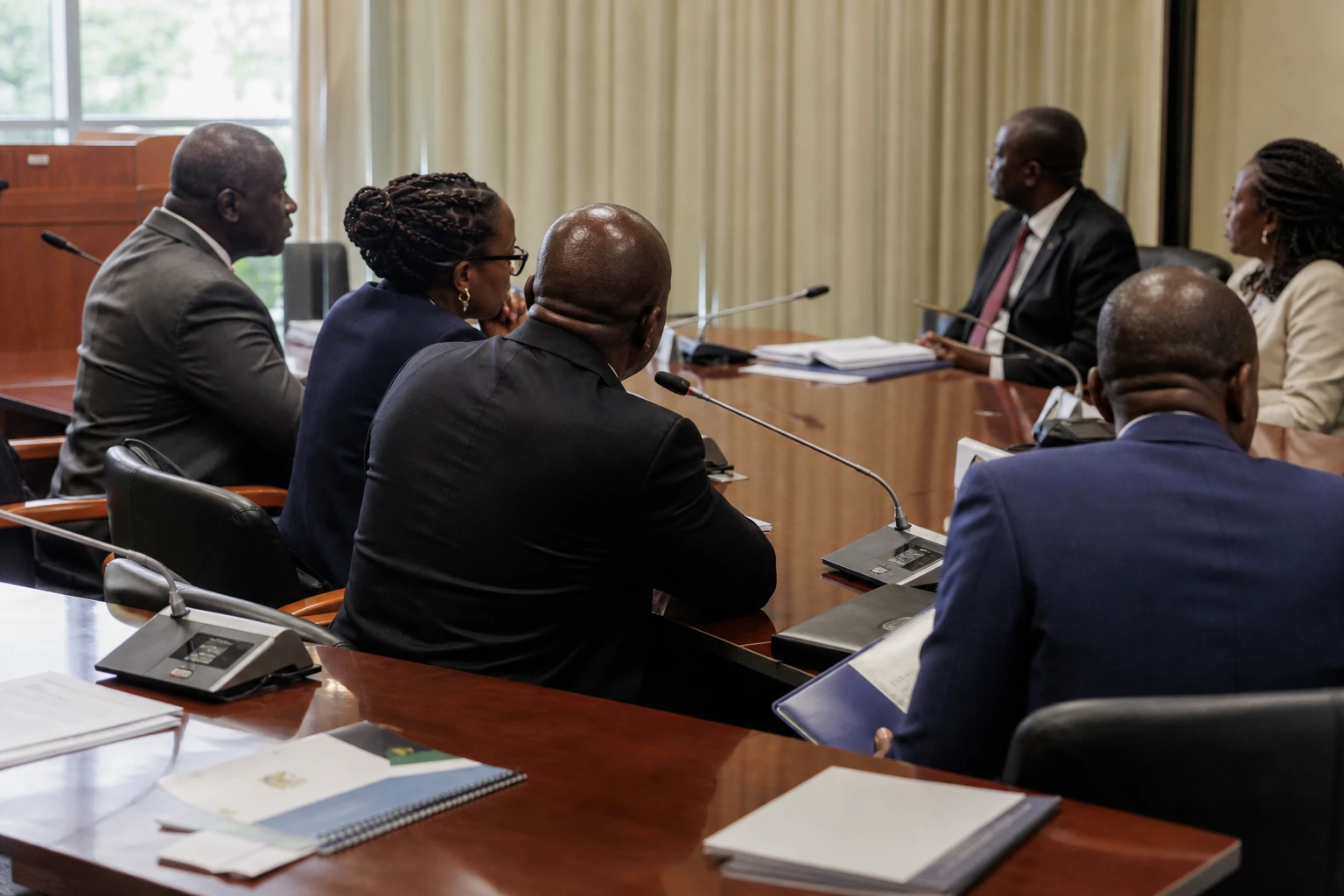
In Accra, the gold rush is no longer just about what lies underground
In Ghana, artisanal gold is no longer treated as a blurred fringe of the economy. It is becoming a sector in its own right, monitored, structured and now attracting international partners. In a country where artisanal mines account for a large share of revenues, the question is no longer simply how to produce more. Above all, it is about who buys, who controls and who truly benefits from the value created.
This shift is part of a process that began in 2025 with the creation of the Ghana Gold Board, or GoldBod, tasked with centralising the purchase and export of artisanal and small-scale gold. The initiative addresses a longstanding problem in West Africa: a precious metal that generates substantial export earnings but often slips into informal channels, smuggling or opaque networks. At regional level, the issue goes beyond Ghana alone, as ECOWAS faces the same tensions between formalisation, border security and the capture of mining revenues.
Modest funding, but a clear political signal
On 21 July 2026, Ghana’s Ministry of Lands and Natural Resources announced that it had secured an initial grant of $250,000 from the World Gold Council. The sum is part of a broader $1 million programme to support the formalisation of artisanal and small-scale gold, notably by registering cooperatives under rCOMSDEP, the government’s Responsible Cooperative Mining and Skills Development Programme. The ministry presented the support as a means of making Ghanaian gold more traceable and better aligned with international market expectations.
At the same time, the Ghanaian state is highlighting results already in evidence. According to the authorities and several local media outlets, declared artisanal production reached 104 tonnes in 2025, up from 63 tonnes in 2024. The government has also said that this volume generated more than $10 billion in export revenues. These figures have been reported by the national news agency and Ghanaian media organisations, making it possible to corroborate them in broad terms, although the precise accounting still depends on the scope used by GoldBod.
The Ghana Gold Board says this momentum has begun to reverse the sector’s usual pecking order. In 2025, artisanal and small-scale gold production is said to have exceeded output from industrial mining, a first for the country. This is a significant shift for a state where gold remains a pillar of exports, foreign-exchange reserves and the stability of the cedi, the national currency. In other words, this is not just about mines. It is also about monetary policy and economic sovereignty.
What formalisation means for miners, the state and buyers
Formalisation can have very different effects on different stakeholders. For the state, it promises higher tax revenues, fewer losses of gold and a better contribution to official reserves. For international buyers, it reduces a risk that has become central: gold whose origin cannot be credibly documented. For artisanal miners, however, the outcome will depend on the practical terms of access to the official market, the prices offered, the cost of licences and how quickly payments are made. If these conditions are too onerous, the informal sector can quickly reassert itself.
The World Gold Council has a strong interest in supporting this shift. For several years, the organisation has argued that supply chains need to become more transparent, including in artisanal and semi-industrial mining. Its own research notes that artisanal gold supports millions of people worldwide, but remains exposed to risks of criminality, corruption and environmental degradation. Its support for Ghana is therefore part of an effort to bolster market credibility, as well as to secure flows for refiners, banks and investors.
The Ghanaian government, for its part, presents GoldBod as a tool for rebalancing the sector. The national news agency reported that in 2025 the institution bought and exported 104 tonnes of artisanal gold, while purchases from January 2025 to May 2026 exceeded 135 tonnes across all categories. The authorities also want to reduce the share of unlicensed buyers and limit losses linked to speculative stockpiling, fraud and gold smuggled to neighbouring countries. In a highly porous West African region, this battle is being fought as much at borders as at buying counters.
An economic battle with implications for ECOWAS
The Ghanaian case resonates beyond Accra. In several countries in the sub-region, artisanal gold supports thousands of families, but also fuels smuggling networks, land disputes and environmental pressures on water and farmland. For ECOWAS, formalisation is therefore not a technical issue. It is a question of regional governance, customs cooperation and economic security. Ghana is testing an approach: centralise purchasing, trace the metal and involve private partners within a stricter public framework.
The continental significance is clear. As several African economies seek to capture more value from their resources, Ghana’s case shows that a state can regain control without closing the market. It can also use artisanal gold as a tool for strengthening its finances, provided that formalisation does not become mere administrative control with no benefit for producers. The real test in the months ahead will be sustainability: maintaining official volumes, protecting miners’ incomes and proving that traceability can become a competitive advantage for West Africa in an increasingly demanding global market.