Algeria
 Egypt
 Libya
 Morocco
 Sudan
 Tunisia
 Benin
 Burkina Faso
 Cabo Verde
 Côte d'Ivoire
 Guinea
 Guinea-Bissau
 Liberia
 Mali
 Mauritania
 Niger
 Nigeria
 Senegal
 Sierra Leone
 The Gambia
 Togo
 Cameroon
 Central African Republic
 Chad
 DR Congo
 Equatorial Guinea
 Gabon
 Republic of the Congo
 São Tomé and Príncipe
 Burundi
 Comoros
 Djibouti
 Eritrea
 Ethiopia
 Kenya
 Madagascar
 Malawi
 Mauritius
 Mozambique
 Rwanda
 Seychelles
 Somalia
 South Sudan
 Tanzania
 Uganda
 Angola
 Botswana
 Eswatini
 Lesotho
 Namibia
 South Africa
 Zambia
 Zimbabwe
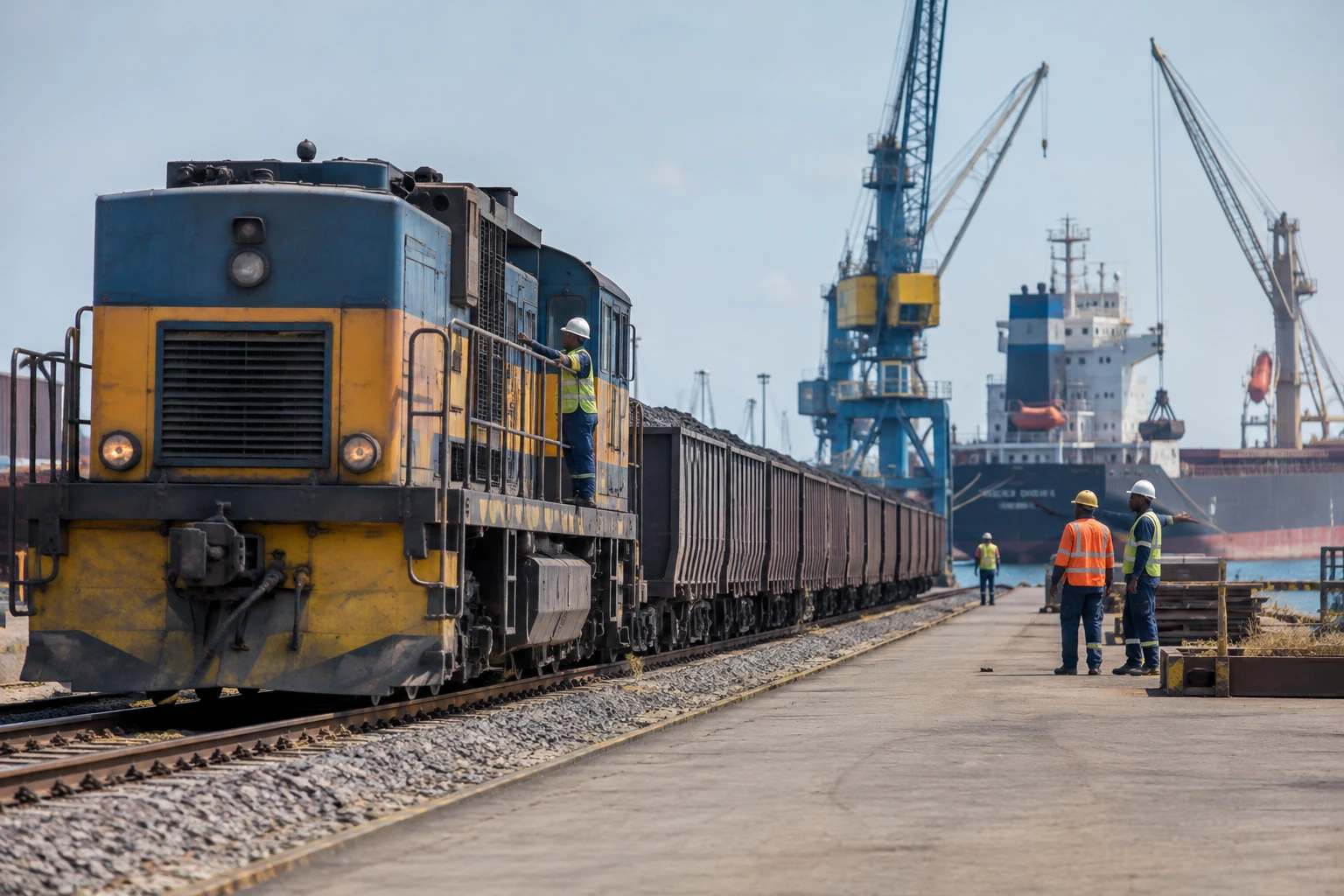
At Takoradi, the challenge is not limited to accommodating larger ships. Ghana also wants to improve links between its mining areas and the coast, as it seeks to process its minerals locally by 2030. The new quay can deliver on that promise only if its access routes are up to the task.
A strategic port for Ghanaian exports
Located in western Ghana, the port of Takoradi plays an important role in the country’s maritime trade. In 2025, it handled 11.42 million tonnes of cargo, or 27.7% of national maritime traffic. It accounted for 78% of exports by sea, notably manganese, bauxite and cocoa. These figures were published by Ghana’s port authority, the GPHA.
The port also handles bulk imports, such as clinker, which is used to make cement. This dual role puts pressure on its facilities: mining products destined for export and imported industrial inputs compete for handling capacity.
On 10 November 2026, President John Dramani Mahama launched work on Berth 19. The project, funded from the GPHA’s own resources, represents an announced investment of $98.41 million. The 300-metre-long berth is designed to accommodate vessels with a deadweight of up to 75,000 tonnes, meaning their maximum cargo capacity. It is scheduled to enter service after 26 months of work, according to the Ghana News Agency.
The project is part of a broader expansion of the port. The ceremony also marked the start of a separate project: a ship repair facility estimated to cost $137 million and being developed by a private operator under a concession. The two projects address different needs: Berth 19 is intended for bulk cargo, while the other is designed to develop maritime services.
Rail, the crucial link between the mines and the coast
An additional quay does not, on its own, guarantee smoother exports. Cargo must be transported from production sites without increasing delays or dependence on road transport. That is why the condition of the Western Railway line matters as much as the port works.
Transport Minister Joseph Bukari Nikpe said in September 2026 that work on the Takoradi-Huni Valley section, suspended in 2024, had resumed in August 2025. The line is used, among other things, to transport manganese between Nsuta and the port. Its rehabilitation should strengthen this link, but the timetable and the freight capacity actually available remain critical.
The government also plans to extend the network in two phases. The first is to connect the line to Nyinahini, a bauxite resource area. The second would extend the corridor to Hamile, near the border with Burkina Faso. Mahama announced that the first phase would be prioritised in the 2027 budget. This is, however, an announced project: its funding, detailed timetable and delivery remain to be established.
If it goes ahead, the link to Hamile could give landlocked Burkina Faso an additional route to Ghanaian maritime facilities. It would strengthen Takoradi’s regional role, but would also depend on rail continuity, customs procedures and cross-border coordination.
Local processing puts the port at the heart of a transition
Ghana’s strategy is not simply aimed at exporting more. On 19 October 2026, Mahama set 2030 as the target date for ending exports of unprocessed raw minerals. The government has announced a gradual ban, with rules and deadlines tailored to different resources. The Ghana News Agency and the government’s information service reported this policy direction.
This ambition could change the goods passing through Takoradi. In time, the port could ship more processed products, such as alumina or steel, rather than raw minerals. But this shift requires industrial investment, a reliable energy supply, skills and commercial outlets. The political timetable alone cannot guarantee that this capacity will be created.
The effects will vary among stakeholders. Mining companies and exporters could benefit from better access to the port, while local manufacturers would need reliable supplies of inputs and manageable logistics costs. For communities near mines and transport routes, the benefits will also depend on the jobs created and how local impacts are managed. In ports and production areas alike, value added will depend on decisions made far beyond the quay.
A test for West African connectivity
The project is part of a region where transport corridors link the ports of the Gulf of Guinea to Sahelian countries. The Economic Community of West African States (ECOWAS) is seeking to facilitate regional trade, but plans for a corridor to Burkina Faso will have to be matched by interoperable infrastructure and efficient procedures.
For Ghana, the next indicator will therefore not be Berth 19’s nominal capacity alone. It will be necessary to track its completion, the effective resumption of rail freight, budget decisions in 2027 and the announced investments in mineral processing. It is on this scale that it will be possible to judge whether Takoradi becomes more than a point for exporting resources: a link in a better-integrated industrial and commercial chain.
Ghana Ports and Harbours Authority 2025 data on the port of Takoradi · Ghana News Agency report on port projects · Government information on the planned phases of the Western Railway line · Transport minister’s remarks on the resumption of rail works · Announcement of the 2030 target for mineral processing · Confirmation by Ghana’s government information service