Algeria
 Egypt
 Libya
 Morocco
 Sudan
 Tunisia
 Benin
 Burkina Faso
 Cabo Verde
 Côte d'Ivoire
 Ghana
 Guinea
 Guinea-Bissau
 Liberia
 Mali
 Mauritania
 Niger
 Nigeria
 Senegal
 Sierra Leone
 The Gambia
 Togo
 Cameroon
 Central African Republic
 Chad
 DR Congo
 Equatorial Guinea
 Gabon
 Republic of the Congo
 São Tomé and Príncipe
 Burundi
 Comoros
 Djibouti
 Eritrea
 Ethiopia
 Kenya
 Madagascar
 Malawi
 Mauritius
 Mozambique
 Rwanda
 Seychelles
 Somalia
 South Sudan
 Tanzania
 Angola
 Botswana
 Eswatini
 Lesotho
 Namibia
 South Africa
 Zambia
 Zimbabwe
When coffee weighs on foreign exchange, every change counts
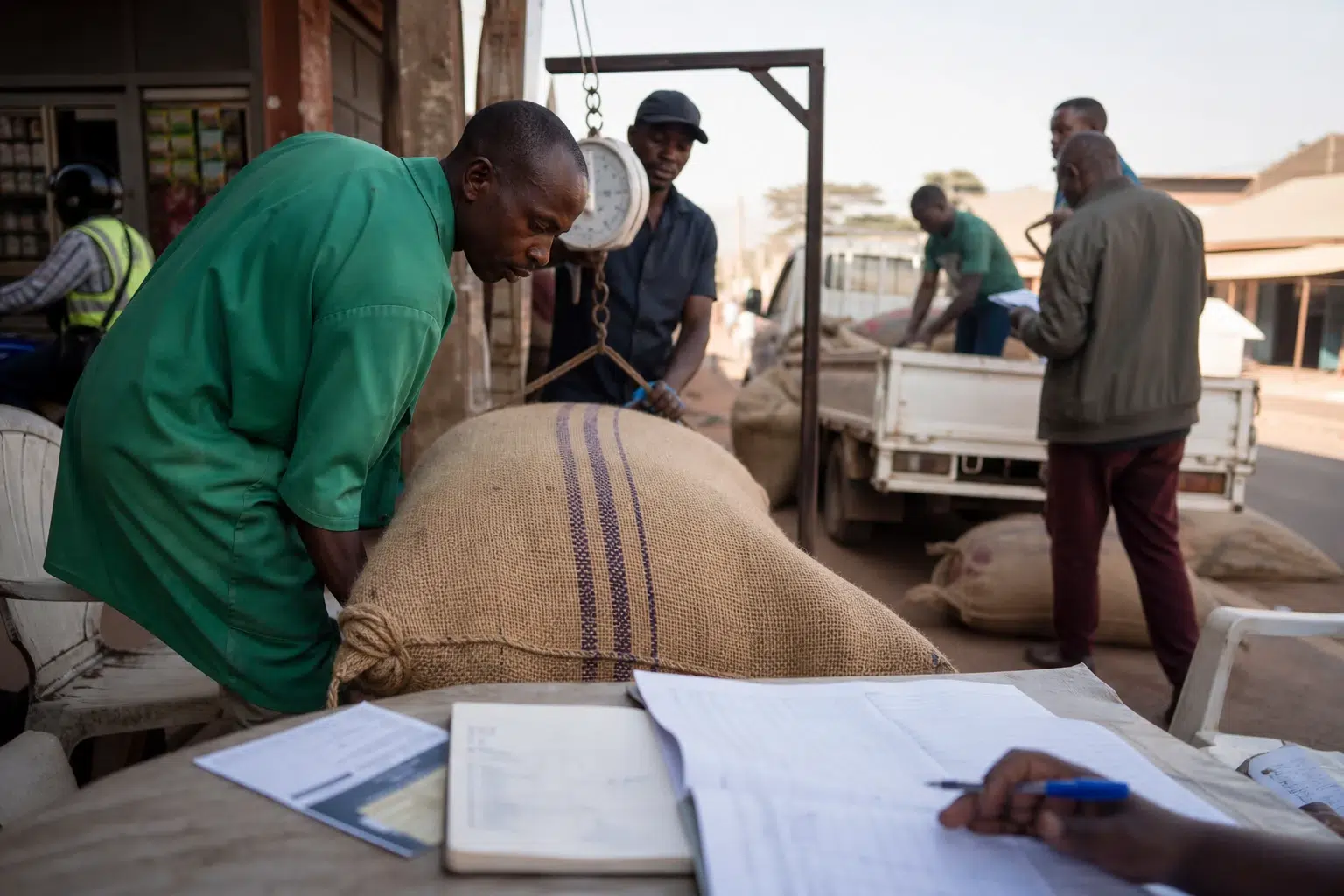
In Uganda, a monthly decline can quickly be felt beyond market screens. It affects exporters, of course, but also smallholders, transporters, sorters and families who depend on coffee for most of their cash income. In a country where the crop remains one of the main pillars of agriculture, even a slight fall in overseas sales is quickly felt in rural areas. Coffee officials point out that more than 1.8 million households grow the crop across 126 districts, and that coffee makes a major contribution to the country’s export earnings.
The issue also extends beyond Uganda’s borders. In the East African Community, Uganda remains a major agricultural player, with a coffee sector geared towards European markets as well as African and Asian ones. Official figures from the agriculture ministry show that Europe still takes the largest share of Ugandan coffee exports, ahead of Africa and Asia. In other words, the prices paid in Kampala, Masaka or Mbale also depend on buyers in Milan, Hamburg or Geneva.
In May 2026, volumes fall and revenues follow
Figures published by the authorities confirm the slowdown seen in May 2026. Uganda exported 617,491 60kg bags worth $151.7 million, compared with 793,445 bags worth $243.95 million in May 2025. Year on year, the decline was therefore just over 22% by volume and about 38% by value. African media outlets and reports repeating the news, citing the agriculture ministry’s report, confirmed the same broad figures.
The contrast with spring 2025 is stark. At the time, Kampala was celebrating a historic surge in exports, with 793,445 bags sold in May and monthly revenues close to $244 million. The country had just become Africa’s leading coffee exporter, ahead of Ethiopia, according to official figures reported during World of Coffee Geneva. A year later, the same sector remains powerful, but it shows that its trajectory is not linear.
The May 2026 decline is not just a story of lower volumes. It also reflects weakening international prices, already flagged by the business press and Ugandan public services. In June 2025, the finance ministry noted instead that coffee revenues had been boosted by better global prices and larger shipments. A year later, the trend has reversed. The international market has eased amid expectations of more comfortable supply, particularly from other major producing countries.
What the decline reveals about Uganda’s coffee sector
This contraction highlights the sector’s dependence on two highly sensitive variables: the weather and the market. When harvests slow in some areas, or global prices soften, the impact on revenues is immediate. Uganda, meanwhile, has built a clear strategy in recent years: increase production, improve yields, strengthen quality and drive overseas sales. Sector documents indicate that the relevant authority is working on the distribution of seedlings, training, traceability and the promotion of Ugandan coffee in international markets.
On the ground, the impact is not the same for everyone. Exporters can cushion some of the shock if stocks are well managed. Smallholders, by contrast, feel price fluctuations at the farm gate more quickly. That is where the system’s fragility lies. According to the sector’s institutional fact sheet, coffee provides more than 50% of an average farming family’s cash income, even though it occupies less than 20% of a typical plot. In short, coffee is not just a cash crop: it remains a source of liquidity for a large share of Uganda’s rural communities.
The May slowdown also comes amid regional competition. In East Africa, Uganda is seeking to consolidate its markets while holding its position against Ethiopia and other robusta and arabica origins on the continent. Official statistics show that the country retains a broad production base, exporting millions of bags each year and maintaining a strong commercial presence in Europe. But the priorities remain the same: diversify markets, safeguard quality and reduce dependence on a handful of destinations and pricing windows.
A warning for Africa’s commodity exporters
Ultimately, the May 2026 figures are a reminder of a familiar reality across the continent: a product can be strategically important without being shielded from global cycles. Ugandan coffee illustrates this tension. On the one hand, the country has gained market share, strengthened its reputation and crossed historic milestones. On the other, it remains exposed to shocks in global trade, unstable weather and the decisions of international buyers. The next figures to watch will be those for June and the rest of the coffee year, to see whether May’s decline was a one-off or a sign of a broader slowdown.