Algeria
 Egypt
 Libya
 Morocco
 Sudan
 Tunisia
 Benin
 Burkina Faso
 Cabo Verde
 Côte d'Ivoire
 Ghana
 Guinea
 Guinea-Bissau
 Liberia
 Mali
 Mauritania
 Niger
 Nigeria
 Senegal
 Sierra Leone
 The Gambia
 Togo
 Cameroon
 Chad
 DR Congo
 Equatorial Guinea
 Gabon
 Republic of the Congo
 São Tomé and Príncipe
 Burundi
 Comoros
 Djibouti
 Eritrea
 Ethiopia
 Kenya
 Madagascar
 Malawi
 Mauritius
 Mozambique
 Rwanda
 Seychelles
 Somalia
 South Sudan
 Tanzania
 Uganda
 Angola
 Botswana
 Eswatini
 Lesotho
 Namibia
 South Africa
 Zambia
 Zimbabwe
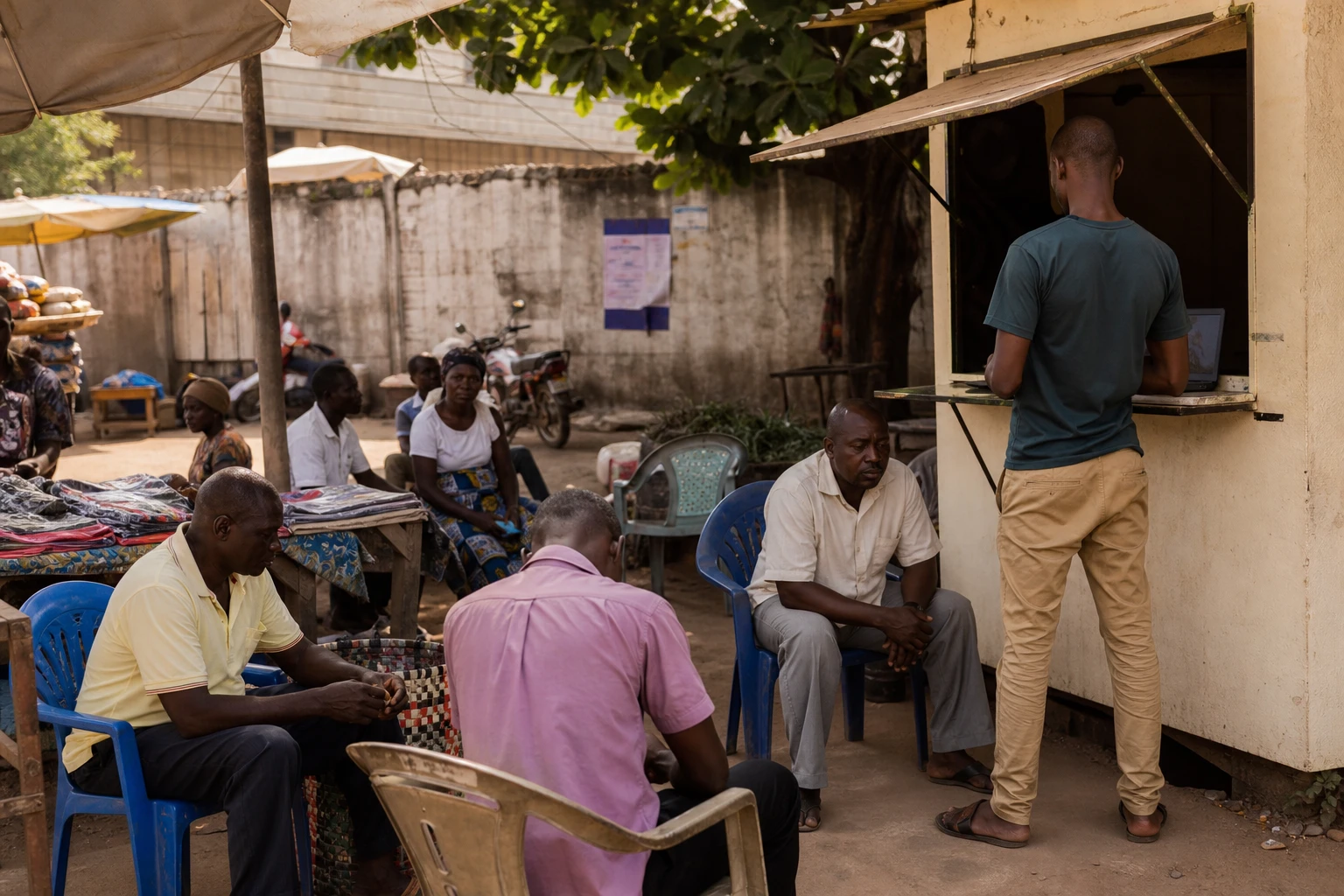
When gold stops, an entire village grinds to a halt
In the west of the Central African Republic, a few kilometres from the Cameroon border, Zamboï lives to the rhythm of pits, shovels and pick-ups loaded with gravel. When the gold-mining site stops, it is not just a worksite that falls silent: an entire local economy loses its driving force. The village, built around mining, suddenly finds itself with less traffic, fewer purchases and fewer outlets for the families who depend on it.
This vulnerability is part of a wider picture. In the Central African Republic, gold and diamonds account for a significant share of revenue and employment, but much of the sector remains informal, difficult to monitor and exposed to accidents. The country adopted a new mining code in 2024 specifically to strengthen governance, transparency and the regulation of mining permits, while the EITI noted in 2024 that the government still needed to improve the publication of contracts and disclosure of beneficial ownership.
Prolonged closure after the landslide
On 18 August 2026, a landslide struck an artisanal gold-mining site in Zamboï, in Nana-Mambéré prefecture, near Baboua and the border with Cameroon. Figures published in the first days varied by source, but pointed to a disaster on a large scale: at least several dozen dead, with the toll later rising to more than 100 as bodies were recovered. The Central African government subsequently ordered work at the site to stop.
Two weeks later, the suspension continues to weigh on Zamboï. Daily life has narrowed around the wait. Young people pass the time, commercial exchanges are slowing, and income from the site has dried up. This is the shift described by residents and local officials: the closure has not only halted extraction, it has also broken a chain of small trades that supported part of the village.
The site’s geography also explains the risk. Zamboï, sometimes spelt Zamboye, lies in a border area shared with Cameroon, separated by the Kadéï. On the Central African side, work takes place on steeper terrain, where landslides are more dangerous, especially during the rainy season. Cameroonian authorities confirmed that the accident occurred on the Central African side, while also highlighting the porous nature of the cross-border mining basin.
A survival economy, governance under strain
In Zamboï, agriculture, fishing, hunting and trade remain underdeveloped. In places like this, artisanal mining often serves as an employer, a market and a social anchor. When it closes, families lose a direct source of income, but also the flow of money that sustains women traders, transporters, restaurant owners, small retailers and owners of plots rented to workers. This dependence is typical of several Central African mining areas, where artisanal gold mining shapes settlement patterns and the movement of labour.
The problem extends beyond the village. The Central African mining code already stipulates that any accident must be reported and that, in the event of danger, the authorities may take the necessary measures to eliminate the risk. But repeated collapses show the gap between the law and conditions on the ground. In practice, weak oversight, the scale of artisanal mining and the movement of workers, sometimes from across the border, make the rules difficult to enforce.
This is precisely what the authorities and some civil society groups want to address. The Ministry of Mines emphasises formalising the sector, transparency and regulating operators. Local civil society, for its part, is calling for a more in-depth study of mining governance to identify safety gaps, better target permit holders and, if necessary, bring the matter before the courts. This perspective matters: the debate is not only about a temporary closure, but about how gold is extracted, monitored and made safe.
What Zamboï says about Central Africa
Zamboï is not an isolated case. Across the sub-region, artisanal gold-mining sites are numerous and often located near borders, with workers moving between countries as work sites and gold prices change. Cameroon itself has discussed measures to restructure its artisanal mining sector, a sign that the risks, flows and tax issues cross borders. In Central Africa, mine safety is thus becoming a matter for practical cooperation, going well beyond rhetoric about the mere exploitation of resources.
For Bangui, the challenge is twofold. It must protect workers, while also preventing a prolonged closure from suffocating entire communities where the state has little presence and the mine often takes the place of other absent services. For residents, the immediate issue is income. For the authorities, it is a legal and safety matter. For the country, it concerns the credibility of the mining reform launched in 2024.
At continental level, the case resonates with a broader challenge: turning African gold into lasting wealth rather than a source of accidents, lost tax revenue and insecurity. The Central African Republic has real mining potential, but the value of that potential now depends on the authorities’ ability to enforce the rules, make sites safe and formalise an activity that feeds thousands of households. The next steps will be decided on this very practical front.