Algeria
 Egypt
 Libya
 Morocco
 Sudan
 Tunisia
 Benin
 Burkina Faso
 Cabo Verde
 Ghana
 Guinea
 Guinea-Bissau
 Liberia
 Mali
 Mauritania
 Niger
 Nigeria
 Senegal
 Sierra Leone
 The Gambia
 Togo
 Cameroon
 Central African Republic
 Chad
 DR Congo
 Equatorial Guinea
 Gabon
 Republic of the Congo
 São Tomé and Príncipe
 Burundi
 Comoros
 Djibouti
 Eritrea
 Ethiopia
 Kenya
 Madagascar
 Malawi
 Mauritius
 Mozambique
 Rwanda
 Seychelles
 Somalia
 South Sudan
 Tanzania
 Uganda
 Angola
 Botswana
 Eswatini
 Lesotho
 Namibia
 South Africa
 Zambia
 Zimbabwe
A quiet shift in West Africa’s gold map
In the West African Economic and Monetary Union, gold is more than a source of mining revenue. It is also an indicator of fiscal strength, local employment and credibility for states seeking to attract capital. The balance of power between Mali and Côte d’Ivoire appears to be shifting, not through declarations, but through production figures taking shape for the end of the decade.
This shift matters far beyond the mines. It affects public revenue, subcontracting chains, exports and, in rural areas, thousands of households linked to artisanal mining, transport or informal trade. It also says something about states’ ability to secure a strategic sector without deterring investment.
Two trajectories, two approaches
In Mali, the Ministry of Mines is forecasting 43.2 tonnes of industrial gold in 2026, then 51.2 tonnes in 2027, before a peak of 57 tonnes in 2028 and a decline to 50 tonnes in 2029, according to a plan seen by Reuters. The same document refers to artisanal production remaining stable at around 6 tonnes a year. Adding the two segments together, national production would reach 49.2 tonnes in 2026, then peak at 63 tonnes in 2028.
In Côte d’Ivoire, the trend is different. The director-general of Mines told Reuters that national production was expected to reach 62 tonnes in 2026, up from 59.33 tonnes in 2025, then 63 tonnes in 2027 and about 69 tonnes in 2028. In Abidjan, officials are highlighting a series of new permits and projects that could fuel this growth, several of which have already entered construction or advanced preparation.
The contrast is clear. By 2028, Mali would remain on a path to recovery, but without regaining the momentum it had before recent tensions. Côte d’Ivoire, meanwhile, would extend a rise that began a decade ago, driven by new mines coming on stream and an environment many sector investors consider more predictable.
Mali is still paying the price of its mining dispute
Mali’s slowdown cannot be separated from the open conflict between the state and several foreign operators since the adoption of the 2023 mining code. The Loulo-Gounkoto complex, operated by Barrick, was at the centre of the dispute. In January 2026, Reuters reported that the country’s industrial production had fallen by 22.9% in 2025, partly as a result of the prolonged suspension.
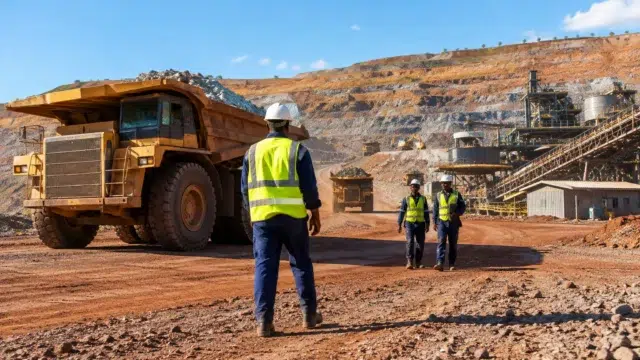
The site subsequently resumed operations, but at a pace still below its usual level. Barrick lowered its 2026 targets for Loulo-Gounkoto, with production expected to reach 362,500 ounces, compared with 723,000 ounces in 2024, according to information reported by Reuters. This decline weighs heavily because the complex has long been one of the mainstays of national gold production.
The Malian government, for its part, has made clear its intention to regain control of revenue. In December 2025, it announced that it had recovered CFA francs 761bn in arrears from mining companies following an audit. The sum is substantial for a budget under pressure, but it does not on its own resolve the central question: how to maintain production while increasing the state’s share of the value created?
The answer also depends on another, harder-to-measure front: artisanal mining. The Malian authorities put production at 6 tonnes a year, while SWISSAID gives a range of 30 to 57 tonnes for the country. This difference changes everything. It affects estimates of actual production and exports, as well as revenue that escapes tax and customs controls.
Côte d’Ivoire capitalises on an investment window
In Abidjan, the official message is more assertive. The government recently granted mining permits to two companies for projects representing more than 14 tonnes of gold a year, and confirmed another deposit that could yield 59 tonnes over its lifetime, with an annual average of 6.43 tonnes. Taken together, these projects illustrate a strategy to move the sector up the value chain.
The country is also benefiting from a more reassuring assessment of its business climate. This does not mean there are no risks. Energy costs, construction times, infrastructure and environmental obligations remain decisive. But unlike Mali, Côte d’Ivoire is not currently embroiled in a dispute with its major operators that is as visible. This relative stability helps speed up investment decisions.
Another point merits attention: the place of artisanal mining in the statistics. As elsewhere in West Africa, small-scale gold extraction remains difficult to quantify. This can lead to actual production being underestimated, but can also obscure issues of security, health and taxation. Here again, comparisons between states should be treated with caution. Statistical models, ministerial statements and independent estimates do not always measure the same reality.
What this shift says about the region
Mali remains a major mining power in West Africa, but its 2026-2029 trajectory shows that a country can retain strategic weight while losing momentum. Côte d’Ivoire, meanwhile, is consolidating a different model: gradual growth, new projects and more visible diversification among operators. In the short term, the ranking of producers matters. In the medium term, what will matter more is each country’s ability to turn gold into infrastructure, stable jobs and sustainable revenue.
This reshaping also matters to the UEMOA as a whole, where macroeconomic stability depends in part on major export sectors. If Côte d’Ivoire continues to gain ground while Mali recovers slowly, investment flows, mining jobs and fiscal choices could be reshaped across the sub-region. The next test will come down to two concrete factors: progress on Ivorian projects and Mali’s ability to stabilise its major industrial sites without further blockages.
In this quiet contest, gold is not merely a way to measure wealth beneath the ground. It reveals the quality of the rules of the game, fiscal discipline and the level of trust between states, investors and local communities. That is where the real mining hierarchy of the late 2020s will be decided, far more than by a simple ranking.