Algeria
 Egypt
 Libya
 Morocco
 Sudan
 Tunisia
 Benin
 Burkina Faso
 Cabo Verde
 Côte d'Ivoire
 Ghana
 Guinea
 Guinea-Bissau
 Liberia
 Mali
 Mauritania
 Niger
 Nigeria
 Senegal
 Sierra Leone
 The Gambia
 Togo
 Cameroon
 Central African Republic
 Chad
 Equatorial Guinea
 Gabon
 Republic of the Congo
 São Tomé and Príncipe
 Burundi
 Comoros
 Djibouti
 Eritrea
 Ethiopia
 Kenya
 Madagascar
 Malawi
 Mauritius
 Mozambique
 Rwanda
 Seychelles
 Somalia
 South Sudan
 Tanzania
 Uganda
 Angola
 Botswana
 Eswatini
 Lesotho
 Namibia
 South Africa
 Zambia
 Zimbabwe
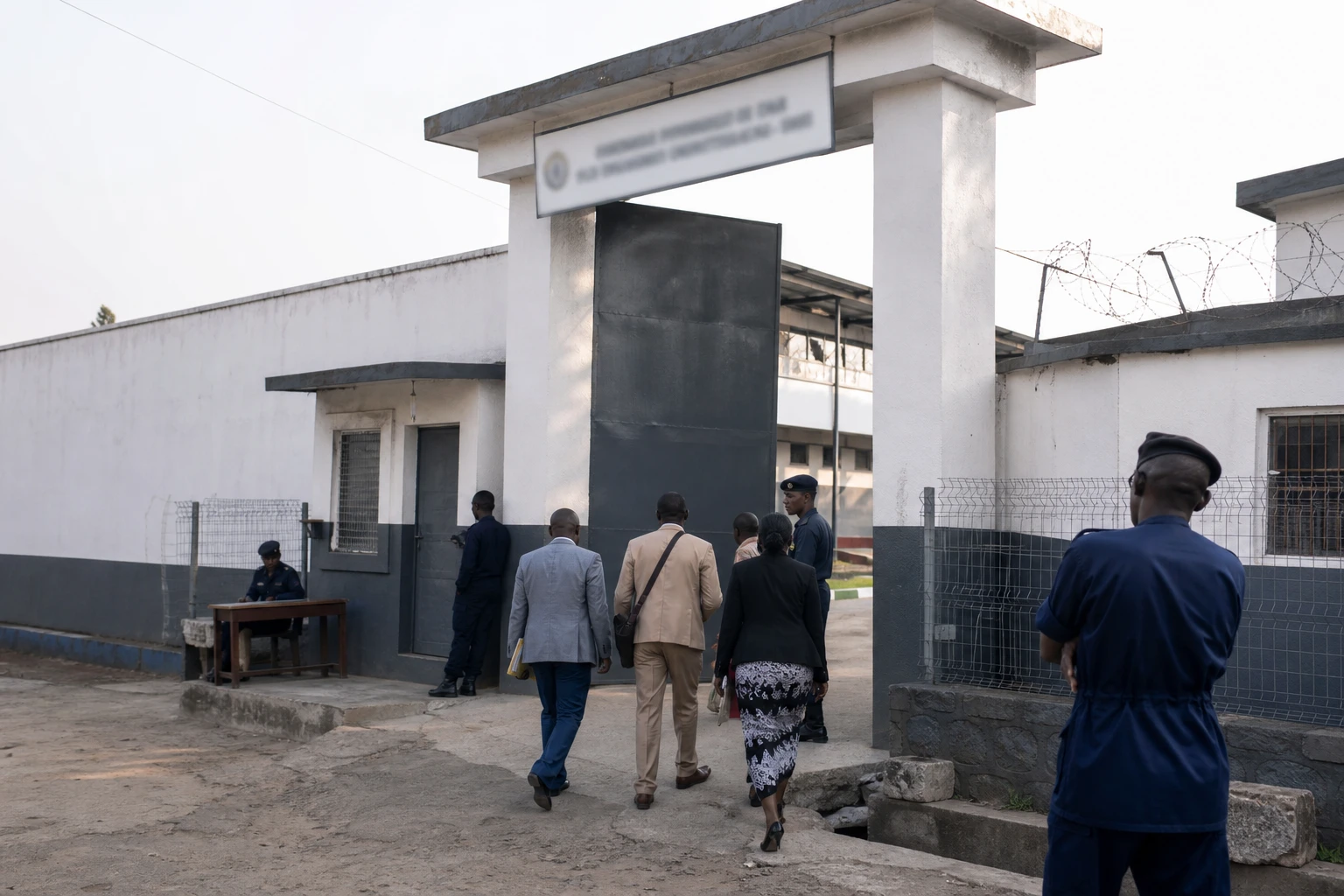
A prison meant to hold, but a recurring warning sign
In Haut-Uele, a prison escape is not merely a crime story. It also raises questions about the Congolese state’s ability to secure its places of detention, protect residents and make a justice system already under pressure function. In Watsa, the problem extends beyond the walls of a prison: it affects the day-to-day security of a mining area where the movement of people, money and weapons makes the authorities’ work even more difficult.
The Democratic Republic of the Congo has for years faced prison-system weaknesses documented by the United Nations and several human rights organisations. Overcrowding, a lack of resources, insufficient staffing and slow proceedings have put the system under strain. At Makala prison in Kinshasa, the situation came into sharp focus again after the deadly escape attempt on 2 September 2024, prompting the authorities to reopen the prison reform file.
In Watsa, 70 inmates left the prison within minutes
On Friday 17 July, about 70 inmates escaped from Watsa central prison, in Haut-Uele province. Information corroborated by local civil society and Congolese media indicates that the escape took place at around 4pm, as a prison guard was preparing to return to their cells inmates who had spent some time outside after visits from relatives. The inmates reportedly overpowered the guard and took his bunch of keys before opening several cells.
Among those who escaped were 15 people being prosecuted by the military prosecutor’s office for illegal possession of weapons and munitions of war. The others are under civilian justice for various offences. This detail matters because it shows that the incident involved not only people accused of common-law offences, but also cases of concern to local security.
The incident was all the more surprising because the prison had recently been presented as one of the best-secured facilities in Haut-Uele, following renovation work funded by the provincial authorities. The contrast between the announced investment and the mass escape raises a simple question: what is a renovated prison worth if the surveillance chain remains fragile?
A local problem, but a national breakdown
The Watsa case is part of a long pattern. In DR Congo, mass prison escapes have recurred for several years, sometimes amid armed attacks, sometimes taking advantage of internal security failures. In August 2022, more than 800 inmates fled Kakwangura prison in Butembo. In November 2021, 189 prisoners escaped from Matadi. In October 2020, an attack on Beni-Kangbayi prison led to the escape of about 1,000 inmates. These episodes have made such warnings seem almost routine, without addressing the underlying problem.
The Makala tragedy reinforced this conclusion. After the escape attempt on 2 September 2024 in Kinshasa, Human Rights Watch called on the Congolese authorities to conduct a prompt and credible investigation, while stressing the need to tackle overcrowding. Other sources reported that the incident caused at least 129 deaths, some from gunshot wounds and others from suffocation in the crush. The episode was a reminder that prison is not merely a place where liberty is taken away: it can become a breaking point when supervision collapses.
The United Nations has long described a Congolese prison system marked by a lack of funding, insufficient staffing, deteriorating infrastructure and overcrowding. In several facilities, pre-trial detention accounts for a large share of available places. UNDP, for example, reported that about 4,000 people were being held on remand in Goma, where capacity was around 350 places. In Kinshasa, the Congolese Press Agency also reported the release of 304 remand prisoners from Makala in February 2024 to ease overcrowding.
What this means for Haut-Uele and DR Congo
In Watsa, the escape is first and foremost a source of concern for residents. The province is already dealing with security tensions, trafficking and weapons movements that fuel a sense of insecurity. The release from prison of people accused of weapons-related offences heightens fears of renewed criminal activity or a knock-on effect in an area where the public authorities are seeking to reassert themselves. Local civil society is calling for a swift investigation and the recapture of the fugitives.
For the provincial authorities, the challenge is different. It is no longer just a matter of arresting the escapees, but of showing that the prison administration works, that the renovation was not merely for show, and that those responsible for the chain of custody can be identified. In a country where internal security remains heavily shaped by crises in the east and more scattered centres of violence, every mass escape further undermines confidence in the justice system.
There is also a judicial problem. As long as pre-trial detention remains overcrowded, prisons will hold people who have not yet been tried alongside convicts whose sentences have been determined. This mix increases internal tensions, makes it harder to manage inmate numbers and complicates the work of guards. Added to this are food shortages, limited access to healthcare, dilapidated buildings and weak logistics. In other words, the Congolese prison system carries the seeds of its own breakdown.
An issue that extends beyond DR Congo
At regional level, the issue also matters to Central Africa and the Great Lakes. The DRC, a member of SADC and the Economic Community of Central African States in several areas of cooperation, remains a place where the security of detention facilities directly affects efforts to combat armed groups, cross-border trafficking and the movement of weapons. When a prison fails, the entire security chain is weakened.
The continent-wide significance is the same: prison reform is not a secondary issue. It reflects a state’s ability to uphold the law without brutality, deliver trials within a reasonable time and maintain public order without turning detention into a lawless zone. After Watsa, the next test will be easy to judge: will the authorities manage to find the escapees, and then fix the failures that make mass escapes possible?