Algeria
 Egypt
 Libya
 Morocco
 Sudan
 Tunisia
 Benin
 Burkina Faso
 Cabo Verde
 Côte d'Ivoire
 Ghana
 Guinea
 Guinea-Bissau
 Liberia
 Mali
 Mauritania
 Niger
 Nigeria
 Senegal
 Sierra Leone
 The Gambia
 Togo
 Cameroon
 Central African Republic
 Chad
 Equatorial Guinea
 Gabon
 Republic of the Congo
 São Tomé and Príncipe
 Burundi
 Comoros
 Djibouti
 Eritrea
 Ethiopia
 Kenya
 Madagascar
 Malawi
 Mauritius
 Mozambique
 Rwanda
 Seychelles
 Somalia
 South Sudan
 Tanzania
 Uganda
 Angola
 Botswana
 Eswatini
 Lesotho
 Namibia
 South Africa
 Zambia
 Zimbabwe
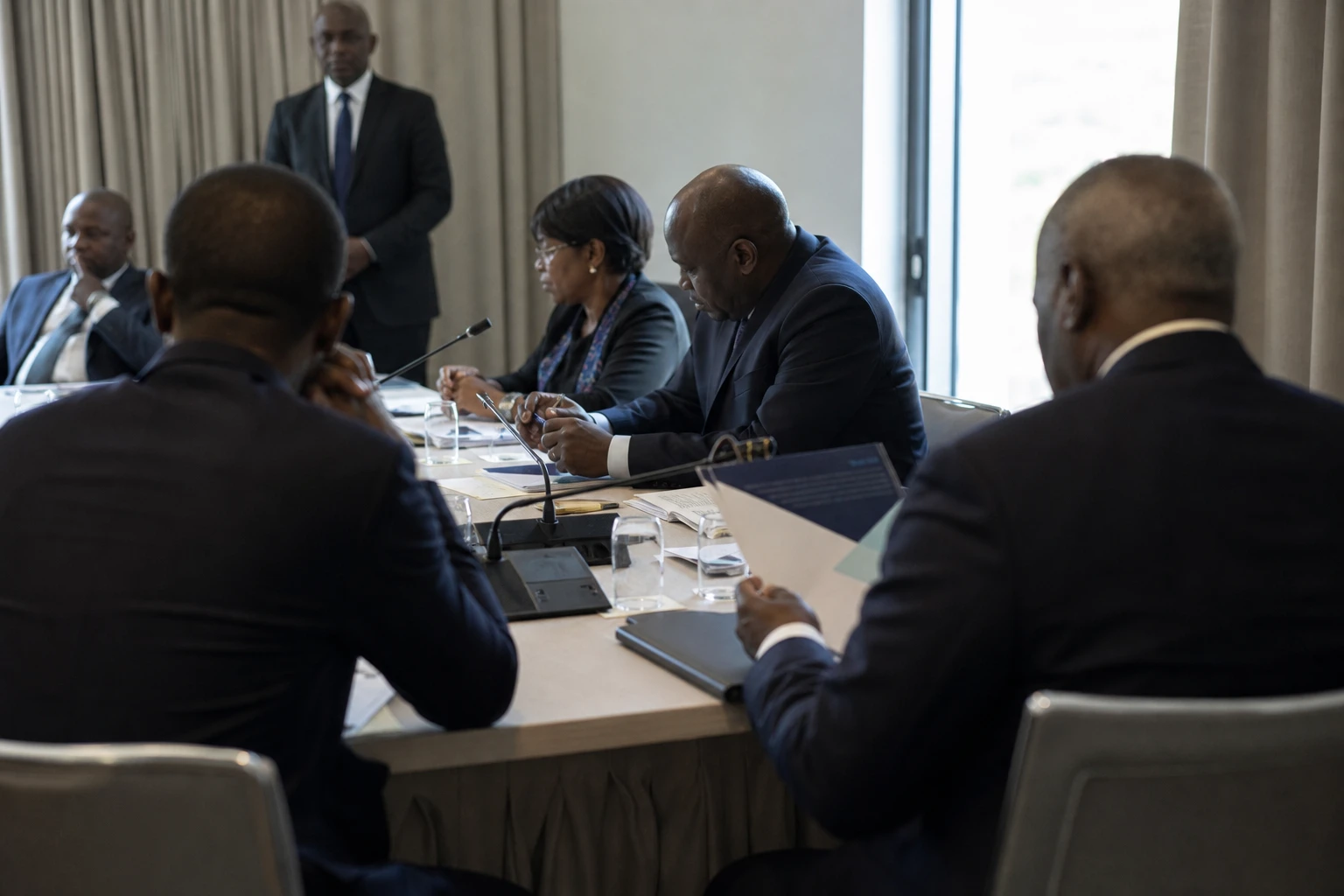
A signed peace deal alone is not enough to silence the guns
In the east of the Democratic Republic of the Congo, diplomacy often moves faster than events on the ground. Between signatures in Washington, talks in Doha and regional mediation efforts, a persistent gap has emerged: agreements pile up, but civilian security remains fragile.
It is in this context that Massad Boulos, Donald Trump’s senior adviser for Africa, has once again restated Washington’s position. The US administration wants to maintain pressure on Kinshasa and Kigali to prevent the peace agreement signed on 27 June 2025 from stalling. The UN has confirmed this framework, presented as an important step towards de-escalation in the Great Lakes region, in coordination with Qatar and the African Union.
A Congolese issue now linked to several mediation efforts
The crisis between DR Congo and Rwanda is no longer being addressed on a single diplomatic front. It is being followed in Washington, Doha, Addis Ababa and at the United Nations. The agreement of 27 June 2025 set out specific commitments: the neutralisation of the FDLR on the Congolese side, the withdrawal of Rwandan forces and an end to so-called defensive measures on the Rwandan side. The UN also recalled the mediation role played by Qatar and the African Union, as well as by the co-facilitators from the East African Community and the Southern African Development Community.
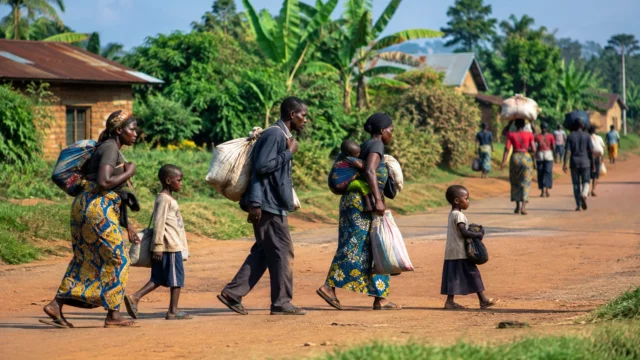
This framework is no mere detail. It reflects the place the Congolese crisis now occupies in regional security. Central Africa is directly affected, but the mechanisms involved extend beyond the sub-region. ECCAS, SADC, the EAC and the African Union are, in effect, linked to the same issue, while tensions in eastern DR Congo continue to affect displaced people, cross-border trade and local economies.
What Washington wants to prevent: a sham agreement
The message from Massad Boulos is focused on results. In June, before the Security Council, he had already said that neither Kinshasa nor Kigali had fully met their obligations, according to several UN and African reports. The idea is simple: without concrete implementation, a peace agreement risks becoming a diplomatic marker with no effect on the ground.
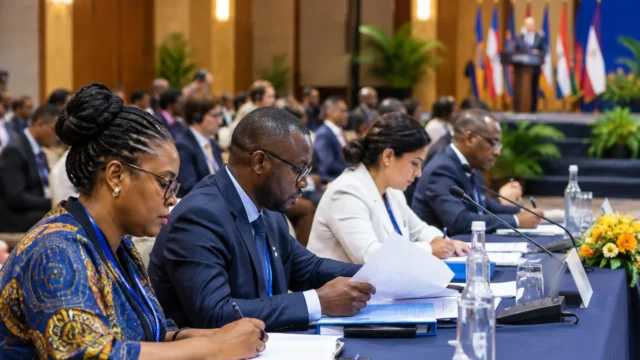
The meeting in Geneva, within the Joint Security Coordination Mechanism, was specifically intended to assess implementation. The UN said that meetings had been held there on 7 and 8 August 2025, with the participation of Qatar, Togo and the African Union, to monitor commitments linked to the Washington agreement. A further meeting was announced for 16 and 17 September. This timetable shows that the process remains active, but also that trust is still incomplete.
For the Congolese side, this US pressure can be seen as leverage, but also as an additional demand. Kinshasa expects a tangible reduction in insecurity in North Kivu and South Kivu. Kigali, for its part, wants guarantees on the neutralisation of the FDLR and the security of its border. Between the two, the Congolese population is paying the immediate price of delays, suspicion and repeated breakdowns in trust.
Eastern Congo, a test of credibility for African and international mediation
The other issue is political. Washington is not acting alone, but its activism is forcing other players to take a position. Qatar is leading dialogue between the Congolese government and the AFC/M23 under the Doha process. The African Union has appointed Faure Gnassingbé, President of the Council of Togo, as mediator. And the two regional blocs, the EAC and SADC, have already been involved in reviving the monitoring mechanism. For Africa, the issue has therefore become a test of coordination between national, regional and extra-regional mediation efforts.
This coordination matters all the more because the conflict in eastern DR Congo is not merely a diplomatic standoff between states. It affects informal trade networks, mining routes, forced displacement and daily life in cities such as Goma, Bukavu and Beni. When diplomatic commitments are delayed, families, traders, schools and health centres bear the brunt. Here, peace is measured less by the tone of statements than by the movement of people and an end to violence.
For DR Congo, the stakes go beyond its relationship with Rwanda. They concern the state’s ability to re-establish its authority in the east, coordinate its actions with regional processes and turn diplomatic signatures into real security. For Kigali, the challenge is also to emerge from a recurring dispute with Kinshasa without remaining trapped in a cycle of mutual suspicion. In both capitals, the same question remains: how can an agreement sustained by international pressure be turned into a lasting ceasefire?
At continental level, the Congolese issue is a reminder of a reality that is often underestimated: Africa’s most enduring crises are those that become regional. The Washington agreement, the Doha framework and the African Union’s mediation point to the same lesson. In the Great Lakes region, as elsewhere, peace does not advance through a single channel. It depends on coherence among the actors, compliance with commitments and the mediators’ ability to ensure credible monitoring. This balance of power, far more than declarations, will show whether US pressure brings about a turning point or merely another diplomatic phase.