
 Algeria
 Egypt
 Libya
 Sudan
 Tunisia
 Benin
 Burkina Faso
 Cabo Verde
 Côte d'Ivoire
 Ghana
 Guinea
 Guinea-Bissau
 Liberia
 Mali
 Mauritania
 Niger
 Nigeria
 Senegal
 Sierra Leone
 The Gambia
 Togo
 Cameroon
 Central African Republic
 Chad
 DR Congo
 Equatorial Guinea
 Gabon
 Republic of the Congo
 São Tomé and Príncipe
 Burundi
 Comoros
 Djibouti
 Eritrea
 Ethiopia
 Kenya
 Madagascar
 Malawi
 Mauritius
 Mozambique
 Rwanda
 Seychelles
 Somalia
 South Sudan
 Tanzania
 Uganda
 Angola
 Botswana
 Eswatini
 Lesotho
 Namibia
 South Africa
 Zambia
 Zimbabwe
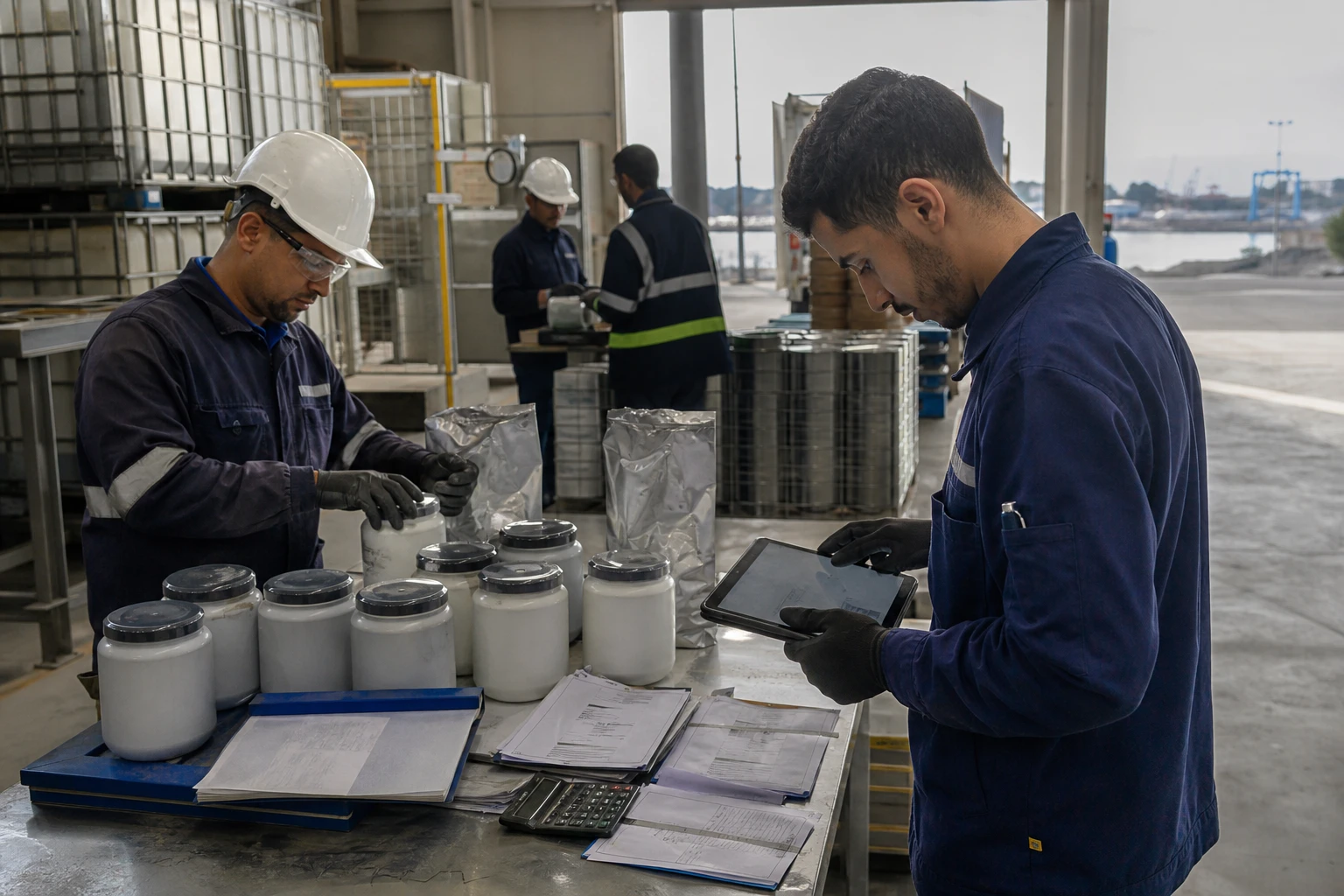
In Kenitra, Morocco is no longer seeking merely to assemble vehicles. It is now targeting a strategic link in their manufacture: active cathode materials, essential for batteries used in electric cars and electricity storage.
On 28 September 2026, Volkswagen Group, its specialist subsidiary PowerCo SE and Chinese manufacturer Gotion High-Tech announced the creation of three joint ventures linked to a single industrial chain. The arrangement brings together Valencia in Spain, Šurany in Slovakia and Kenitra in Morocco. The aim is to bring battery production closer to the European market while securing its supplies.
Morocco stakes a claim upstream in the supply chain
The future joint venture in Kenitra will produce active cathode materials for lithium iron phosphate batteries, better known by the acronym LFP. The cathode is one of a cell’s essential components: it determines part of its performance, cost and lifespan.
LFP batteries are particularly sought after for their robustness, longevity and lower cost than some batteries that use more nickel or cobalt. They are suitable in particular for entry-level and mid-range electric vehicles, as well as stationary energy-storage systems.
Under the announced agreement, Gotion will hold 51% of the joint venture based in Kenitra. PowerCo, Volkswagen’s battery business, will own 49%. The project represents a planned investment of about €480 million and is intended primarily to supply the partnership’s other two European sites. Its implementation remains subject to regulatory approvals and the internal procedures of the companies concerned.
Volkswagen’s statement presents this structure as a regional chain stretching from cathode materials to cell production. Kenitra therefore sits before the cell-manufacturing stage, at the heart of an industrial segment where some of the added value is created.
An industrial triangle between North Africa and Europe
In Valencia, the joint venture is to produce LFP cells, the electrochemical units that make up batteries. In Šurany, Slovakia, Gotion and PowerCo plan to operate another cell-production capacity for electric vehicles and energy storage.
PowerCo plans to contribute about €470 million by 2030 towards its stakes in the Moroccan and Slovakian sites. This distribution allows Volkswagen to avoid concentrating every stage of its battery strategy in a single European country.
The choice of Kenitra reflects several considerations. The city already has an export-oriented automotive platform, an industrial zone geared towards overseas markets and logistical links with Europe. Morocco also benefits from trade agreements with the European Union and accumulated experience in integrating suppliers around carmakers.
This investment does not mean Morocco is becoming merely an industrial extension of Europe. Rather, it reflects a reshaping of value chains, as the Kingdom seeks to attract activities with greater technological intensity. The challenge will be to turn announced investments into local expertise, Moroccan subcontracting and skilled jobs.
A sector expanding around Kenitra and Jorf Lasfar
The partnership with Volkswagen comes as an ecosystem is already taking shape. In June 2024, the Moroccan government signed an agreement with Gotion High-Tech covering a gigafactory in Kenitra. The initial project envisages capacity of 20 gigawatt-hours and the announced creation of 17,000 direct, indirect and induced jobs, according to the Moroccan authorities.
The first phase is to cover several operations, from cathode materials to cells and battery packs. The African Development Bank has also described a project comprising annual capacity of 20 gigawatt-hours of LFP batteries and up to 100,000 tonnes of cathode materials in its documented initial configuration.
In Tanger Tech, Chinese group BTR New Material Group announced an investment in cathode materials in 2024. Other projects involving copper foil and anode materials have also been announced, although the plans for some of them have since evolved.
In Jorf Lasfar, near El Jadida, COBCO inaugurated an initial unit dedicated to NMC cathode precursors, another family of battery materials, on 25 June 2025. Its announced capacity is 40,000 tonnes a year. The complex also plans developments in LFP materials, metal refining and recycling. COBCO describes the facility as the first stage of an integrated industrial platform.
Benefits will depend on local roots
For major groups, the benefits are clear: shorter distances, more diverse suppliers and secure access to components. For Morocco, success will be measured differently. It will depend on the share of contracts won by Moroccan companies, the training of technicians and engineers, and the ability to develop an industrial base around the main plants.
The effects will not be the same across all areas. Kenitra could benefit from industrial jobs and production-related services. Companies in neighbouring regions could join the subcontracting chains. But the gains will remain limited if components, equipment and expertise continue to be imported almost entirely.
Energy will also be a decisive factor. Manufacturing materials and cells consumes large amounts of electricity and water. Morocco will therefore have to balance industrial competitiveness, resource availability and a lower carbon footprint. This balance will affect access to European markets, which are increasingly attentive to the traceability of imported products.
A signal for Africa’s automotive industry
The Kenitra project goes beyond Volkswagen alone. It confirms Morocco’s ambition to move from vehicle assembly towards specialisation in electric-mobility components. This direction forms part of the trajectory of a country that has become an important industrial base for exporting vehicles and parts.
Across Africa, this development raises a central question: can the continent capture more value from the shift to electric vehicles, rather than mainly exporting its minerals and importing processed technologies? Morocco does not have all the minerals needed for a complete industry, but it is seeking a position in processing, manufacturing and, eventually, recycling.
The next steps will be decisive: obtaining approvals, setting a construction timetable, coordinating with Gotion’s gigafactory and securing European customers. For Kenitra, the real test will begin when industrial announcements have to translate into production, skilled jobs and transfers of expertise.



