Algeria
 Egypt
 Libya
 Morocco
 Sudan
 Tunisia
 Benin
 Burkina Faso
 Cabo Verde
 Côte d'Ivoire
 Ghana
 Guinea
 Guinea-Bissau
 Liberia
 Mali
 Mauritania
 Niger
 Nigeria
 Senegal
 Sierra Leone
 The Gambia
 Togo
 Cameroon
 Chad
 DR Congo
 Equatorial Guinea
 Gabon
 Republic of the Congo
 São Tomé and Príncipe
 Burundi
 Comoros
 Djibouti
 Eritrea
 Ethiopia
 Kenya
 Madagascar
 Malawi
 Mauritius
 Mozambique
 Rwanda
 Seychelles
 Somalia
 South Sudan
 Tanzania
 Uganda
 Angola
 Botswana
 Eswatini
 Lesotho
 Namibia
 South Africa
 Zambia
 Zimbabwe
In Vakaga, security and public services go hand in hand
In Birao, in Vakaga, every official visit tells the same story: securing a porous border while maintaining public services that reassure the population. In the north-east of the Central African Republic, development still depends on stability, especially since the Sudan crisis has intensified pressure on localities near Am-Dafock and cross-border routes.
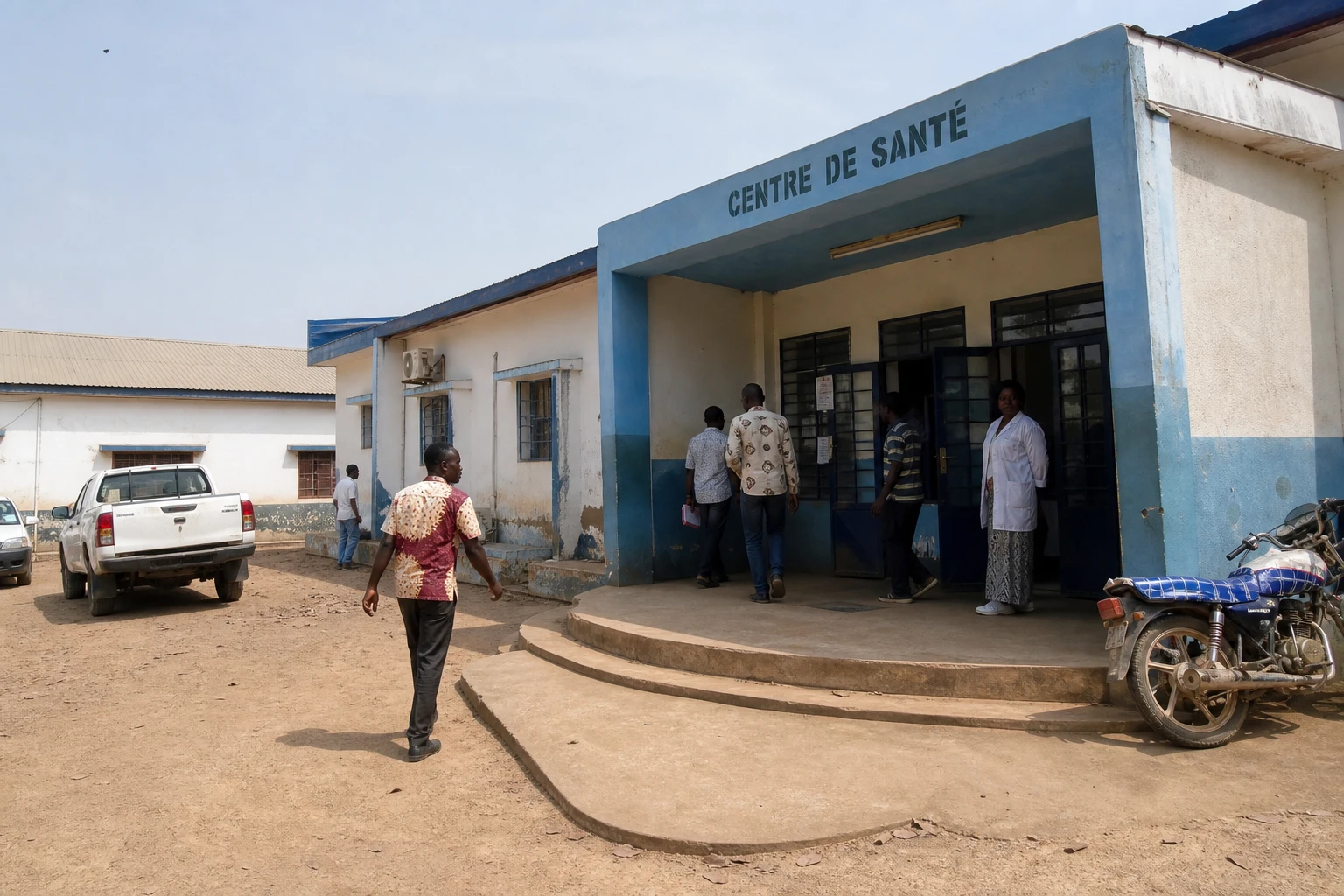
It was in this context that Prime Minister Félix Moloua travelled to Birao to demonstrate the presence of the state, open a health centre and send a firm message to armed groups. The government wants to show that its response is not limited to the military front. It is also seeking to establish concrete projects in a region long exposed to isolation, population displacement and supply disruptions.
A political visit after the Am-Dafock attack
The visit to Birao came after the attack on Am-Dafock on 30 June 2026, a locality about 65 kilometres from Birao, near the Sudanese border. Central African military authorities then announced that the area had returned to government control, while MINUSCA condemned the attack and referred to the protection of civilians and support for state authority.
The chronology matters. For several years, Am-Dafock has been a sensitive crossing point. The locality serves as a hub linking Vakaga, the movement of traders, refugees and armed groups, and the spillover effects of the war in neighbouring Sudan, which began in 2023. In this kind of area, a local attack is never only local: it affects markets, healthcare, population movements and trust in institutions.
MINUSCA said a few days after the assault that the situation had gradually calmed, while remaining fragile and unpredictable. It also reported civilian protection measures, logistical support and efforts to maintain humanitarian access to Am-Dafock. This confirms that, in Vakaga, security and emergency aid remain closely linked.
Bangui’s message: DDR, development and state authority
In Birao, Félix Moloua called on armed groups to join DDR, the disarmament, demobilisation and reintegration programme. The idea is familiar, but remains central: to take combatants out of confrontation and bring them back into a political, administrative and economic framework. The head of government also stressed the need to “turn the page”, in deliberately firm language.
This firmness is more than symbolic. In the Central African state, DDR is an instrument of sovereignty as much as a tool for pacification. When it works, it helps reduce the grey areas where weapons, informal taxes and local networks of predation circulate. When it stalls, the authorities have to make up for it through the presence of the FACA, MINUSCA and administrative services. Vakaga illustrates this tension precisely.
The prime minister also spoke about development. He mentioned a future development hub, supported by partners, to consolidate infrastructure projects already under way. This language is not incidental. For years, Bangui has presented development hubs as a way to concentrate investment in strategic areas rather than scatter projects with no lasting impact. In the north-east, however, this approach runs up against isolation, transport costs and recurring insecurity.
What this means for the people of Birao and Vakaga
For residents, the immediate issue is not rhetoric but the continuity of services. Opening a health centre addresses a pressing need: in Vakaga, journeys are long, distances take their toll, and access to healthcare often depends on ad hoc initiatives by the authorities, MINUSCA or NGOs. The health ministry lists Vakaga among the most dispersed health districts, with a limited number of health facilities relative to need.
The effects of the Sudan crisis are already visible on the ground. Refugees have arrived via Am-Dafock in Birao, including at the Korsi site, while the city’s supplies have been disrupted. The United Nations has reported Sudanese refugees in Birao and the prefecture, as well as a local economy weakened by disruptions to cross-border movement. This directly affects households, small traders, transporters and herders.
The balance of power also needs to be considered. In the capital, Bangui, security is measured through communiqués and official announcements. In Birao, it is measured differently: by the ability to reopen a classroom, treat an emergency, bring in fuel, secure a market and keep humanitarian corridors open. That is where state authority is truly tested.
A regional issue, not just a Central African one
The significance of the episode extends beyond Vakaga. The Central African Republic is a member of CEMAC, the Central African Economic and Monetary Community, where borders shape the movement of goods and people, as well as security risks. When the border with Sudan is engulfed in conflict, the entire regional balance comes under strain, from trade to refugee movements.
For the Central African Republic, the situation in Birao also serves as a reminder of a broader lesson: stabilisation cannot be planned from Bangui alone. It requires local partners, a continuous administrative presence, credible DDR and close co-ordination with MINUSCA, UN agencies and African partners. In the short term, the next test will be maintaining security in Am-Dafock and the authorities’ ability to turn a political visit into lasting results on the ground.