
 Algeria
 Egypt
 Libya
 Morocco
 Sudan
 Tunisia
 Benin
 Burkina Faso
 Cabo Verde
 Côte d'Ivoire
 Ghana
 Guinea
 Guinea-Bissau
 Liberia
 Mali
 Mauritania
 Niger
 Nigeria
 Senegal
 Sierra Leone
 The Gambia
 Togo
 Cameroon
 Central African Republic
 Chad
 DR Congo
 Equatorial Guinea
 Gabon
 Republic of the Congo
 São Tomé and Príncipe
 Burundi
 Comoros
 Djibouti
 Eritrea
 Ethiopia
 Kenya
 Madagascar
 Malawi
 Mauritius
 Mozambique
 Rwanda
 Seychelles
 Somalia
 South Sudan
 Tanzania
 Uganda
 Angola
 Botswana
 Eswatini
 Lesotho
 Namibia
 Zambia
 Zimbabwe
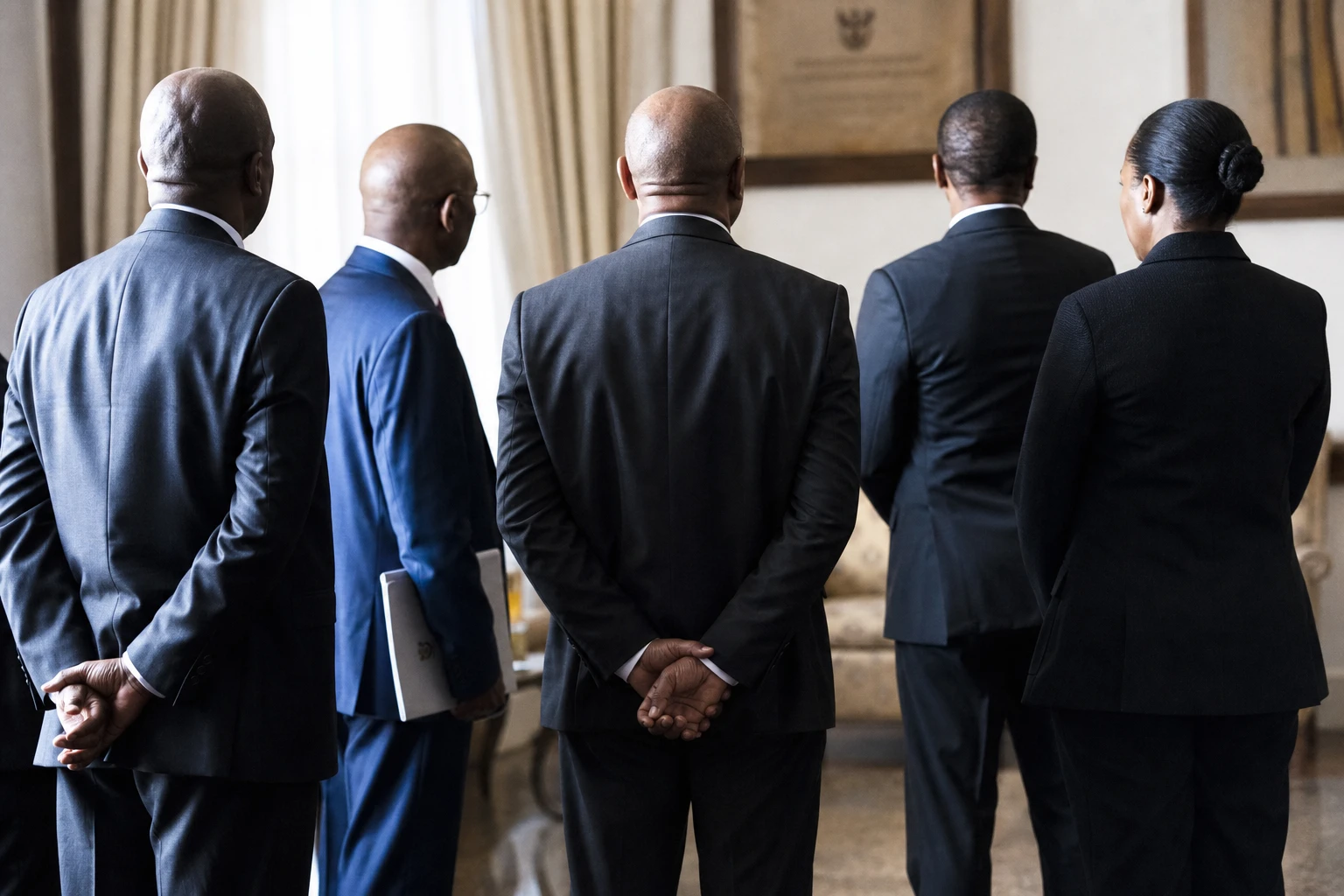
Washington tightens the screws, Pretoria looks beyond the symbolism
In relations between South Africa and the United States, the visa issue has become a political barometer. It is no longer just about the movement of people. It is also about land, race, historical memory and how Washington views South African debates from Pretoria. On Tuesday 15 September 2026, US Secretary of State Marco Rubio announced a new visa restriction policy targeting certain foreign nationals deemed responsible for, or complicit in, laws and practices that allow land seizures without compensation, race-based discrimination and the incitement of imminent violence against minorities in South Africa.
The tightening comes as bilateral relations are already severely strained. For several months, the Trump administration has accused the South African authorities of persecuting Afrikaners, a white minority descended mainly from Dutch settlers, and has already taken other measures to exert pressure, including cutting aid, expelling the South African ambassador in Washington and giving certain Afrikaners priority access to a refugee scheme. International media have also noted that this episode is part of a broader diplomatic escalation.
The heart of the issue: land, history and the battle over the narrative
In South Africa, the land question is not a technical debate. It goes to the heart of the post-apartheid order. The South African government itself points out that the Constitution governs expropriation in the public interest, with just and equitable compensation, and that land reform aims to address inequalities inherited from colonialism and apartheid. The presidency signed the Expropriation Bill in January 2025, describing it as a measure aligned with the Constitution and intended to replace a law dating from 1975.
Washington, for its part, is now linking this debate to a racial and security-focused framework. In his announcement, Marco Rubio referred to “laws or policies” that would allow seizures without compensation, racial discrimination and incitement to violence against minority groups. The statement names no officials, does not specify which South African provisions would automatically trigger the sanction, and does not say whether current holders of US visas are affected. In practice, the measure therefore looks more like a framework for political targeting than a general ban on South African travellers.
This distinction matters. It shows that Washington’s chosen lever is aimed first at decision-makers, lawyers and political or administrative figures deemed linked to these policies, rather than at South Africans as a whole. This is important for businesses, universities, researchers, diplomats and professionals who regularly travel between Johannesburg, Pretoria and US cities. But it is also politically sensitive, because the decision gives the impression of a moral sanction over a domestic South African debate, even though that debate is based on laws passed locally, public consultations and a long history of dispossession.
What this means for South Africa and southern Africa
In Pretoria, the response is twofold. On the one hand, the South African government must continue to defend its land reform and reiterate that there is no arbitrary seizure of land. On the other, it must prevent the controversy from becoming a lasting crisis of credibility among investors, trading partners and regional public opinion. In 2025, the Department of Public Works also stressed that there would be “no confiscation” of land in South Africa, seeking to dispel concerns about the new law.
The issue also has a domestic dimension. President Cyril Ramaphosa recently acknowledged before lawmakers that some African countries are concerned about anti-migrant actions in South Africa, while reaffirming the official rejection of xenophobia, Afrophobia and discrimination. At the same time, Pretoria has strengthened its migration management policy with a plan for border control, administrative modernisation and action against abuses. In other words, the country is already under pressure over its own social and migration tensions. The US decision adds an external dimension to an already fraught domestic issue.
The impact on communities is uneven. Business and academic circles are likely to see it above all as a further sign of strain in a relationship that matters for trade, business visas, research and student mobility. In rural areas, by contrast, the land debate remains tied to access to land, agricultural productivity and redress for past injustices. The South African government presents reform as a tool for redistribution and agricultural recovery, while opponents sometimes view it as a threat to the security of property rights. The US measure therefore fuels a battle over narratives as much as a legal dispute.
For southern Africa, the stakes extend beyond South Africa. Pretoria is a central player in SADC, the Southern African Development Community, and an important interlocutor of the African Union. Any lasting tension with Washington could therefore spill over into trade negotiations, diplomatic forums and South Africa’s ability to speak on behalf of a region that is counting on integration, free movement and a more assertive defence of African sovereignty. The South African government itself has repeatedly reaffirmed its commitment to cooperation with SADC and the AU on migration management and burden-sharing.
This episode should also be viewed in light of a broader precedent: US visa policy in Africa has recently been reorganised around regional hubs, reflecting a desire for more centralised control of mobility flows from the continent. The announcement targeting South Africa is therefore part of a wider tightening, in which visas are becoming an instrument of diplomatic signalling. For Pretoria, the message is clear: the land dispute will not remain confined to domestic debates when it touches on race, property and the country’s international image.
What remains to be seen is how the policy will be implemented. The immediate question is not only who will be targeted, but how Washington will apply this new framework, and whether the measure will remain limited to a handful of officials or extend to other categories. In Pretoria, the challenge will be to respond without escalating tensions, defending South Africa’s right to reform its land system while protecting economic confidence and social cohesion. In a South Africa already under scrutiny for its ability to reconcile historical justice, institutional stability and economic appeal, the visa dispute is also a battle over sovereignty.



