Algeria
 Egypt
 Libya
 Morocco
 Sudan
 Tunisia
 Benin
 Burkina Faso
 Cabo Verde
 Côte d'Ivoire
 Ghana
 Guinea
 Guinea-Bissau
 Liberia
 Mali
 Mauritania
 Niger
 Nigeria
 Senegal
 Sierra Leone
 The Gambia
 Togo
 Cameroon
 Chad
 DR Congo
 Equatorial Guinea
 Gabon
 Republic of the Congo
 São Tomé and Príncipe
 Burundi
 Comoros
 Djibouti
 Eritrea
 Ethiopia
 Kenya
 Madagascar
 Malawi
 Mauritius
 Mozambique
 Rwanda
 Seychelles
 Somalia
 South Sudan
 Tanzania
 Uganda
 Angola
 Botswana
 Eswatini
 Lesotho
 Namibia
 South Africa
 Zambia
 Zimbabwe
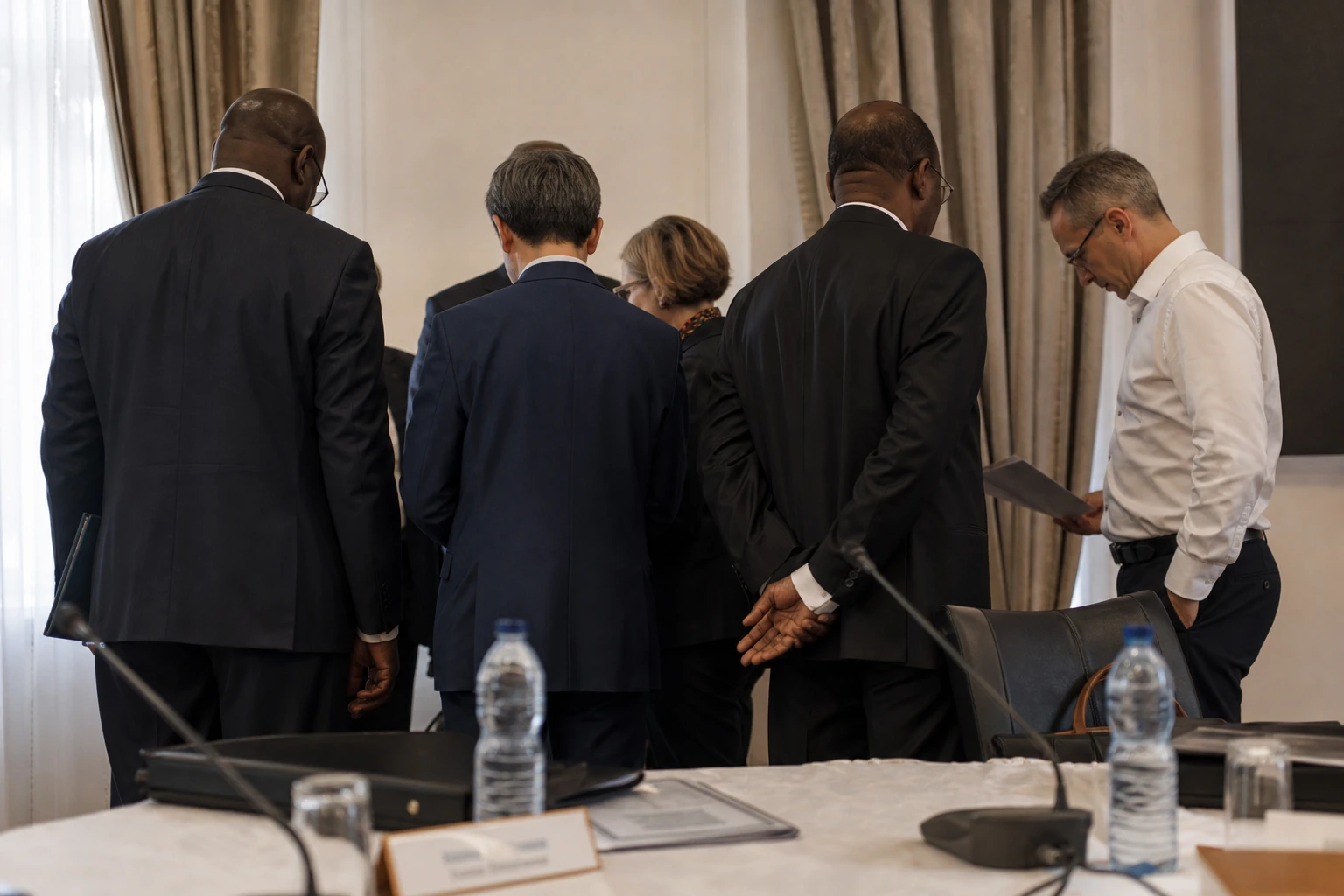
In Bangui, sanctions still reflect the fragility of peace
In the Central African Republic, the question is no longer simply whether weapons are circulating. It is why, despite political progress and the decline of some rebellions, networks continue to supply groups capable of destabilising areas beyond the capital, Bangui. That is the point of the extension approved by the Security Council: to maintain pressure on the networks sustaining violence, without mistaking that pressure for a sufficient response in itself.
The Central African Republic remains subject to a long-standing UN regime, established in 2013 with targeted sanctions against armed non-state actors. Since 2024, the general arms embargo has been lifted for the national forces, but measures targeting armed groups and associated individuals have been retained and then extended in 2025 until 31 July 2026. The issue has therefore entered a more nuanced phase: less symbolic sanction, more monitoring of supply routes, finances and logistical support.
What the Security Council has put on the table
On Tuesday 29 July 2025, the Security Council had already unanimously renewed sanctions against armed groups operating in the Central African Republic until 31 July 2026, as well as the mandate of the group of experts tasked with monitoring their implementation until 31 August 2026. Resolution 2789 confirmed that all member states must prevent the supply, sale or transfer of arms and related materiel to these groups and their associates.
On the eve of the new vote expected on 29 July 2026, specialists on the issue at the Council said that a draft text was expected to extend measures against armed groups until 31 July 2027, and the mandate of the group of experts until 31 August 2027. This prospect reflects a policy of continuity: the Council considers that the threat has not disappeared, even though the security landscape has changed since the major clashes at the start of the decade.
According to the summary of the debate, the Central African ambassador to the UN emphasised a central point: sanctions are useful only if they help identify the networks supplying armed groups, their financiers, points of entry and supply chains. This highlights a familiar weakness of sanctions regimes: they sometimes limit a group’s immediate capacity without necessarily breaking the networks that allow it to rebuild.
Visible progress, but security remains incomplete
Since 2024, and particularly in the first half of 2026, the UN has described a more positive trajectory in the Central African Republic. MINUSCA says it has observed “remarkable and tangible” progress, notably following the dissolution of several armed groups and the continuation of the peace process launched in 2019. But this improvement remains uneven. Across the country, state authority is advancing in some areas, with more visible effects around administrative centres and much more limited gains in some prefectures in the east and north.
The Secretary-General’s report submitted in June 2026 also notes that the situation remains sensitive, in an environment where MINUSCA continues to support security efforts, the protection of civilians and the gradual transfer of responsibilities to the national authorities. The key word is transition: not an abrupt end to the international presence, but a gradual shift towards greater national capacity.
For the Central African government, the extension of sanctions has an ambivalent significance. On the one hand, it confirms that the international community still considers armed groups a threat to peace and security. On the other, it is a reminder that Bangui must still demonstrate progress in weapons tracing, tackling illicit networks and consolidating its security apparatus. The debate is therefore not simply about sanctions versus sovereignty. It concerns the state’s ability to regain control of the country’s periphery and the flows that sustain it.
A signal for Central Africa and beyond
This issue extends beyond the Central African Republic alone. Across Central Africa, it concerns the cross-border movement of weapons, porous areas along the borders with Sudan, Chad, Cameroon, the DRC and Congo, and CEMAC’s ability to support lasting stabilisation in a region where crises are often fuelled by poorly controlled borders. The Security Council itself has long linked the Central African issue to regional security dynamics in Central Africa.
The issue also has continent-wide political significance. As the African Union and regional organisations call for a greater role in managing African crises, the Central African case serves as a test: how can African-led solutions be given greater scope without allowing armed networks to regroup, when neither peace agreements nor institutional changes have yet been enough to neutralise them? The next step to watch is clear: the new Security Council decision, expected around 29 July 2026, and how it will combine arms control, support for the Central African authorities and monitoring of the actors who continue to undermine the country’s stability.