Algeria
 Egypt
 Libya
 Morocco
 Sudan
 Tunisia
 Benin
 Burkina Faso
 Cabo Verde
 Côte d'Ivoire
 Ghana
 Guinea
 Guinea-Bissau
 Liberia
 Mali
 Mauritania
 Niger
 Nigeria
 Senegal
 Sierra Leone
 The Gambia
 Togo
 Cameroon
 Central African Republic
 Chad
 DR Congo
 Equatorial Guinea
 Gabon
 Republic of the Congo
 São Tomé and Príncipe
 Burundi
 Comoros
 Djibouti
 Eritrea
 Ethiopia
 Kenya
 Madagascar
 Malawi
 Mauritius
 Mozambique
 Rwanda
 Seychelles
 Somalia
 South Sudan
 Tanzania
 Angola
 Botswana
 Eswatini
 Lesotho
 Namibia
 South Africa
 Zambia
 Zimbabwe
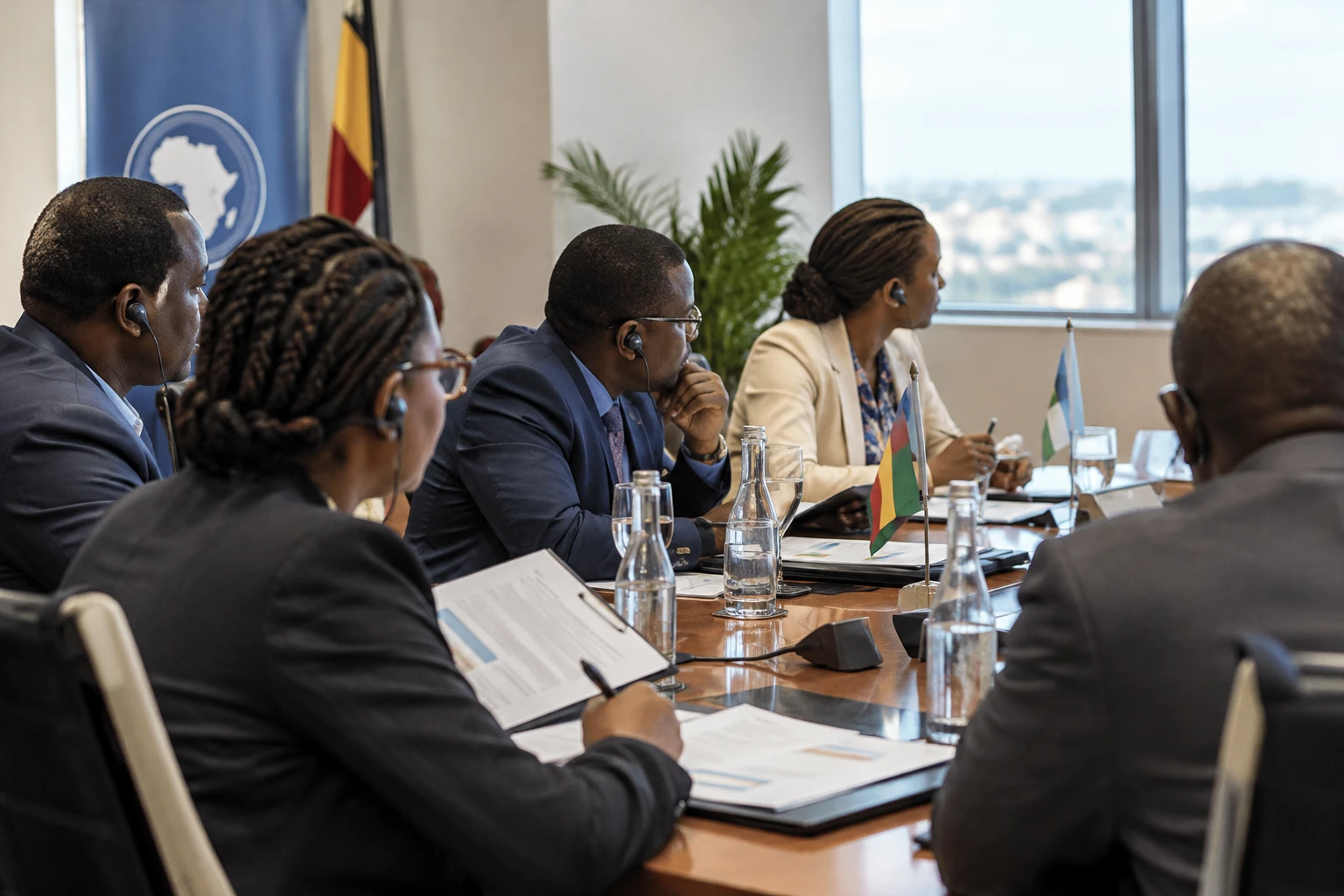
For people fleeing persecution, a decision taken thousands of miles away can shift the entire process without resolving the essential question: where will they be able to obtain effective protection? In Uganda, an agreement with the United States has now placed this question at the heart of a legal and regional debate.
A bilateral agreement in a host region
Uganda has long hosted refugees, including people from South Sudan and the Democratic Republic of the Congo. This role as a host country comes in a context where forced displacement crosses the borders of East Africa. The country belongs to the East African Community (EAC), a regional organisation for economic and political cooperation.
On 29 July 2025, Kampala and Washington signed an agreement on the transfer of nationals of third countries who seek protection in the United States. Uganda’s Ministry of Foreign Affairs confirmed this in August. It described the agreement as temporary and said Uganda would prioritise people of African origin. In its initial statement, the authorities also excluded unaccompanied minors and people with criminal records.
The Ugandan government says the agreement complies with its laws and the principle of non-refoulement: a person must not be sent back to a country where they risk torture or other serious harm. But, according to Human Rights Watch (HRW), the text does not specify in detail how transferred claims will be examined.
US decisions before transfers
In a report published on 8 October 2026, HRW examines how US authorities use these transfer agreements. For the Ugandan arrangement alone, the organisation analysed data from US immigration courts. Between 20 January 2025 and 31 July 2026, these courts issued final orders of removal to Uganda in the cases of 2,914 third-country nationals.
Of these cases, 2,746 — or 94% — were closed after a procedure known as “pretermission”. This procedure allows a judge to reject an asylum claim without examining its grounds, on the basis that protection could be sought in another country. HRW says the mere existence of the agreement with Kampala was thus enough in many cases to halt a full examination in the United States.
These figures do not mean that 2,746 people were sent to Uganda. Court data and deportation records are separate and do not make it possible to link each decision to an actual transfer. HRW reports, however, that eight people arrived in Uganda on 2 April 2026, according to US data. A spokesperson for Uganda’s Ministry of Internal Affairs described them as seven men and one woman from six African countries. The Ugandan government, for its part, announced their arrival on 1 April.
A separate measure, covering a shorter period, records 2,718 cases closed between January 2025 and the end of May 2026, with Uganda designated as a possible destination for the protection claim. The difference from the 2,914 decisions recorded up to July 2026 reflects the periods and data categories used. It should not be interpreted as a tally of transfers.
The right to protection at the heart of the dispute
The US government presents these agreements as a way to transfer certain claims to a partner country. HRW contests their application when US judges halt consideration of a case before a transfer and without assessing the risks cited by the person concerned. The organisation also points out that the Ugandan agreement does not describe precisely the procedure for deciding claims once people have arrived.
The distinction matters: a removal order is not a removal that has already taken place, and arrival in a third country does not in itself guarantee protected status. The United Nations High Commissioner for Refugees says transfer agreements should guarantee effective access to a fair asylum procedure, lawful stay while it is examined, and protection from return to danger. These safeguards must work in practice, not merely appear in a political statement.
The controversy goes beyond the US legal debate alone. For those concerned, the closure of a case may mean losing the opportunity to have their account examined in the United States, while their reception and future in Uganda remain to be determined. For Kampala, the agreement places demands on the capacity of its asylum system and its responsibility to protect people admitted to the country. The consequences are therefore not the same for governments, courts and applicants.
A regional impact to watch
Uganda is not the only African country approached by Washington to receive people removed to a country other than their own. Similar arrangements have been discussed or concluded elsewhere on the continent. But each agreement has its own terms: these arrangements should not be treated as a uniform African policy. The countries concerned do not have the same asylum systems or bilateral commitments.
For the EAC and the African Union, the central question is how responsibilities are shared between states. Hosting people transferred from a powerful country can increase the administrative and social needs of a host country. Legal safeguards, the capacity to examine claims and monitoring arrangements therefore need to be assessed, without confusing regional solidarity with an automatic transfer of responsibility.
Future data on actual transfers and decisions made in Uganda will help measure the gap between US orders and actual arrivals. The way claims are examined in Kampala will also show whether the agreement opens up concrete access to protection or mainly shifts out of the United States cases that have not been examined on their merits there.