Algeria
 Egypt
 Libya
 Morocco
 Sudan
 Tunisia
 Benin
 Burkina Faso
 Cabo Verde
 Côte d'Ivoire
 Ghana
 Guinea
 Guinea-Bissau
 Liberia
 Mali
 Mauritania
 Niger
 Nigeria
 Senegal
 Sierra Leone
 The Gambia
 Togo
 Cameroon
 Central African Republic
 Chad
 DR Congo
 Equatorial Guinea
 Gabon
 Republic of the Congo
 São Tomé and Príncipe
 Burundi
 Comoros
 Djibouti
 Eritrea
 Ethiopia
 Kenya
 Madagascar
 Malawi
 Mauritius
 Mozambique
 Rwanda
 Seychelles
 Somalia
 South Sudan
 Tanzania
 Angola
 Botswana
 Eswatini
 Lesotho
 Namibia
 South Africa
 Zambia
 Zimbabwe
Job promises that can turn into war
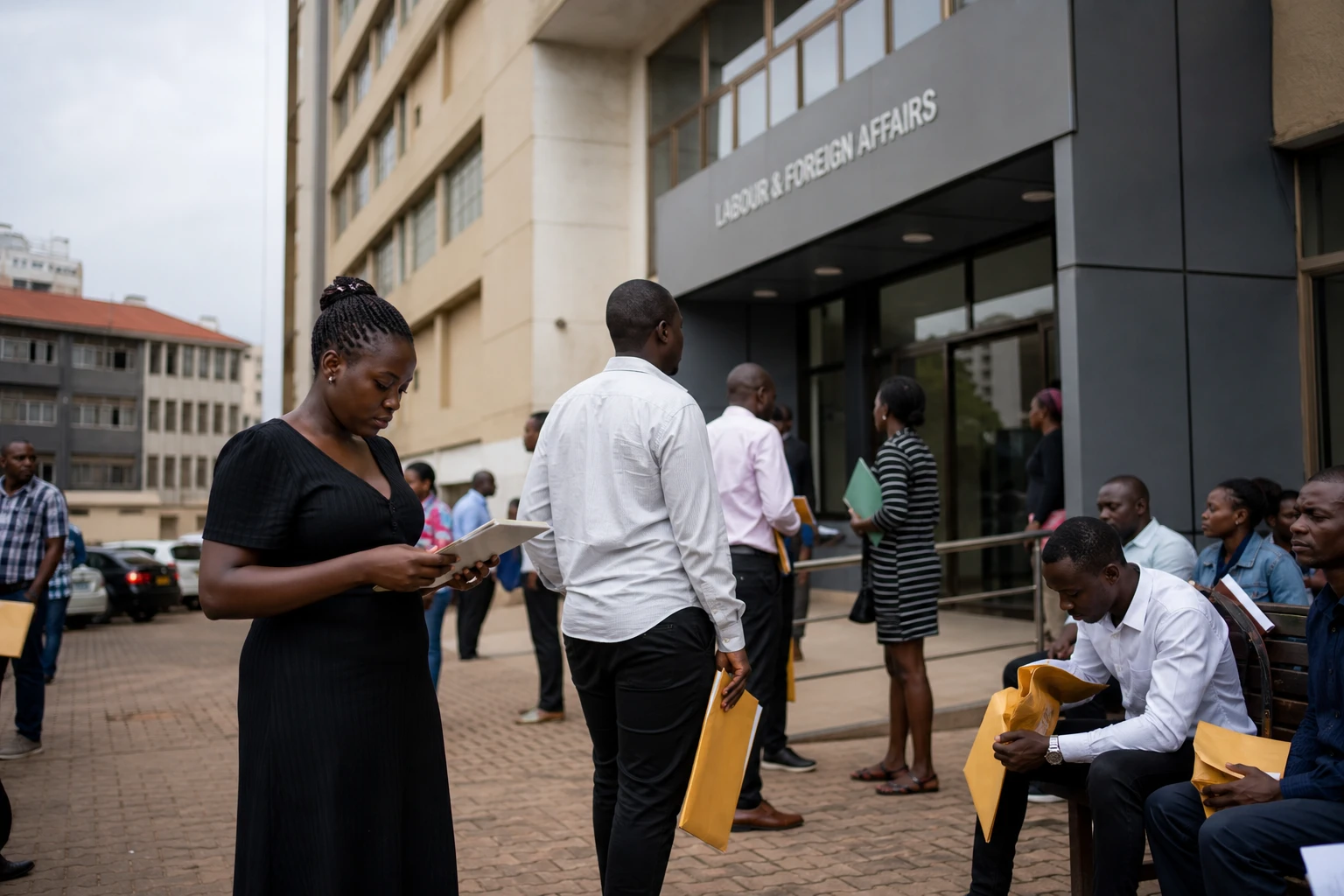
In Kampala, as in other African capitals, overseas job offers spread quickly, often through informal networks. When they promise a salary in foreign currency, they appeal to families seeking an economic lifeline, not a war front. That is sometimes when the trap closes.
Uganda is not an isolated case. For several months, Ugandan and African media have reported opaque recruitment targeting citizens of the region, with promises of private security, construction work or training, before they are drawn into the Russia-Ukraine conflict. Ugandan authorities say there is no official agreement allowing this kind of deployment of military labour to Russia.
What the Ugandan case reveals
The name Edson Kamwesigye has become central to the case. Ugandan media have reported that the man, from Rukungiri and aged about 45 to 46, according to the articles, had worked in security abroad before returning home, then leaving again believing he had accepted a new job as a security guard in Russia. His family says he later called from military training before being killed in Kupiansk, in north-eastern Ukraine, in January 2026.
His widow has requested the repatriation of his body, but the case has stalled. Ugandan media have said the authorities did not coordinate the operation. At least two other Ugandans are reported to have died fighting for Russia by June 2026, according to local press reports cited by African media.
This individual case forms part of a much wider picture. A BBC and Mediazona investigation compiled a list of at least 3,586 foreign nationals killed alongside Russia since the start of its full-scale invasion of Ukraine in February 2022. The documented deaths are from more than 40 countries.
A war recruiting far beyond its borders
The methods described by investigators are familiar: Russian prisoners recruited from penal colonies, vulnerable migrants, fake contracts, promises of high salaries, then deployment to the front. From 2024, Moscow also increased enlistment bonuses. A recruit can receive an advance of $30,000 and a monthly salary of about $3,500, with combat bonuses that can exceed $72,300 — sums bearing no relation to the average Russian salary cited in the investigation.
The phenomenon is not confined to Eastern Europe. In spring 2026, Reuters described networks targeting African citizens with promises of civilian jobs or help with administrative procedures, before steering them towards military contracts. Other analyses have shown that recruitment networks operate across several countries, including Uganda, to evade checks.
This movement of vulnerable labour says a great deal about Russia’s war. It also shows that the Kremlin no longer depends solely on its own citizens. The BBC investigation nevertheless estimates that foreign nationals remain a minority of Russian losses, even when North Korean soldiers deployed under the military agreement between Moscow and Pyongyang are included.
Uganda faces a diplomatic and social dilemma
For Kampala, the issue goes beyond one family’s tragedy. It concerns the regulation of overseas work, consular protection and the state’s credibility in dealing with recruitment networks. Uganda’s foreign ministry recently reaffirmed its ties with Moscow as preparations got under way for the third Russia-Africa summit, scheduled to take place in Moscow on 28 and 29 October 2026. But the bilateral relationship does not dispel concerns about unregulated departures.
The country is therefore walking a tightrope. On the one hand, Russia remains a diplomatic partner with which Uganda maintains close relations. On the other, families say they see their relatives drawn by civilian jobs and returned in coffins, or not returned at all. In an economy where many people rely on precarious work, the promise of an overseas contract can carry more weight than an official warning.
Ugandan authorities have already warned that there is no labour migration agreement with Russia for this type of job. The relevant ministries have also issued warnings about unverified offers. But the problem remains difficult to contain because it combines unemployment, social media networks and opaque intermediaries.
What the case says about East Africa
The Ugandan case resonates far beyond Kampala. In East Africa, labour mobility is a daily reality, shaped by the EAC, the East African Community, and by departures to the Gulf, Europe or Southern Africa. When recruiters bypass official channels, they exploit that same desire to leave, earn foreign currency and support families back home.
At a continental level, the case also highlights a new form of predation: transnational networks turning migrant workers into combatants. Reuters, the Africa Center for Strategic Studies and several African media outlets describe recruitment routes now spanning several regions of the continent, from Kenya to South Africa, via Uganda. The issue is therefore no longer solely military. It is consular, social and security-related.
The next point to watch is not only the battlefield in Ukraine. It is how African states respond to opaque recruitment, their ability to protect their citizens and, above all, how they handle returns, disappearances and bodies that remain unrepatriated. In this case, institutional silence often costs more than the war itself.