Algeria
 Egypt
 Libya
 Morocco
 Sudan
 Tunisia
 Benin
 Burkina Faso
 Cabo Verde
 Côte d'Ivoire
 Ghana
 Guinea
 Guinea-Bissau
 Liberia
 Mali
 Mauritania
 Niger
 Nigeria
 Senegal
 Sierra Leone
 The Gambia
 Togo
 Cameroon
 Central African Republic
 Chad
 DR Congo
 Equatorial Guinea
 Gabon
 Republic of the Congo
 São Tomé and Príncipe
 Burundi
 Comoros
 Djibouti
 Eritrea
 Ethiopia
 Kenya
 Madagascar
 Malawi
 Mauritius
 Mozambique
 Rwanda
 Seychelles
 Somalia
 South Sudan
 Tanzania
 Angola
 Botswana
 Eswatini
 Lesotho
 Namibia
 South Africa
 Zambia
 Zimbabwe
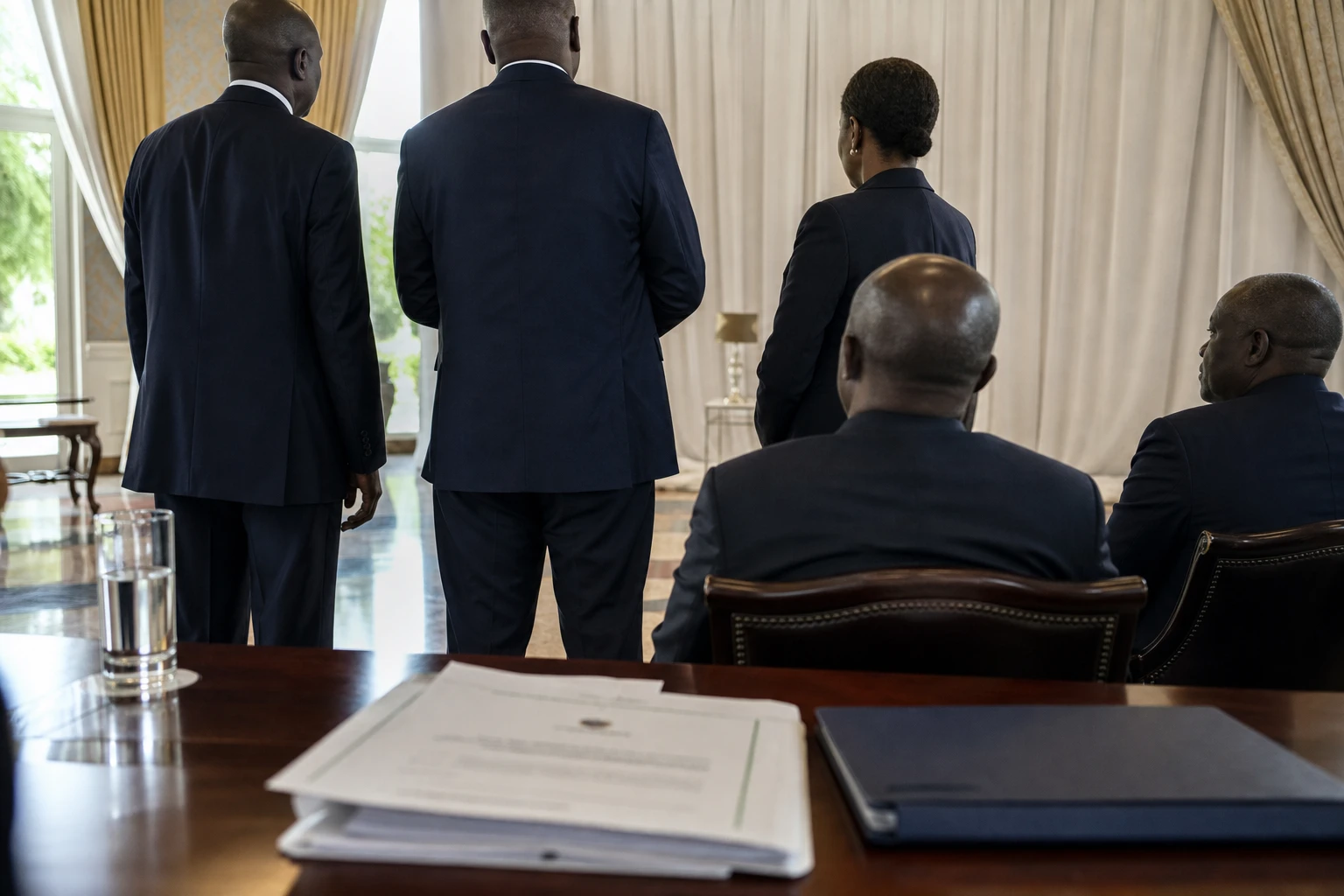
In Kampala, the question of what comes after Museveni is no longer theoretical
In Uganda, succession debates rarely take place in the open. Yet the focus of political discussion has shifted once again towards this question, and with greater clarity: who will control the state when the Museveni era truly comes to an end? In Kampala, where power is measured as much through institutions as through security power dynamics, the prospect of a handover within the presidential circle is no longer a distant speculation.
The country enters this period with a president, Yoweri Museveni, who has been in power since 1986, and a regional framework that includes the East African Community, of which Uganda is a member alongside seven other East African states. In this region, political continuity often carries as much weight as electoral change.
Muhoozi Kainerugaba confirms an ambition he has never really concealed
The head of Uganda’s armed forces, General Muhoozi Kainerugaba, announced on X that he intended to run in the 2031 presidential election. He accompanied the statement with a promise of a landslide victory, citing 90% of the vote and the support of his father, whom he refers to by the honorific title “Mzee”. The message is clear: succession is no longer merely being discussed; it is being claimed.
At 52, Muhoozi Kainerugaba currently serves as head of defence in Uganda’s military hierarchy. The official websites of the Ministry of Defence and the presidency describe him as the army’s most senior operational official, giving his words unusual political weight. In Uganda, the uniform remains a powerful route to civilian power.
This is not the first time he has flirted with the idea of running for office. He had previously hinted that he might stand, before backtracking. This time, he has set out his timetable well in advance: 2031, the next presidential election after that of January 2026. The announcement therefore serves as a political marker, not merely a publicity stunt.
A transition under military and family influence
To understand the significance of this statement, it is necessary to look at the immediate context. In January 2026, Yoweri Museveni won a seventh term, according to the official results, with 71.65% of the vote. His main challenger, Bobi Wine, rejected the verdict. The election was also marked by a tense climate, allegations of repression and an internet shutdown lasting several days, according to international press reports.
In this landscape, the opposition remains under pressure. Bobi Wine left Uganda at the beginning of the year, saying he feared for his safety. Kizza Besigye, a veteran opposition figure, has been detained since November 2024 and is facing treason proceedings. These developments alone do not tell us what 2031 will bring, but they help explain why Uganda’s political horizon is narrowing around a handful of dominant players.
Muhoozi Kainerugaba also leads the Patriotic League of Uganda, a political mobilisation movement described by its supporters as a force for organisation and by its critics as an extension of the government’s influence. This dual role, military and political, blurs the boundaries between institution, personal loyalty and electoral machinery. It also raises a sensitive question: in Uganda, will succession come through the ballot box or through the gradual consolidation of the apparatus already in place?
What this means for the state, the economy and regional balances
For the government, the advantage is obvious: announcing a 2031 bid so early allows it to set the agenda, test loyalties and occupy the space before other contenders organise. For regime supporters, this anticipation may be seen as a way to guarantee continuity. For opponents, it looks more like a closing of the political arena in a system where the presidential family, the army and the dominant party remain closely intertwined.
For Ugandans, the stakes are more tangible. Political stability affects employment, investment and the freedom of movement of economic actors, particularly in a capital such as Kampala, where the administration, commerce and services are concentrated. A poorly prepared succession can fuel uncertainty. Conversely, a controlled handover may reassure some investors, but without dispelling questions about the rule of law, electoral competition and the opposition’s real place in the system.
The regional timetable also matters. Uganda is part of the EAC, which is pushing for deeper integration, particularly in economic and political terms. A transition in Kampala would therefore not be a strictly domestic issue. It would also affect relations with Nairobi, Kigali, Juba and Dar es Salaam, in a region where heads of state influence security, trade and border issues. The country also remains exposed to cross-border concerns, from refugee flows to regional military operations.
2031 already in sight
The real issue, then, is not just the announcement of a candidacy. It is the normalisation of a succession planned in advance, in a system where political time is rarely left to chance. If Museveni decided to run again, his son’s candidacy would become a marker of deferred continuity. If he prepared to step down, Muhoozi Kainerugaba would emerge as a possible heir, but in an environment where the army, the ruling party and state apparatus would remain central to the process.
The significance extends further across the continent than it might appear. In East Africa, as elsewhere, the question is not simply one of a name. It concerns how long-serving regimes organise themselves to endure, the role of the armed forces in civilian life and the ability of institutions to outlast a founding figure. In Uganda, 2031 is already beginning to look like a stress test for the entire political edifice.