Algeria
 Egypt
 Libya
 Morocco
 Sudan
 Tunisia
 Benin
 Burkina Faso
 Cabo Verde
 Côte d'Ivoire
 Ghana
 Guinea
 Guinea-Bissau
 Liberia
 Mali
 Mauritania
 Niger
 Nigeria
 Senegal
 Sierra Leone
 The Gambia
 Togo
 Cameroon
 Central African Republic
 Chad
 DR Congo
 Equatorial Guinea
 Gabon
 Republic of the Congo
 São Tomé and Príncipe
 Burundi
 Comoros
 Djibouti
 Eritrea
 Ethiopia
 Kenya
 Madagascar
 Malawi
 Mauritius
 Mozambique
 Rwanda
 Seychelles
 Somalia
 South Sudan
 Tanzania
 Angola
 Botswana
 Eswatini
 Lesotho
 Namibia
 South Africa
 Zambia
 Zimbabwe
A succession taking shape before the next election
In Kampala, the question of power is no longer decided only at the ballot box. It is also playing out within the family circle, in the barracks and across the political networks already preparing for the post-Museveni era. The announcement by Muhoozi Kainerugaba, head of Uganda’s armed forces, confirms that the battle for 2031 is beginning well before the official campaign.
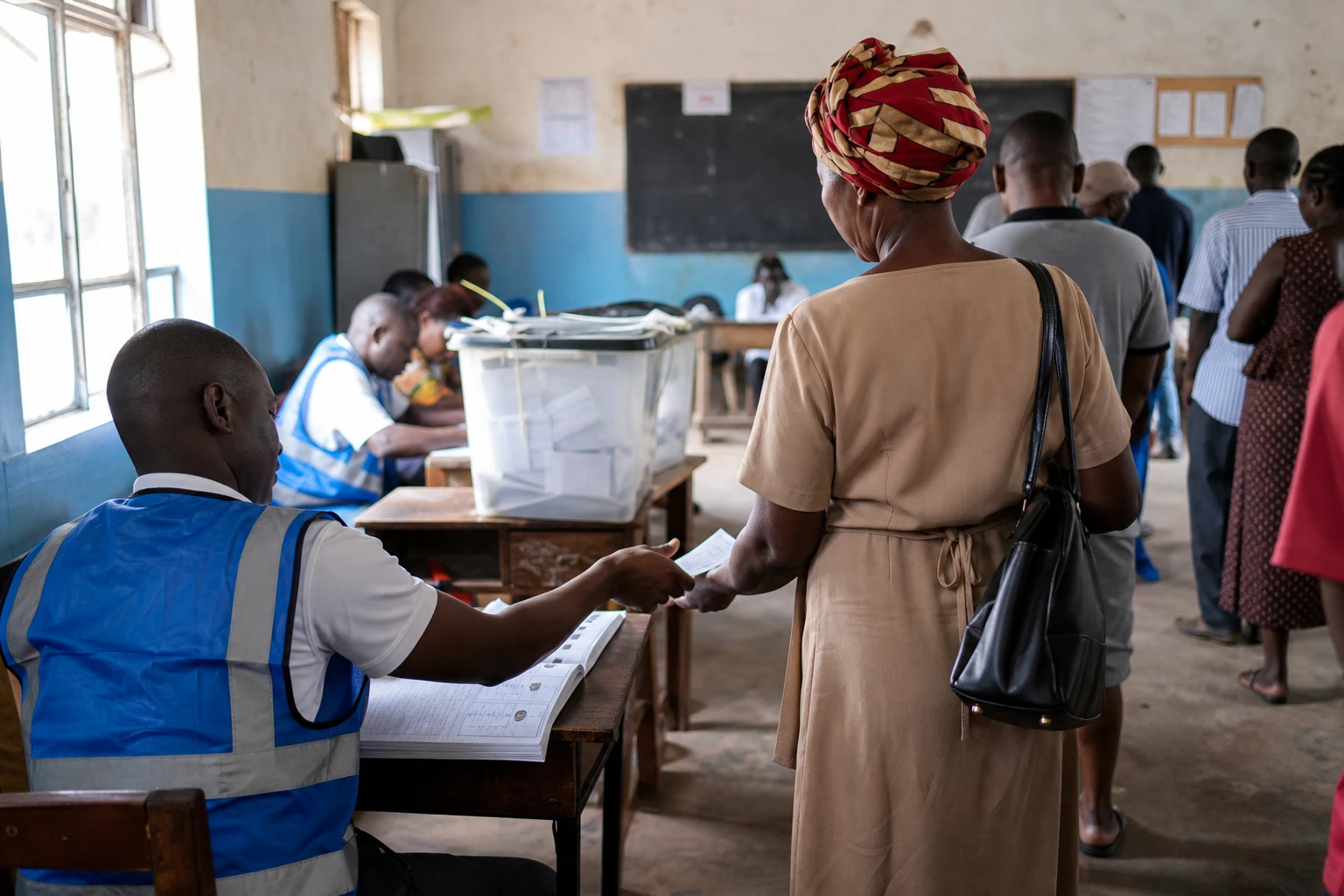
The timing is far from incidental. Uganda has just emerged from an election in which Yoweri Museveni was returned for a seventh term in January 2026, after nearly four decades in power. At the same time, the succession question remains open, even as the country belongs to the East African Community, a region where political stability and the smooth flow of trade are essential to business, the movement of people and regional balance.
What Muhoozi said, and what it means in Kampala
On Tuesday 25 August 2026, Muhoozi Kainerugaba wrote on X that he would run for president in 2031. He added, according to reports carried by Reuters and Africanews, that he would win “by the grace of God” and hoped to secure 90% of the vote with his father’s support. Africanews reports that he is 52 and heads the Patriotic League of Uganda, a political pressure group.
The news did not come out of nowhere. For several years, Muhoozi Kainerugaba has been presented as a possible successor to the head of state. He has previously floated a bid in the 2026 election, before backtracking and supporting his father. His military career and closeness to the presidential palace give him unusual visibility. But this exposure also fuels criticism, as it blurs the line between the military hierarchy and partisan politics.
Uganda’s Constitution and the army’s official doctrine nevertheless set out a simple principle: the army must remain non-partisan and subordinate to civilian authority. The UPDF website describes the armed forces as “nonpartisan”, while Parliament recently reiterated this non-partisan character in connection with the use of military symbols in the political arena. In this context, a candidacy by a serving military chief immediately raises an institutional question.
In Kampala, then, the announcement carries more weight than a mere declaration of intent. It establishes the idea of an organised succession within the regime, even though President Museveni, aged 81, has not yet said whether he will seek another term in 2031. The government spokesperson, quoted by Reuters, replied that the decision would be made in due course by the president and the party he leads. In other words, the electoral timetable remains official, but political arbitration remains highly personalised.
A test for the government, the opposition and the region
For the president’s camp, the advantage is clear. Museveni still has a strong state apparatus, a dominant party and an extensive administrative network. Muhoozi faces a different challenge: he will have to turn his strong presence within the system into political legitimacy of his own. Several observers and Ugandan media point out that he remains less popular than his father, even though some supporters already see him as the face of an orderly transition.
For the opposition, the stakes are even more tangible. The prospect of a family succession has long fuelled concerns about civic space, freedom of expression and the use of the security institutions. In 2025, Uganda’s Parliament even passed a controversial law again allowing certain civilians to be tried by military courts, despite strong criticism. In the country, this kind of decision is viewed through the lens of the coming election and the balance of power around the security apparatus.
The regional context also matters. Uganda occupies a central position in the East African Community, of which it is one of eight member states. Kampala carries weight in discussions on trade, logistics corridors, security and the movement of people. A contentious presidential transition, or one that is too tightly controlled, would therefore have an impact beyond Uganda’s borders: on investors, institutional confidence and the image of a country often described as a linchpin of East Africa.
Finally, this episode resonates across the continent. It brings back a question that has become sensitive in several African countries: how is power transferred when a leader remains in office too long, the army plays a political role and institutions lack sufficient autonomy to guarantee a credible change of government? In Uganda, the answer will not be purely electoral. It will also depend on the regime’s ability to balance continuity, legacy and popular acceptance, as the already calculation-laden 2031 horizon approaches.