Algeria
 Egypt
 Libya
 Morocco
 Sudan
 Tunisia
 Benin
 Burkina Faso
 Cabo Verde
 Côte d'Ivoire
 Ghana
 Guinea
 Guinea-Bissau
 Liberia
 Mali
 Mauritania
 Niger
 Nigeria
 Senegal
 Sierra Leone
 The Gambia
 Togo
 Cameroon
 Central African Republic
 Chad
 DR Congo
 Equatorial Guinea
 Gabon
 Republic of the Congo
 São Tomé and Príncipe
 Burundi
 Comoros
 Djibouti
 Eritrea
 Ethiopia
 Kenya
 Madagascar
 Malawi
 Mauritius
 Mozambique
 Rwanda
 Seychelles
 Somalia
 South Sudan
 Tanzania
 Angola
 Botswana
 Eswatini
 Lesotho
 Namibia
 South Africa
 Zambia
 Zimbabwe
A region under pressure, far beyond the lack of rain
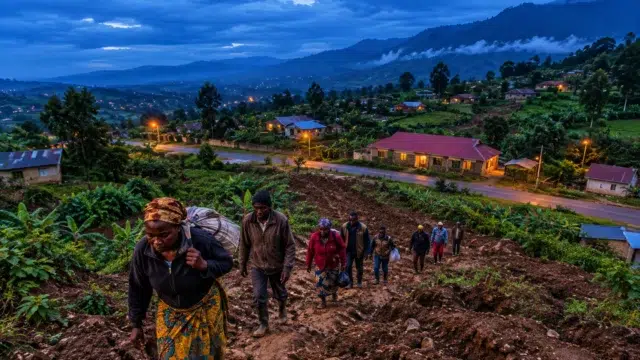
In north-eastern Uganda, drought means more than scorched fields. It is disrupting markets, draining families’ reserves and weakening a region already exposed to climate shocks. In Karamoja, where livestock-rearing and subsistence farming remain essential, every week without rain weighs on what people will eat the next day.
The region is no stranger to emergency assessments, but the scale of the current warning is drawing attention. According to the IPC analysis published in June 2026, around 473,000 people, or 32% of the population assessed in Karamoja, face high levels of acute food insecurity. Of these, 41,000 are classified in Phase 4, known as emergency.
Kampala steps up emergency aid
The Ugandan government has launched food aid distribution in Karamoja’s nine districts after several weeks of pressure on household stocks. The programme provides for 9,419,610 kilograms of food, mainly maize flour and dry beans, for 313,987 households across 480 parishes. Prime Minister Robinah Nabbanja described the operation as an immediate response to the prolonged drought, which has reduced harvests and increased families’ vulnerability.
The schedule is tight. Aid is to be distributed over two months. The government has also highlighted a package of 50 billion Ugandan shillings, or about $13.5 million, to fund this response and other emergency measures. The Office of the Prime Minister had already begun sending an initial consignment of relief supplies to Kaabong, a district identified as among the worst affected.
Figures on the human toll have varied between sources and over time. On 9 July, the Office of the Prime Minister reported 16 deaths linked to food shortages in Karamoja. More recently, Ugandan and African media have reported at least 19 deaths. The overall trend is clear: the crisis has already claimed lives, although the exact toll has yet to be confirmed.
What the Karamoja crisis reveals
At its core, the humanitarian emergency points to more than a single episode of drought. It exposes the fragility of a rural economy vulnerable to climate shocks, high food prices and low stock levels. In Karamoja, the latest IPC analysis also describes a deterioration driven by climate shocks, below-average agricultural and livestock production, animal diseases and rising prices. In other words, rain alone will not solve everything.
The debate has also reached the national political arena. On 17 July, Uganda’s parliament backed a motion calling for a broader response to drought and hunger in the north of the country. MPs called for sustained food aid, as well as drought-resistant seeds, agricultural insurance and targeted nutritional support for children. The parliamentary pressure signals that the Karamoja crisis is no longer being handled solely as a technical matter; it is becoming an issue of public governance.
The effects differ greatly between groups. For rural households, especially those dependent on small harvests and livestock, a lack of rain means less food and more debt. Local authorities must organise distribution across dispersed areas, while grappling with transport and monitoring constraints. For Kampala, the challenge is political as well as humanitarian: to show that the state is responding without allowing the crisis to become entrenched.
A Ugandan issue, but also an East African one
Karamoja is part of a wider regional landscape: East Africa and the East African Community, where climate shocks quickly spread across Uganda, Kenya, South Sudan and Somalia. Repeated droughts in this area never remain strictly local: they affect prices, disrupt pastoral systems and force governments to weigh immediate relief against prevention.
Technical institutions will therefore play an important role in the coming months. The IPC analysis projects a seasonal improvement between August 2026 and February 2027, but notes that food insecurity will remain structural in several districts, including Kaabong, Kotido, Karenga and Moroto. This means the warning will not disappear with the current distribution. The real test will come after the next harvest, when Uganda will have to assess whether emergency aid merely cushioned the shock or has begun to reduce a vulnerability that has become chronic.
For East Africa, Karamoja is also a reminder of an often-underestimated truth: climate action cannot be purely reactive. It must combine water, seeds, animal health, storage, social safety nets and preparedness. Without that, relief efforts will return as regularly as droughts do. And the same districts will remain the first to be exposed, year after year.