Egypt
 Libya
 Morocco
 Sudan
 Tunisia
 Benin
 Burkina Faso
 Cabo Verde
 Côte d'Ivoire
 Ghana
 Guinea
 Guinea-Bissau
 Liberia
 Mali
 Mauritania
 Niger
 Nigeria
 Senegal
 Sierra Leone
 The Gambia
 Togo
 Cameroon
 Central African Republic
 Chad
 DR Congo
 Equatorial Guinea
 Gabon
 Republic of the Congo
 São Tomé and Príncipe
 Burundi
 Comoros
 Djibouti
 Eritrea
 Ethiopia
 Kenya
 Madagascar
 Malawi
 Mauritius
 Mozambique
 Rwanda
 Seychelles
 Somalia
 South Sudan
 Tanzania
 Uganda
 Angola
 Botswana
 Eswatini
 Lesotho
 Namibia
 South Africa
 Zambia
 Zimbabwe
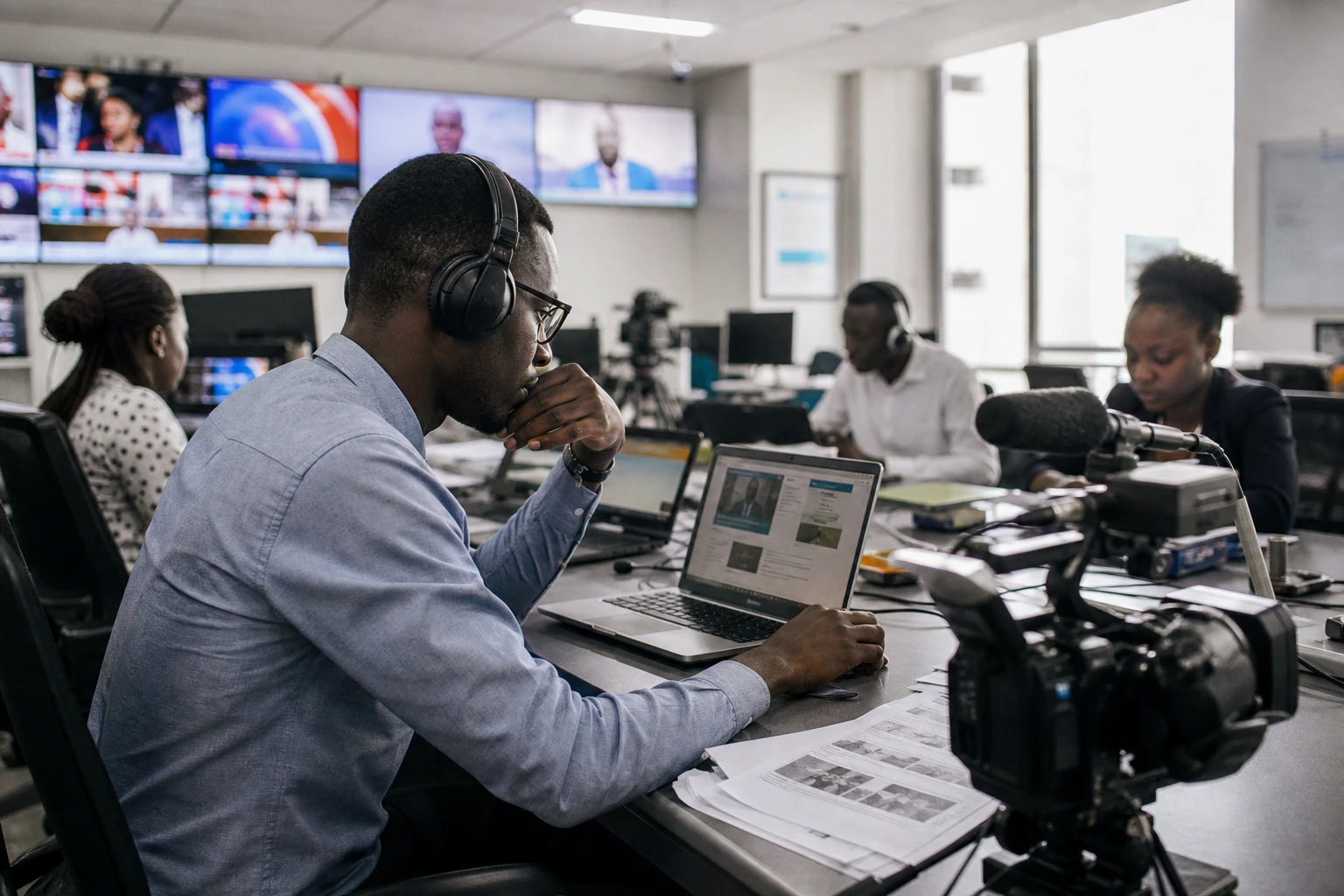
In Sudan, the war is no longer being fought only on the ground
In Khartoum, the battle is not just about weapons. It is also being waged through narratives, influence networks and diplomatic corridors. In a country where war has already destroyed institutions, every attempt to shape the international understanding of the conflict has very tangible consequences for Sudanese civilians.
Since April 2023, Sudan has been torn apart by fighting between the regular army and the Rapid Support Forces, the RSF, a paramilitary group that emerged from the former security apparatus. The estimates most often cited by the United Nations point to tens of thousands of deaths and millions of displaced people, while several parts of the country have been pushed to the brink of, or into, famine. In this context, control of the narrative matters as much as control of a supply route or an airport.
A Sudanese conflict at the centre of regional rivalries
Sudan lies at the crossroads of several strategic regions: the Red Sea, the Sahel, the Horn of Africa and the Nile basin. The fault lines around the war extend far beyond the duel between Sudan’s two sides. They involve supply routes, gold networks, arms flows and ad hoc alliances that span the region.
This also explains the sensitivity of accusations targeting outside actors. For months, UN debates on Sudan have focused on the arms embargo, the responsibility of foreign backers and the protection of civilians. The Human Rights Council and UN investigative mechanisms have become arenas for diplomatic confrontation, not just places for documenting events.
What the Anthropic report reveals
On 10 September 2026, Anthropic published a safety report describing an influence operation that the company links, with a high degree of confidence, to officials in the United Arab Emirates government. According to the document, the operation was aimed in part at shaping the narrative around the war in Sudan and silencing critical voices in international forums.
The report describes a sophisticated operation. It mentions the use of artificial intelligence tools to run about 300 fake influencer accounts, produce reports presented as independent, create a front NGO and prepare testimony intended to be read at a session of the UN Human Rights Council, without mentioning the Emirati role. Anthropic also says that counter-reports were assembled against special rapporteurs who had criticised Abu Dhabi’s conduct in Sudan.
This time, the issue is not simply one of support for one side. The report describes a structured operation, with beneficiaries within the Emirati apparatus. The distinction matters. It separates a spontaneous influence campaign from an operation designed to sway international assessments of responsibility for the Sudanese conflict.
Longstanding accusations, now supported by a new angle
For several years, Algerian President Abdelmadjid Tebboune has accused the United Arab Emirates of acting in several African crises as a destabilising force rather than as a mere diplomatic partner. Sudan features regularly in this rhetoric. Until now, these accusations have been primarily political and diplomatic in nature.
The Anthropic report does not prove everything. On its own, it does not document an arms shipment to Sudan. It does, however, lend weight to part of Algeria’s accusation: the idea that Abu Dhabi is seeking discreetly to influence how the Sudanese war is reported and adjudicated internationally. For Algiers, this reinforces a view already established in its confrontation with the UAE.
This comes as Algeria severed diplomatic relations with the United Arab Emirates on 10 September 2026, after saying it had exhausted all avenues for maintaining dialogue. The Algerian move adds further political weight to the report published the same day, although the two issues are not one and the same.
What this means for Sudanese people and the region
For Sudanese people, the stakes remain first and foremost military and humanitarian. When outside backers fuel the war, they prolong it, complicate any ceasefire and delay access to aid. When influence campaigns blur the responsibility of those involved, they also weaken accountability mechanisms. In a country already fractured, this battle over the narrative can affect aid deliveries, diplomatic pressure and the credibility of international investigations.
The consequences are not the same for everyone. In foreign capitals, the war in Sudan is often viewed through the prism of alliances, security interests or trade routes. In Khartoum, Omdurman, El-Fasher and rural areas, it means above all insecurity, forced displacement, rising prices for basic goods and the collapse of public services. Civilians are therefore suffering both direct violence and manipulation of the narrative.
Recent UN reports and investigations by human rights organisations have already described the movement of transnational networks providing support, fighters, funding and equipment around the conflict. Anthropic’s document adds to this body of evidence. It introduces a new dimension: the alleged use of advanced digital tools to influence international debates on Sudan.
The message across Africa is clear. Conflicts on the continent are no longer confined to armed fronts. They are also being fought on digital platforms, in UN corridors, through regional alliance networks and via private influence operations. For the African Union, IGAD, the regional organisation of the Horn of Africa, and Sudan’s neighbouring states, the question is becoming broader: how can mediation processes be protected when a war is prolonged by outside backers, whether overt or clandestine?
The next test will be diplomatic. The UN continues to debate whether to strengthen or extend the arms embargo related to Sudan. Meanwhile, the war continues on the ground. Until these two fronts converge in genuine political pressure, Sudanese people will remain trapped in a conflict in which the battle for weapons and the battle for narratives are advancing together.