Algeria
 Egypt
 Libya
 Morocco
 Sudan
 Benin
 Burkina Faso
 Cabo Verde
 Côte d'Ivoire
 Ghana
 Guinea
 Guinea-Bissau
 Liberia
 Mali
 Mauritania
 Niger
 Nigeria
 Senegal
 Sierra Leone
 The Gambia
 Togo
 Cameroon
 Central African Republic
 Chad
 DR Congo
 Equatorial Guinea
 Gabon
 Republic of the Congo
 São Tomé and Príncipe
 Burundi
 Comoros
 Djibouti
 Eritrea
 Ethiopia
 Kenya
 Madagascar
 Malawi
 Mauritius
 Mozambique
 Rwanda
 Seychelles
 Somalia
 South Sudan
 Tanzania
 Uganda
 Angola
 Botswana
 Eswatini
 Lesotho
 Namibia
 South Africa
 Zambia
 Zimbabwe
A case that goes beyond the fate of 34 defendants
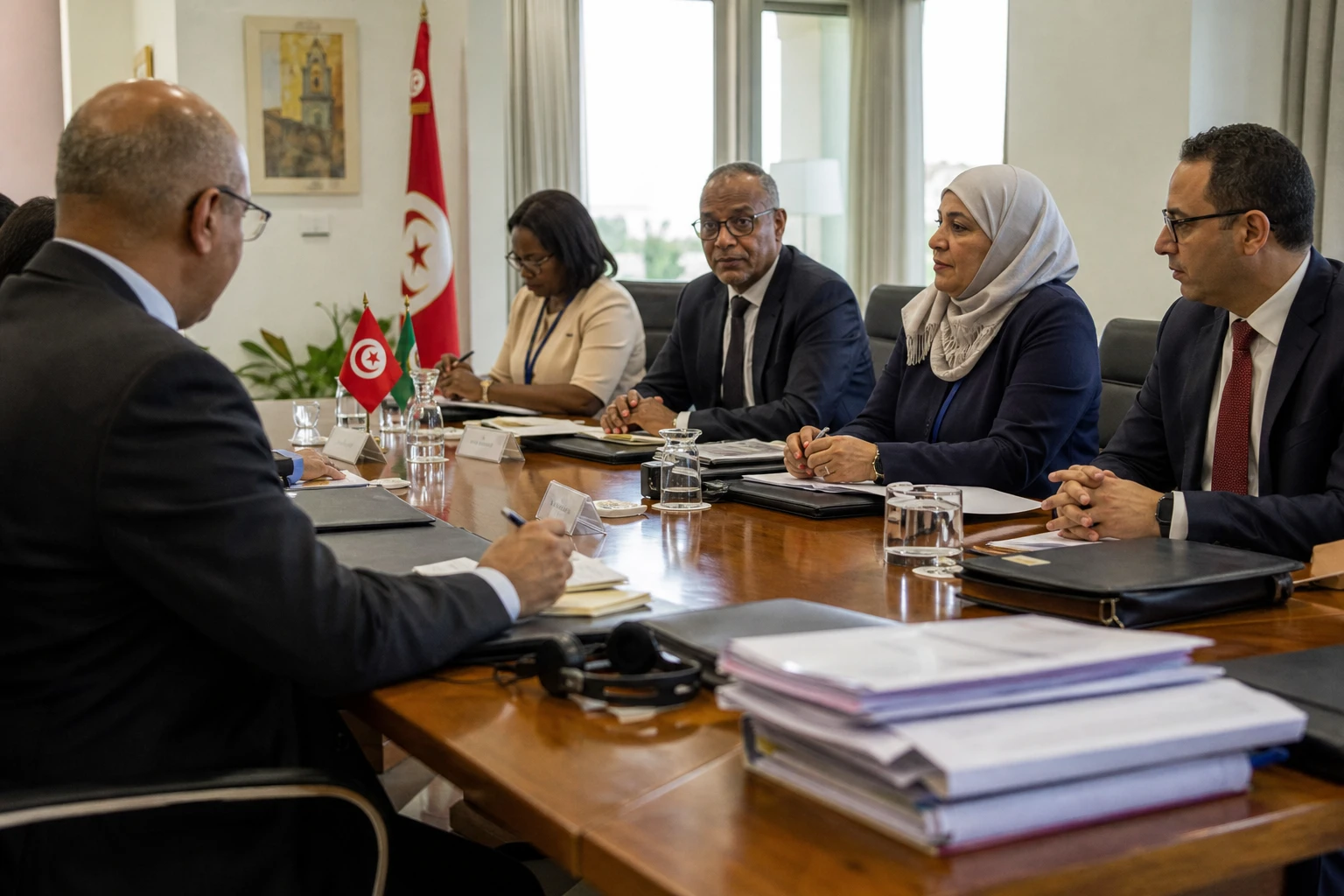
In Tunis, a court case says much more than a simple criminal dispute. It touches on the relationship between the executive, checks and balances, and the place that justice still holds in Tunisian public life. In a Tunisia marked by the concentration of power around President Kaïs Saïed since July 2021, every hearing in this case carries significance far beyond the courtroom.
Tunisia’s Court of Cassation examined the appeal lodged by 34 opponents, lawyers, activists and public figures convicted in the so-called “conspiracy against state security” case. This final judicial stage comes after the Tunis Court of Appeal’s decision on 27 November 2025, which upheld sentences ranging from five to 45 years in prison. Amnesty International and Human Rights Watch describe the case as politically motivated and marked by violations of fair-trial guarantees.
What the courts say, and what rights groups dispute
The most prominent names in the case are well known in Tunisia’s political landscape. They include figures such as Ahmed Nejib Chebbi, Chaïma Issa, Issam Chebbi, Ghazi Chaouachi, Jawhar Ben Mbarek, Ridha Belhaj and Abdelhamid Jelassi, as well as lawyer Ayachi Hammami. According to human rights organisations, several of them had been detained since the investigation was opened in February 2023.
The heart of the dispute concerns the regularity of the proceedings. Defence lawyers denounce a hearing scheduled at very short notice and, more broadly, an investigation they consider to have been directed by political instructions. Amnesty International calls it a “travesty of justice” and urges the Tunisian authorities to overturn convictions it considers unfounded. The NGO also stresses that the sentences have upended the lives of 34 people, as well as those of their families and activist networks.
For months, the authorities have presented the prosecutions as a response to manoeuvres against the state. This narrative is part of a period that began on 25 July 2021, when Kaïs Saïed suspended parliament before reshaping the institutional balance. Since then, international observers and NGOs have noted a narrowing of civic space, as well as increased use of criminal and anti-terrorism laws against opponents and critical voices.
A strong signal for Tunisian political life
In the capital, Tunis, the case is a test of the institutions’ resilience. If the courts definitively uphold such heavy sentences against opposition figures, the message to politicians, lawyers, journalists and activists will be clear: challenging central power is becoming highly risky. Conversely, any questioning of the case could reopen a sensitive debate about judicial independence and the role of the public prosecutor in politically charged cases.
The social impact is just as clear. For the families of those convicted, the issue is not merely legal. It affects work, reputation, travel and the ability to make their voices heard in public. For supporters of the authorities, by contrast, these proceedings are part of a promise of order and a break with networks accused of having held the state in their grip for years. This divide runs through Tunisian society, between those awaiting swift economic answers and those who fear that stabilisation through coercion will further damage civil liberties.
Tunisia is not alone in this debate. Across Africa, the case points to a broader question: how can institutions that arbitrate disputes be preserved when the executive takes back control of checks and balances? The Tunisian case is also of interest to the African Union, whose human rights protection mechanisms can be constrained by sovereign states’ choices, and to regional courts, as disputes over the rule of law multiply across the continent. Amnesty also notes that Tunis has withdrawn its declaration allowing individuals and NGOs to bring cases before the African Court on Human and Peoples’ Rights, reducing an additional avenue of recourse.
What to watch after Tunis
The “conspiracy” case will not be closed by this judicial stage alone. Two things now warrant close attention: the enforcement of the sentences already upheld and how the Tunisian authorities handle other cases targeting the opposition, particularly those added since 2026. The judicial calendar is becoming a political indicator in its own right in a country where public life, justice and the institutional balance remain closely intertwined.
For Tunisians, the stakes go beyond the individuals concerned. They touch on trust in institutions, the possibility of a lawful opposition and the credibility of a political transition long presented as one of the few lasting achievements of the 2011 uprisings in North Africa. What is at stake in Tunis today is therefore not only criminal justice. It is also a definition of pluralism, power and the limits the republic is willing to set for itself.